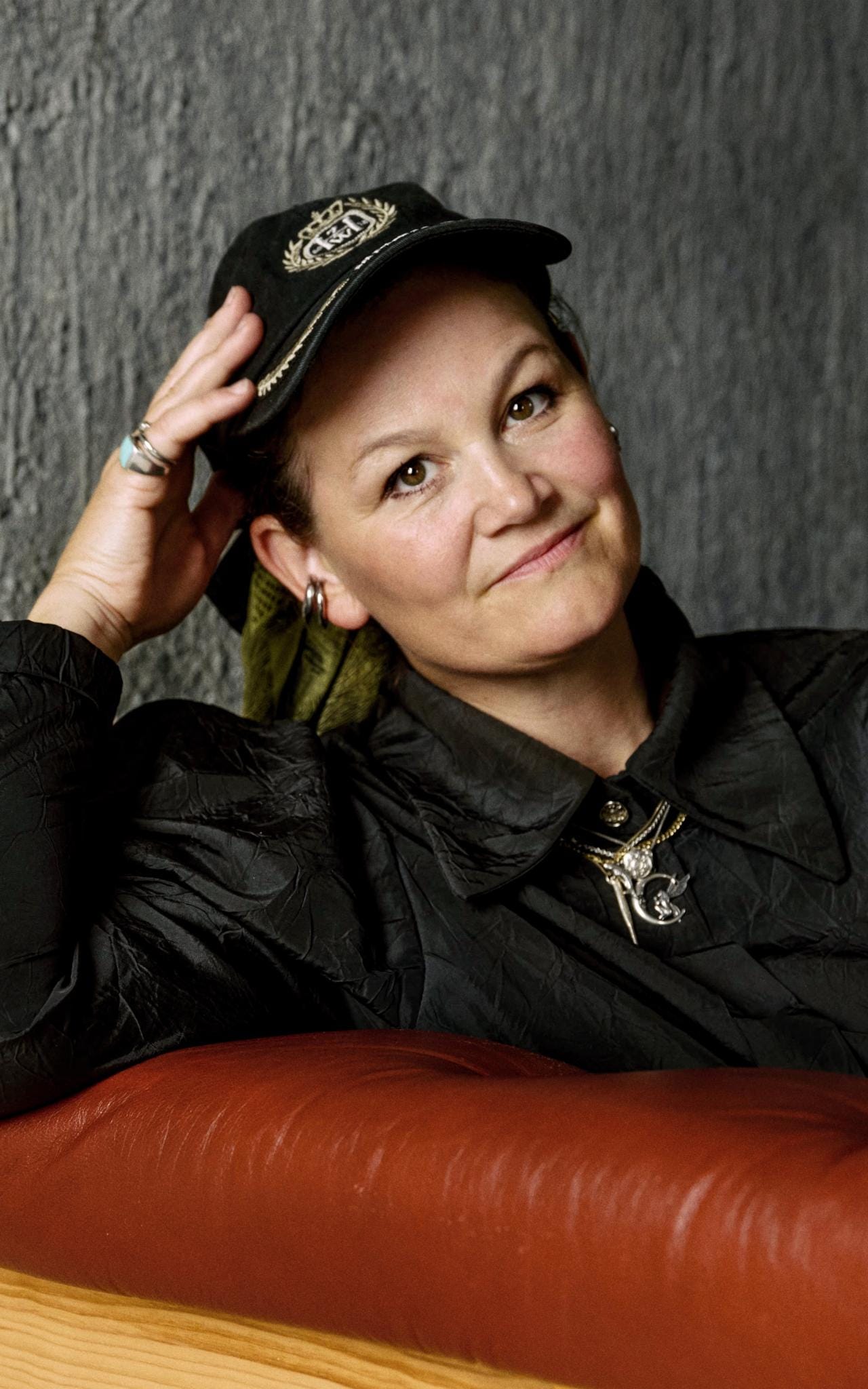
Originally published by AMA Art Magazine, 2026
When Tori Wrånes was selected to represent Norway at the 2026 Venice Biennale, few who know her work could have been surprised. Wrånes has been responsible for several of this century’s most beguiling and darkly fantastical performances and exhibitions. Her audience expands beyond the usual gallery and museum scene, thanks, perhaps, to her grasp of the importance of not wasting people’s time. She pushes her shows to the limit, creating layers for the mind and senses until she believes there is something meaningful for anyone who shows up with an open mind. Wrånes was born in 1978 in Kristiansand, Norway, and now lives and works in Oslo. She is represented by Nazarian Curcio gallery in Los Angeles.
Your work can be unsettling, but you also seem to understand tragedy is a secret source of comedy. What role does humour play in your practice?
I love this question. I have never been asked it before. I do not have a clear answer. But it is true, everything you say. I feel humour has this possibility of cracking everything up, like letting in small cracks of light. It crosses over. It is universal in a way. The warmth and rhythm and timing of humour connects all these different elements of psychology and form. It has some unknown magic. It is an important way to deal with sorrow and tragedy, as you say. It is a way of survival. The recent show I did in Bergen Kunsthall, called “Moonbag”, seemed pretty light. But to me it was also super dark. It had this giant wave that went through the whole space. The square doors between the halls were made into these giant mouse holes. When you went through all the spaces, in the end you just saw a tiny mouse hole and when you bent down to look in, there was this mouse rave. Through the whole exhibition there was this track with a little mouse driving a scooter around the space and through the walls. The mouse was called The Optimist, which feels super radical to be these days. This giant wave can be connected to climate or it can be a giant tear. But it can also just be a gigantic erotic wave. It depends what kind of layer you want to pick. Sometimes there is darkness under the light… and the opposite, I guess. This relates also to these small mussels that were in the show. Mussels cleanse, can you believe it, 100 litres of water a day. That is so insane — crazy big job done by this little shell. When I look around and I am like, fuck, everything is going to hell. What can I do? I can be the mouse or a mussel. We can always do something.
Do you ever find yourself laughing while developing a show?
Most definitely, but also crying. I think I look for these pockets of air, or pockets of relief, to be allowed to dig into something deeper. You need those layers of lightness. A laugh loosens people up so much, loosens tensions. It is a really nice way to establish some kind of trust in a space.
How important is collaboration — both with other artists and the audience?
When I travel I always work with local people. I need to listen and get to know the people that actually spend time on that ground. I also have a team in my studio that I care deeply about, like a family. I think as human beings it is always a collaborative thought to have something happen. If there is a grumpy person on the team, then that is part of the thing we make. If that is good or bad, I do not know. Sometimes it is good that we are not all smiling. I love to challenge myself and I think that is the main thing with other human beings. They have another experience of life than I have. We can find something new together, the answer I would not find myself. It is insane how different we are, how different we read everything around us and what different possibilities and privileges we have, and how this is affecting how we think and behave. For me it is a privilege to expect that I will wake up tomorrow and be able to work. And when you work with art, and you are like — what the fuck? What am I actually working with? What does it matter? — I think this leads us to the audience that you ask about. I try to make this moment where we gather around something together that has potential. I really care about the audience. I do not want to waste anyone’s time. I believe art has the possibility to create these shared moments where we feel less alone. Maybe this is because I always long for that myself, these pockets of warmth and freedom and a little step out of that regularity and all these ready-made systems that are so established. Like in Norway, it is so difficult to introduce the third gender, for instance. It is this ready-made — you have to be a man or you have to be a woman. And this is so insane to me that some people spend so much time disagreeing on something that does not change their life at all, but changes the person whose life it relates to. But now I am wobbling off.
What you said feels relevant. Conventions can burden people, wasting their time, stealing their life. It can feel sinister and dark. How does darkness and light — actual and metaphorical — show up in your work?
My brain is like “woooo” because there are thousands of ways to answer you. But light is, for me, like sound: it is physical and sculptural. I had a show where the light was looping up and down super slowly. I felt like it was undressing and dressing people. And I think it is the same if you live in the north of Norway. It is sculptural how the light undresses and dresses the landscape. It truly changes the mentality. I did this performance once in the north of Norway, underwater. The audience members were driven on a boat out to this platform in the middle of the Arctic. They lay on their belly and looked with binoculars into the water. I was underwater in this furry costume, together with eight other creatures. There was a strobe light built into these boxes under the platform. We had one hour of light during the day, so it was really a crazy thing to work with, because it was like two different worlds when it was light and when it was dark. One of the times when we were doing the performance, the Northern Lights came up in the sky. The light guy changed the light that went down to match the colour of the light in the sky. It made me think, everything is true at the same time as the opposite is also true. I was underwater, but it could just as well have been the sky. You could reverse it and it would be true. I do not know where that leads me with your question about the dark and the light. I do think everything is possible in the darkness somehow. Darkness is super attractive at the same time as it is the opposite, depending on if you look at it as the exciting unknown, full of possibilities, fantasies, or if you look at it as the dark psyche, super alone feeling, which I guess in the end also gives you empathy to understand others.
That underwater performance taps into something primal and terrifying about the human condition. But there is something so playful about it.
To be honest, I feel all my work is just about trying to love and be loved. Like the mussels for instance, they suck themselves to rocks to connect to something steady. But others can feel gruesome and left out of something that is supposed to be nice and good. All these opposites are needed to reach the truth somehow. I can not be gentle if life is not. If you do not know what brutality or grotesqueness are then you cannot understand the opposite. I appreciate the beauty that does not fit into the standard.
Your work Lips Don’t Cry is viscerally gruesome. It looks like bloody, dancing lungs.
Yeah, this was part of a show called “The coming world”. It had this apocalyptic feeling. I had all these brutal looking characters. I was thinking that in the future we would just walk around like open wounds without skin because it was burned off by the sun, and the lungs would become these giant bottles outside of the body that look like accordions. I did this performance in Russia, in 2019, and had no idea they would invade Ukraine. I was thinking about the first time I went to Russia and saw this accordion player on the street. So I was like, okay, what is left in the future? We can breathe, but we are walking around like these open wounds. There was also something about queerness being very taboo in Russia. So instead of fronting the queerness, I made an adventure of these breathing, giant lips. And you are right, maybe they are brutal. I remember when I was composing for this performance, because very often I compose live with all the musicians in front of me, and they were just breathing with the accordions — no sound, just the breath of the bag. I felt scared when I stood in front of them. Also the way I was singing in this performance was full of sorrow for what we are able to do to each other. I think in a way it was a cry. It was a piece of meat crying. What we want is just to live and be allowed to live, and then we have to fight so much.
Something similar could be said about Garden of left hand, which has imagery that looks like splattered blood.
Yes, that was from 2022. Right now the world peaks on violence and I would never make any performances like that now, because I see too much of all these colours on live TV, you know? But Garden of left hand was more about beauty, for me, like zooming in, zooming out. It felt like this double performance. The audience is climbing — there is this dome built up, like a giant belly, and the audience is climbing these racks on the outside to find a hole where they can put in their head. When you look in, it is not stated what you are looking at, but obviously it is like this culture, some sort of society. Maybe it is the blood system. Maybe you are looking into yourself. Or maybe you are looking into Oslo or Europe, or the belly could be the planet and what is outside is not us, it is people on Mars or whatever. But something is closed off inside and it does not have a super defined purpose. It is just moving from this side to that side. The dramaturgy is more in the sound composition. I was improvising with the voice for three hours. I really love to get into that state, to create this landscape that is not recognisable, but still you can recognise something, hopefully enough to open some connections in the brain to get something out of it. But it was very much about the atmosphere and looking with a collective gaze into this society that no one knows what it is, but maybe it is ourselves. If you look at the images, it might feel violent, but if you heard the song and the music then I think you would actually feel comforted.
You sing with improvisational language, like proto-language… how did that enter your practice?
I have a tendency when I work to never stop, then in the end there is no time left to actually finish. Then I end up improvising what I am going to sing. But it has become a method somehow. It is a mix of scatting in jazz and gibberish in theatre. The essence is that it is not planned. It is completely in the moment, a rush of wind from the bottom of your feet, responding to that specific space. I remember the first time I fell into that nonverbal language. I had a couch going through the wall and I was supposed to not be on stage. But in the end we did not have enough rehearsal time, so I ended up being on stage. I had no plan of what I was going to sing, but I had been exploding so much to create the space, suddenly I had so much to say. It felt like it was just running out of my body. And so many things I needed to say I could not say with all these ready-made words that we keep on repeating. So in this moment I understood this is a tool I have for the rest of my life. I can lose everything, but unless I lose my voice I can go into any room and I can just sing. This was extremely liberating. What is it called? Oppdagelse. New knowledge, for me. There is a Norwegian jazz singer called Sidsel Endresen. I am such an admirer of her work and she has been working non-verbally for really long. It connects with the primal thing we talked about earlier. It is natural for the body to try not to think and just stay in the now, focused and let the voice flow.
You have made several public sculptures. How does public work fit into your practice?
I do not know if you read about this one sculpture that I had in South Norway. It was called Fantasihjelmen. It was an astronaut girl sitting on a building with this big helmet and she was dreaming. There were a lot of toys floating out of her helmet as if she could dream as much as she wants. There were no limits for her dreams. She could go to the end of the universe. It was mounted during the trial against this terrorist. He killed a lot of young people at an island and other people in the city. It was terrible. And this sculpture was mounted during the court case against him. Then there was one parent that thought that from a certain angle, in a certain daylight, the fantasy cloud reminded them of a weapon. So they took down the sculpture. This was super interesting, but also super hard and tough for me. I learned a lot about working in public space. I created something that for me was this amazing freedom, then was accused of making a sniper aiming at the kids. I think there was nothing wrong with this person that thought it was a weapon. It was a concrete description of the trauma that Norway was experiencing. Because of this terror attack, the world changed for us. This is important. Our creativity is so controlled by where we live, what we experience, what happens in our lives. And of course such an event will create different views and different fantasies. That is also when we should be very careful with censoring things. Rather, talk about it. Like, what is it? It is a horse. It is a ball. It is a microphone. But that is a good example of how art describes the different ways we experience the world or see the world, and how many different views exist at the same time. None are wrong. It is just how we are.
That must have really affected you…
Yes, it did. It also happened in the city where I was born. I wanted to give something back. I made the sculpture in LA in 2012 and I was so proud of it. I rented a giant truck to drive it when it arrived at the airport in Oslo. I drove the truck myself to deliver this sculpture. And I was like, wow, it is so nice! But I think that it is a very specific example of how events change the way you look at things. And I guess after that I was not crazy about making public sculptures for a while.
What are you preparing for your public exhibition in 2026, when you represent Norway in the Nordic Pavilion at the Venice Biennial?
It is still in process, but I am trying to grow out of the pavilion, to meet up with everyone else. The structure of the whole Venice Biennial is like dividing countries. Who is participating? Who has a pavilion and who does not have a pavilion? So okay, I was born in Norway, so I start on the inside. I guess it is a chain of humans that develop upwards and through the ceiling and out of the pavilion into everyone’s playground. I really want to be from this planet, from our planet. I think especially in this Venice Biennial, it is important to not only stay inside the pavilion but to come out and have some sort of common space.