

(Originally published in AMA Art Magazine)
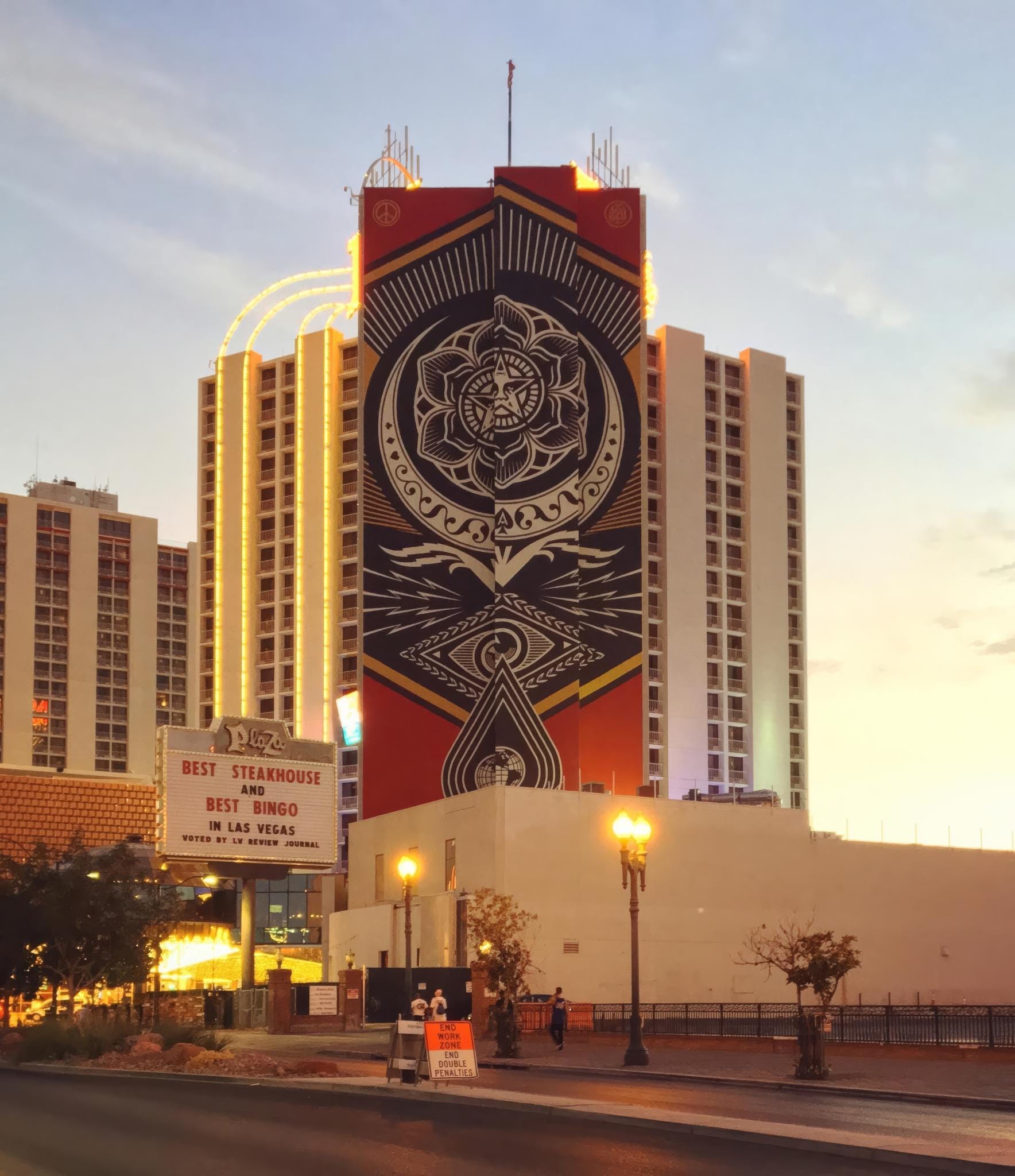
Blue Chip art is easy to spot in Las Vegas — a massive Shepard Fairey mural on the outside of The Plaza; a site-specific Ivan Navarro infinity mirror in the Cosmopolitan’s high roller poker room; a giant Frank Stella painting behind the registration desk of the Vdara Hotel and Spa. Yet, the city lacks the type of contemporary art ecosystem one would find in New York, LA, Paris, Hong Kong or hundreds of other modern cities. There is no “gallery sector”. The city’s few white-walled commercial galleries are more like art stores for tourists, centred around Pop Art, street art or prints by masters. The city has one institutional, collecting art museum, The Marjorie Barrick Museum of Art on the campus of the University of Nevada Las Vegas (UNLV) — at least until the new Las Vegas Art Museum opens in 2028. And museum quality exhibitions are sometimes hosted in The Sahara West Library gallery, operated by the Clark County Library District.
But if you are a serious collector or art tourist visiting Vegas and you feel like you just need more of the good stuff — exciting, meaningful, experimental contemporary art that will expand your mind — you might have to go rogue and find one of the half dozen or so alternative art spaces around the city. Just finding these spaces can turn into its own adventure. Some are nomadic; some are in semi-apocalyptic strip malls; some are inside artist’s homes or studios; many are open by appointment only; all are tucked away in the real Las Vegas, the parts of town most tourists never think about, where actual human beings live, away from the glitz of the strip.
Couper Russ gallery
Matt Couper and J. K. Russ moved to Las Vegas from Aotearoa in 2010. Russ is represented by PAULNACHE Gallery in New Zealand. Couper shows with the always buzzy La Luz de Jesus Gallery in Los Angeles. Both are accomplished, established artists who have exhibited extensively in galleries and institutions. They consider Vegas an ideal place to live and work, but they also consistently notice how few exhibition opportunities there are for local artists. In 2022, they opened Couper Russ Gallery inside their home, transforming the family room of a nondescript, two-level ranch with a pool into a pristine-looking white cube.
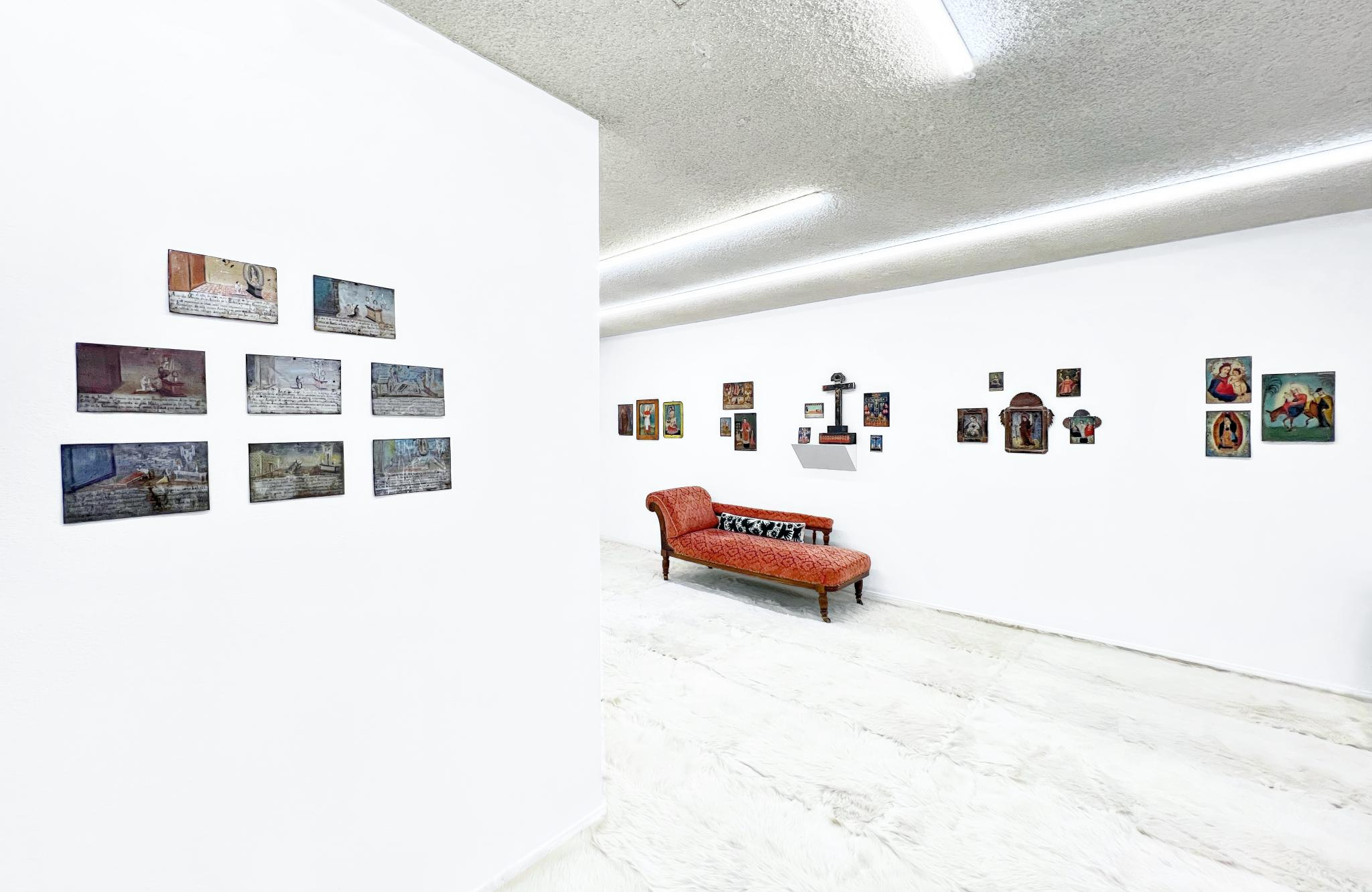
The curatorial focus of Couper Russ Gallery is strictly on Las Vegas based artists. Says Russ, “There are a lot of artists working away in their studios here. They are here and they are doing it, but they are not that visible, you know?” Couper agrees. “We started making a list of artists practicing in Vegas, and we knocked out like 150 really quickly.” Couper and Russ also routinely drop in on the MFA studios at UNLV. The fully-funded, three-year programme, which boasts several influential artists on its faculty, has turned out numerous successful studio artists in recent decades. When Couper and Russ work with an artist, they not only present the work professionally in their perfectly lit space. They also document the exhibition with high resolution images and create extensive writing about the works.
Most generously, Couper and Russ often hang the work in conversation with pieces by historically significant artists from their personal collection. “We can get a young artist from Las Vegas who is obsessed with drawing and put them next to a Philip Guston drawing, says Couper. That is a really big buzz for them and it also allows you to physically look at something that is from a very well known American artist alongside an artist just starting out that we think has potential.”
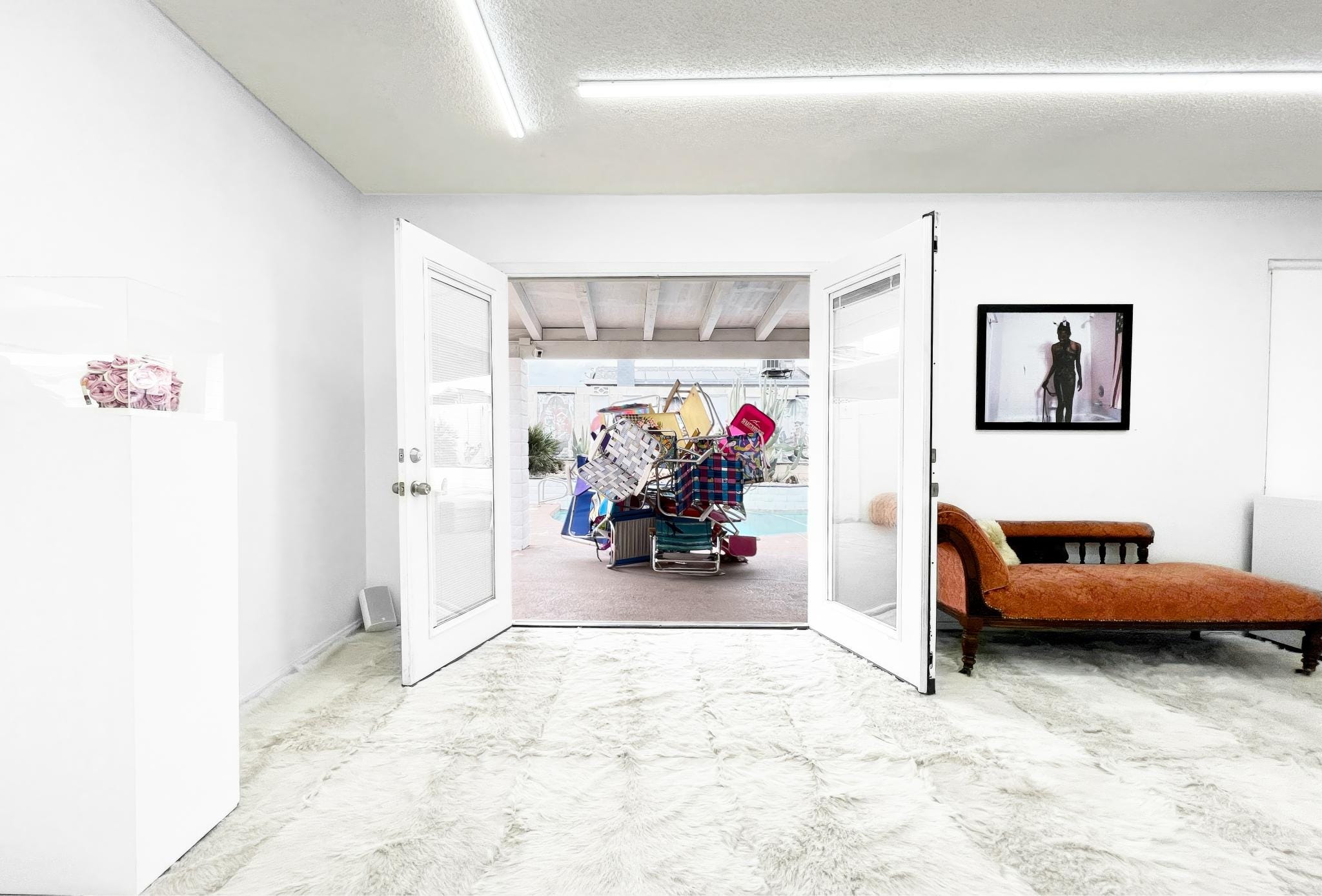
Couper Russ Gallery has no “openings” per se. The driveway is only big enough for maybe two cars, so visits are strictly by appointment. That limitation has done nothing to soften the gallery’s impact on the community. Artists and collectors who have visited the shows say they are particularly grateful for the “grey space” the gallery occupies. “If you go to a gallery on the strip, the impetus is on buying and selling the work. And if you go to a museum or institution, their impetus is on communicating something about society,” says Russ. Couper agrees: “Here, it is a little more informal and relaxed. People might be connected to the art world already, but we also aim to be a welcoming space for people who perhaps have not spent a lot of time in art galleries. They can bring their own experience to the work.”
Scrambled eggs
Like Couper Russ Gallery, Scrambles eggs prioritises the work of Las Vegas artists. Unlike Couper Russ, the space in which they show that work is always changing. Manny Muñoz founded Scrambled eggs in 2022. He had been looking at a lot of Vegas art on social media during COVID lockdown. Then, he says, “When things opened back up, I had this desire to go out and see all that art in person.” Muñoz realised that most of these Vegas artists had few places to show their work in public. An architecture student at the time, he had a little office space near downtown he had been renting as a studio. He decided to pivot and turn that space into a gallery.
“I was like, I think I can do this, says Muñoz. It is small enough to where if it fails, no one is going to know. I called up Brian Martinez, an artist I had been getting to know. He was a BFA student at UNLV. I felt like he has some of that academic education, so he might know what he is doing, so he can kind of help me figure it out. At the same time, he was super well connected outside the art scene. He grew up on the East Side of Vegas, which is primarily Hispanic. So that was something that was interesting to me, because it was also tackling the idea of black and brown artists, or underrepresented artists. It was kind of a big conversation at the time and I think it still is. But we do not really focus as much on that any more, because we are trying to look at artists more as a holistic part of the art scene and the community.”
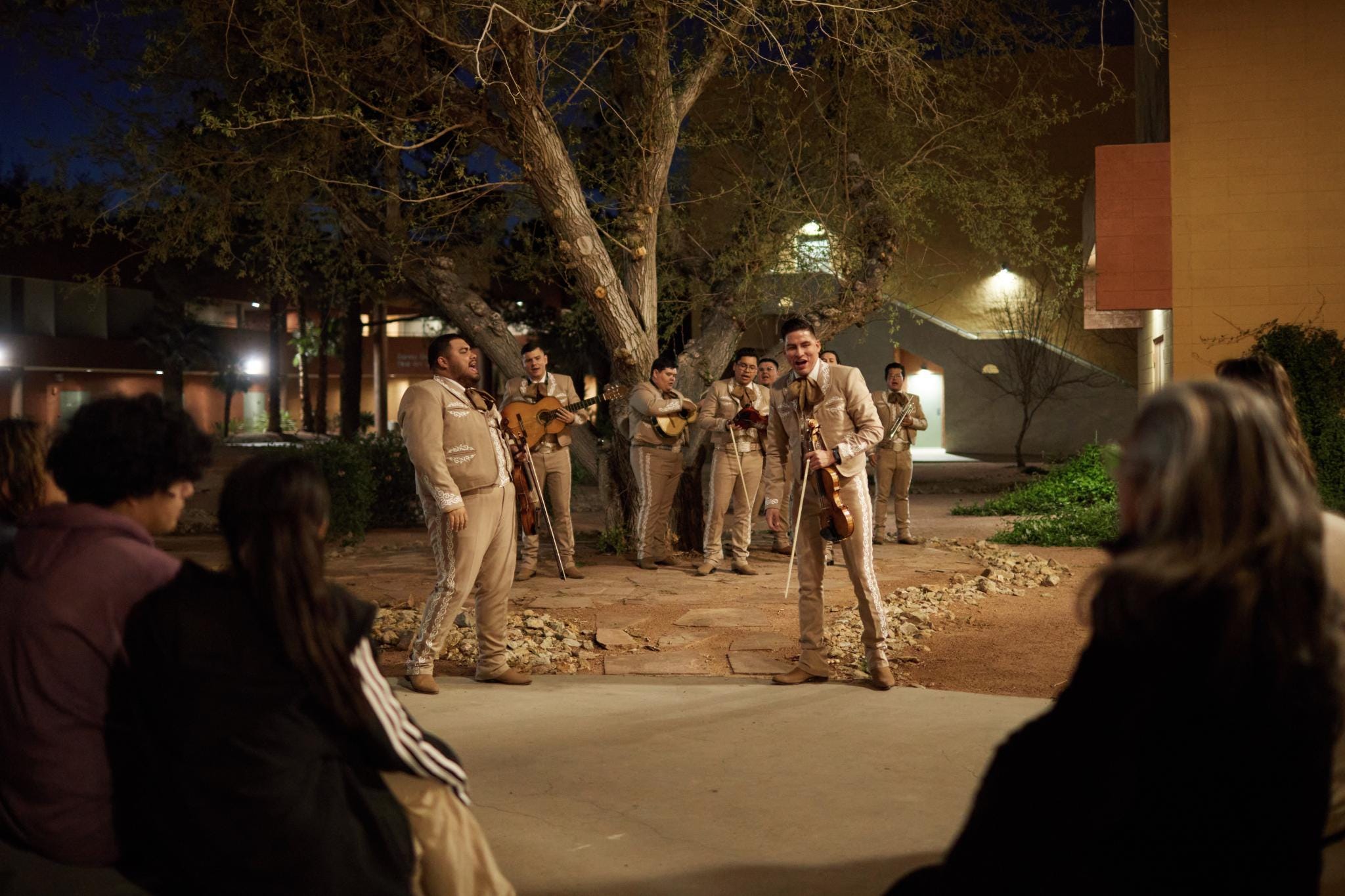
That first show was well attended, so Muñoz and Martinez invited another artist to do a show a few weeks later. That went well, so they invited another. Over the summer they put on six shows in about four months. Then Muñoz had to let go of the lease on the space because it was too expensive. After nearly a year of no shows, Muñoz reached out to the director of the Donna Beam student gallery at UNLV and asked if he was interested in collaborating on something. The director liked the idea of an outside curator coming in to do a show. “This was like almost a year since we had done our summer shows, so I hosted what we called Scrambled again, explains Muñoz. It was all the artists who had shown in our first six shows.” Muñoz raised a little bit of money for the show, which he spent on catering and a Mariachi band that performed outside the gallery under a tree. The show drew a huge crowd, which told Muñoz that he could have shows anywhere and the community he was building would show up.
Around this time, a little art book store called Hasta Siempre Books opened up downtown. Muñoz connected with Pedro Duran, the owner of the shop and found out there was a little back room included in the lease. He invited Pedro to curate an art exhibition in the space under the Scrambled eggs name. Pedro’s show was another success, which showed Muñoz that he could trust the curatorial part to others and just work behind the scenes. After a couple more Scrambled eggs exhibitions in the bookstore’s back room, Pedro moved to New York. Since then, Muñoz has been partnering with other spaces and curators, expanding his nomadic, community-centric model.
Meanwhile, he has been receiving mentorship from a Reno non-profit called The Holland Project and he started an interview series with his artists, which is hosted on Wendy Kveck’s popular contemporary art blog Couch in the Desert. He is also preparing for what will be the collective’s biggest exhibition, at the Sahara West Library, a sprawling, institutional gallery run by the Clark County Library District. As for the future, Muñoz says he eventually wants to transform Scrambled eggs into a real “third space”. Ideally that would mean having a permanent space that hosts experimental art exhibitions, maybe has a printing press, a music venue and spaces for local vendors and workshops. “I am always looking at it from the point of view of how we can use this for something beneficial to the community,” Muñoz says.
Available Space Art Projects
Available Space Art Projects (ASAP) opened in 2020, during the height of COVID. It was founded as a project space dedicated to artistic freedom and experimentation, by Homero Hidalgo, an artist who moved to Vegas to earn his MFA. Hidalgo was born in Ecuador and previously lived in Miami and San Francisco. One of the first things he noticed about Vegas was that it was missing the type of art spaces he had seen in other cities, where artists could cut loose and challenge themselves. According to Hidalgo, “you go to San Francisco or Miami and there are pop-up project spaces everywhere. So I figured why not get that started here in Vegas? The mission was to encourage artists to do their B-Side projects. I wanted to shake the leaves of the town so people could see more unconventional art.”
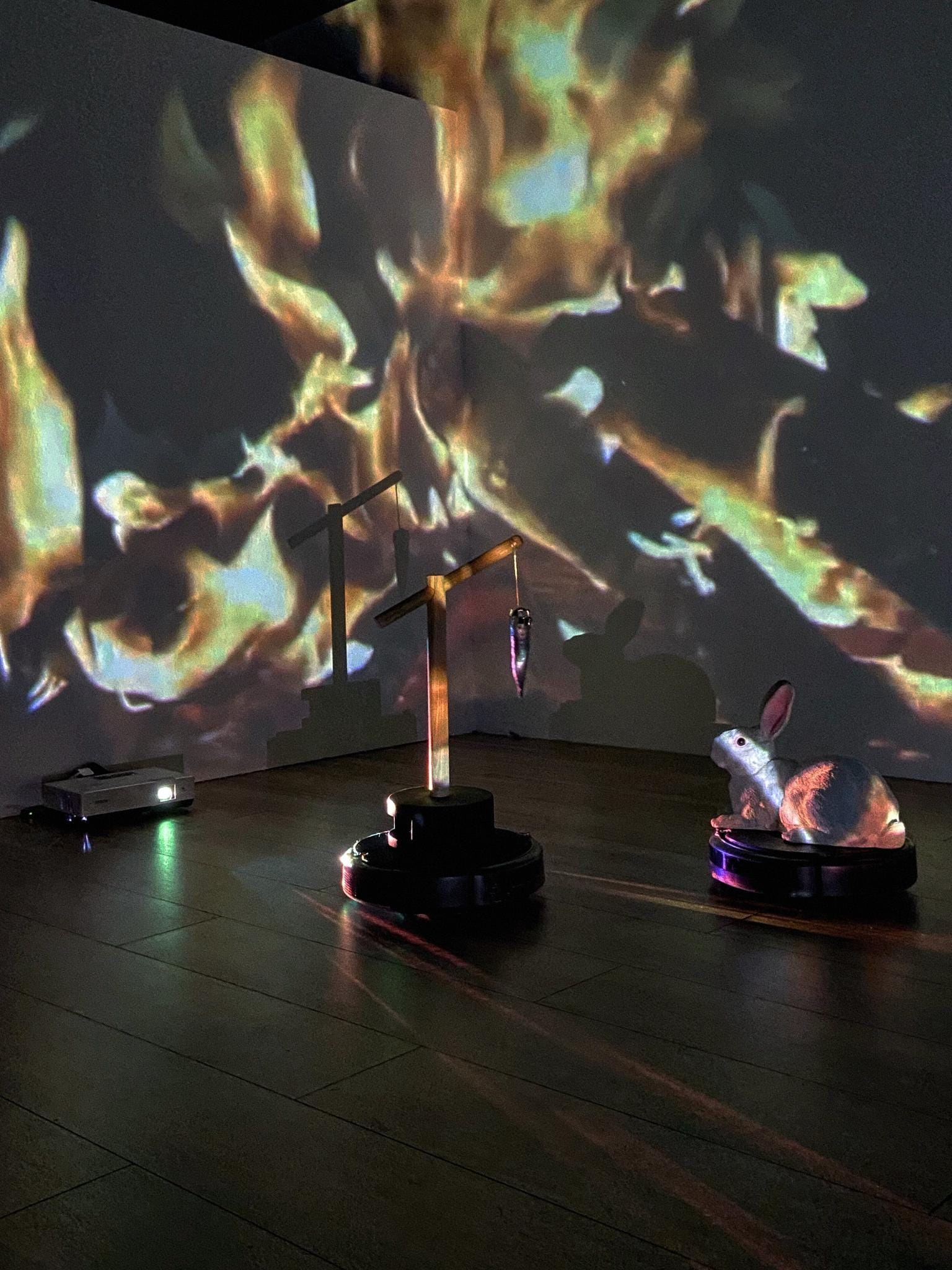
Hidalgo partnered with artist Holly Lay and secured a lease on a commercial space in a rundown strip mall called Commercial Centre, off Sahara Boulevard. ASAP started getting proposals from artists right away. At first, they said yes to everyone and gave the artists full reign to do whatever they wanted. Hidalgo was amazed at the quality of the work. He was also impressed at how the Vegas community turned out big for the shows and for the artist lectures. Soon, the number of proposals they were receiving grew to where they far outnumbered available exhibition slots. Hidalgo also started receiving a lot of interest from artists outside of Vegas.
After more than 30 exhibitions, Hidalgo started looking for a permanent space where ASAP could grow. He was also looking at the idea of buying a place that had some acreage so artists could branch out into land art projects. Then in December 2024, ASAP faced the most familiar of challenges that so many alternative art spaces encounter: gentrification. The wonderfully run-down strip mall the gallery occupied changed hands in a development deal, and they lost their lease. Since then, ASAP has been hosting exhibitions in the front space of artist Wendy Kveck’s studio — the same Wendy Kveck who runs Couch in the Desert, which publishes the Scrambled eggs artist interviews. (Kveck is a professor at UNLV and one of the most prominent artists working in Vegas right now. She is one of a handful of people, like Matt Couper and J. K. Russ, whose name comes up repeatedly when interviewing people in the Vegas art scene.)
Hidalgo says he is still contemplating what a permanent space for ASAP looks like. He wonders what it looks like to continue supporting Vegas artists and encouraging them to level up, while also expanding his programme to include more artists beyond Vegas, including Blue Chip artists. The ultimate goal might be to evolve the project into something evermore rare in the contemporary art ecosystem: a white wall commercial gallery that participates in the market while still prioritising experimentation and artistic freedom. Regardless, he says the most important thing is to keep encouraging the artists who live and work in Vegas to think big. He says, “People here are supportive of the arts. When we sell work, it is to Vegas locals. They are genuinely moved by the pieces they are buying. The reason why is because what we do always has the artist in mind. That is why we focus on the art and the artist first.”