(Originally published in AMA Art Magazine)
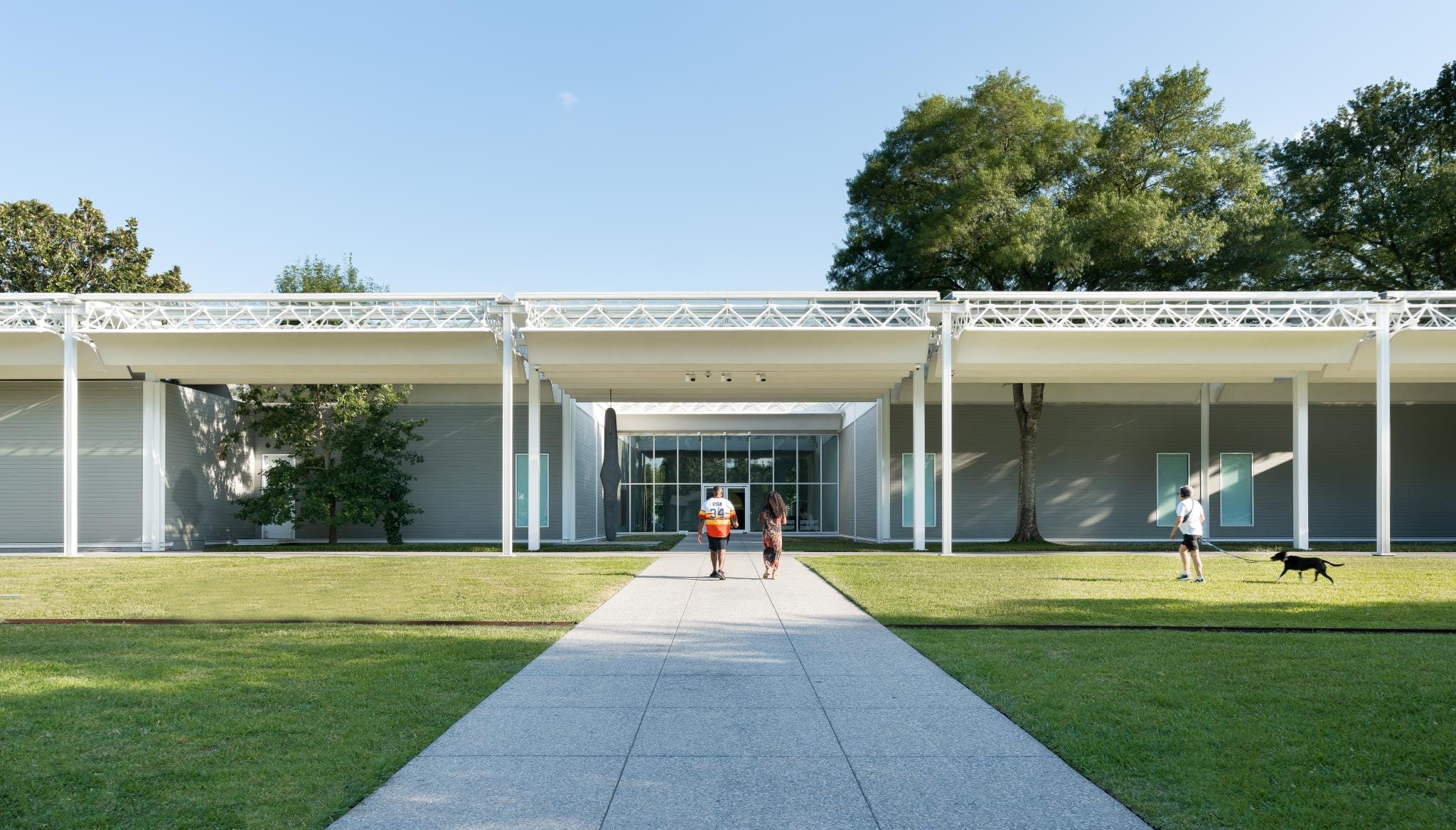
To an uninitiated passerby, treasures of Modern art would be the last thing suspected of lurking beyond the modest entrance to the Menil Collection in Houston. One might not realise they are at a museum at all. But this simple looking structure is actually the work of a master, the first building in the United States designed by renowned Italian architect Renzo Piano, who also designed Centre Pompidou and the Whitney Museum of Art. The steel trench in the front yard that looks like a rain gutter gone slightly mad? It is a work by legendary land artist Michael Heizer. And that other humble, windowless structure, about 150 metres away, with the otherworldly obelisk out front? That is the famous Rothko Chapel, home of Rothko’s most famous works, a suite of monumental black paintings he completed shortly before his death. (The obelisk is a sculpture by Barnett Newman.)
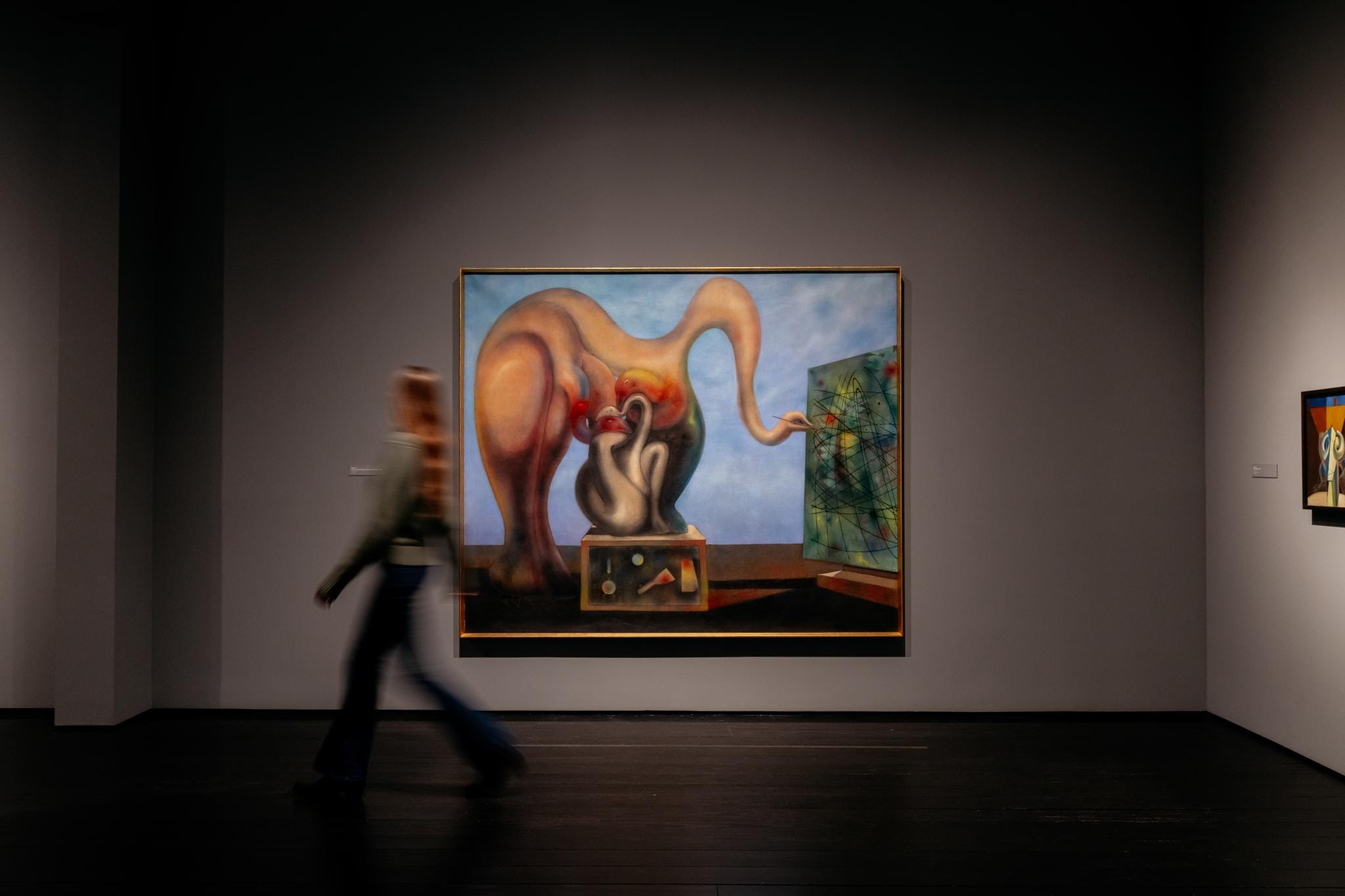
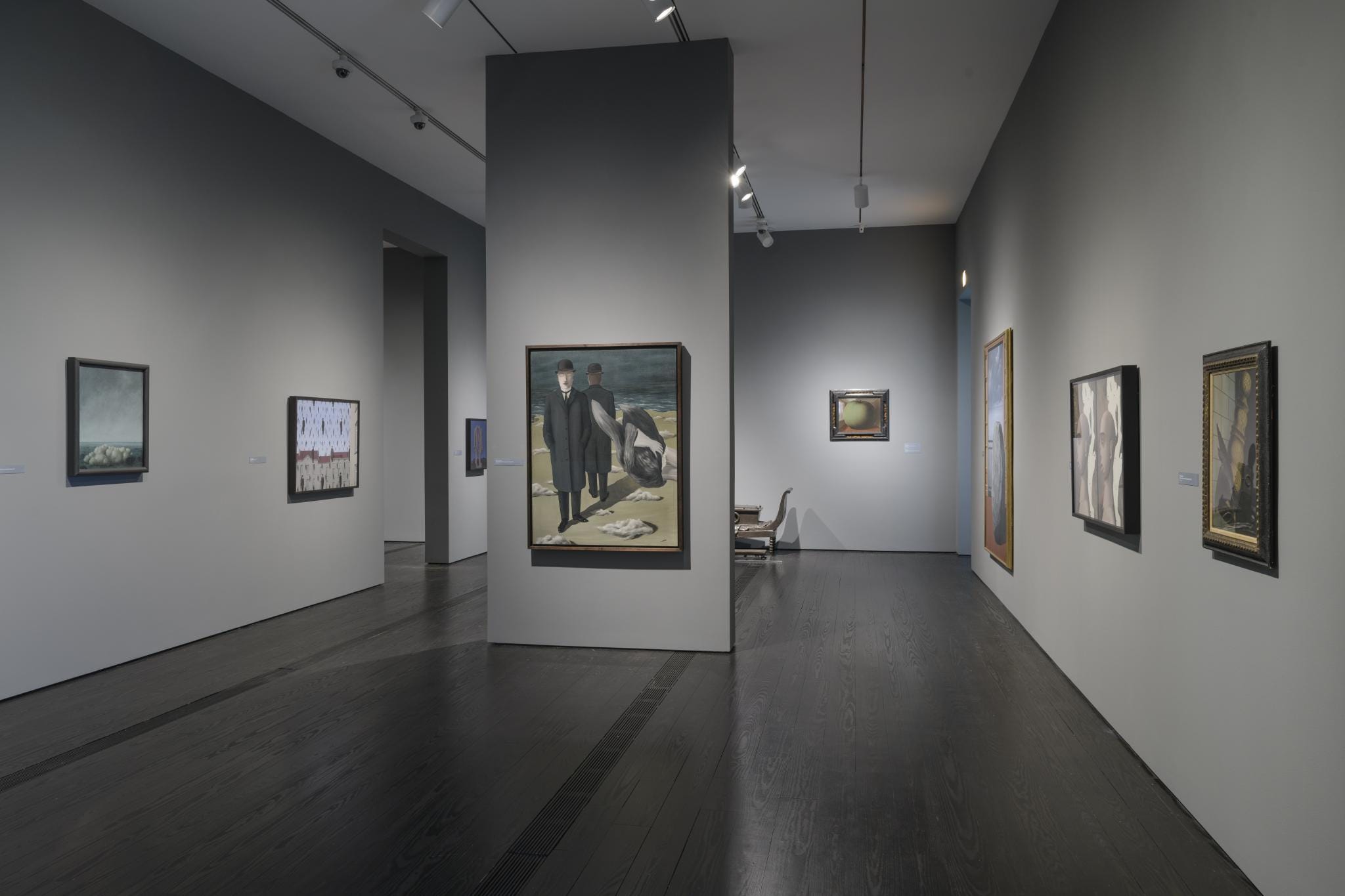
Dominique and John de Menil collected more than 10,000 works of art in their lifetime. This verdant, urban campus serves as the primary storage, research and exhibition hub for their life’s work, which includes one of the most important collections of Surrealist art in the world. The Menils were French transplants who found their way to Texas after fleeing the Nazis during World War II. Among their ex-patriot friends were Max Ernst, whom they commissioned to paint a portrait of Dominique, and René Magritte, whose work is well represented in their collection, and whose catalogue raisonné they also organised and financed.
Natalie Dupêcher is associate Curator of Modern Art at the Menil Collection. She oversees the Surrealism galleries, and has organised numerous exhibitions around the collection, including Meret Oppenheim: My Exhibition in 2022, the first-ever major transatlantic retrospective of Oppenheim’s work (co-organised by the Menil Collection, The Museum of Modern Art and the Kunstmuseum Bern). She recently shared her insights into the collection with me. Here is a partial transcript of that conversation:
I’ve heard the Menil has the largest Surrealist art collection in the US. Is that correct?
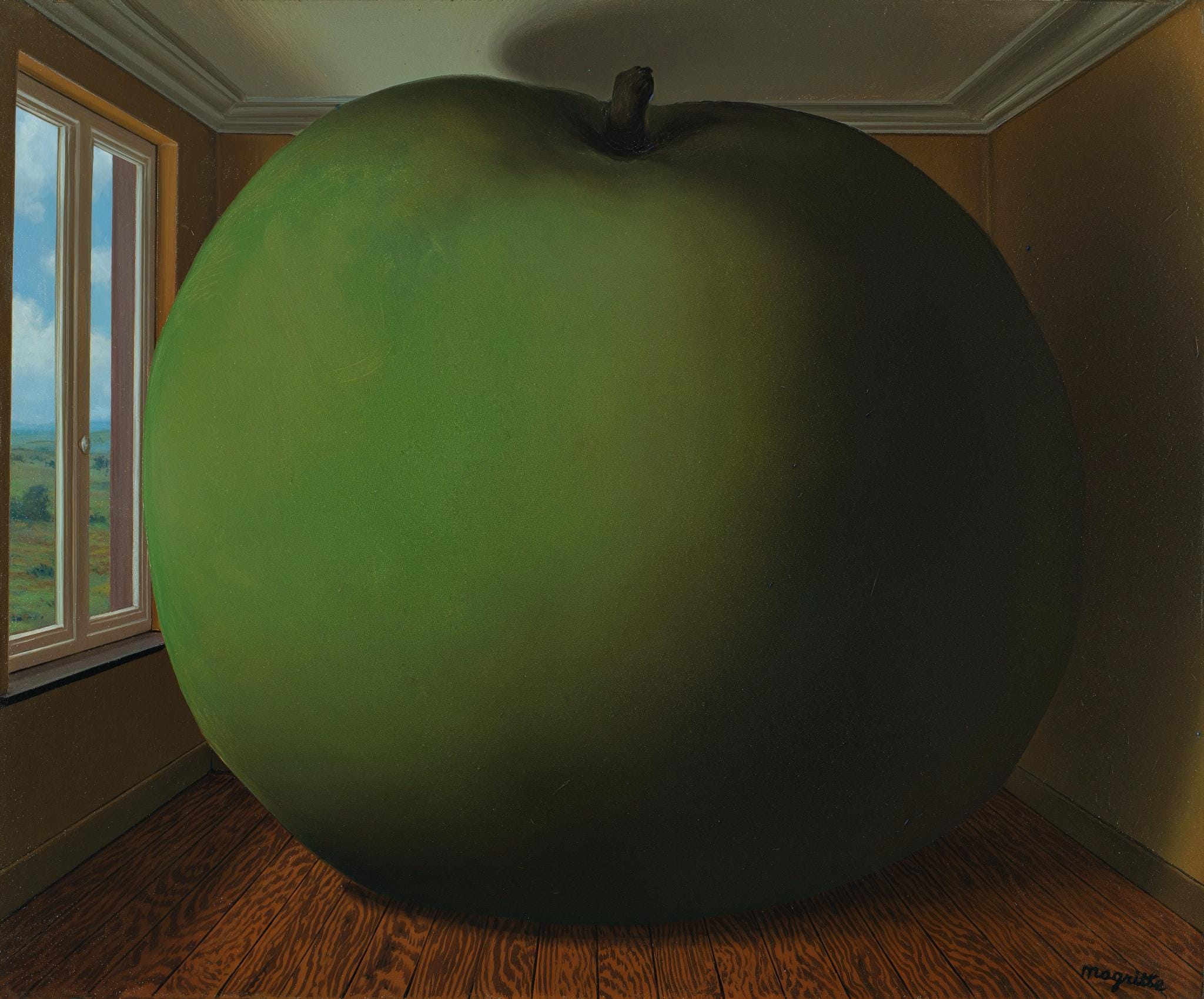
What we usually say is that we have one of the most significant collections, because it is difficult to quantify. In terms of numbers, we do have the largest number of works by René Magritte outside of his home country of Belgium. But more broadly, we say our collection is one of the most important, not the largest.
What makes it important?
From working with the collection and researching it, it seems clear to me that a large reason that many artists associated with Surrealism became so well known is in part because of Dominique and John de Menil’s championship of them. Particularly Magritte and Ernst, who are the artists we have in the most depth and in full panorama across their careers. The de Menils started collecting Magritte’s work in the 1940s, at a moment when Surrealism was not at all in vogue. In the US, Surrealism was considered old fashioned and overly narrative, not interesting, not on the cutting edge, compared to new movements of abstract art. But they were Magritte’s champions in this country. It was thanks to their enthusiasm in building their collection, mounting exhibitions, and publishing his catalogue raisonné that Magritte became as well known as he is in the US. Much of that is true of Ernst as well.
Why did the de Menils focus so much on Surrealism?
In an interview in 1982, Dominique de Menil spoke about the origins of her and John’s interest in Surrealism. It was a type of art that she did not really love at first. It took her a while to warm to it. They were working closely with Alexander Iolas, a gallerist in New York who showed a lot of the exiled Surrealists, and he was quite persuasive that, one day, the world would catch up to these artists. Eventually the de Menils became true believers, friends with many of the artists, and put on exhibitions in Texas and around the country.
I also want to mention that they were not only collecting Surrealism at this time. They had broad interests, and pursued it all simultaneously. For example, in the early 1970s, they opened the Rothko Chapel with these commissioned paintings by Rothko. The early 70s is also when they launched the Magritte catalogue raisonné, which was a huge logistical and financial effort. Also in the early 1970s, they financed the De Luxe show in Houston, one of the first racially integrated abstract art shows in the country. So they were huge supporters of Surrealism, but all of these other projects were on the boil at the same time.
When people use the word surreal today, does it mean something different than when the de Menils were collecting these works?
Surrealism has become a catch all, almost a synonym for anything strange or unbelievable or out of this world. It has become much more part of everyday vernacular, untethered from the art movement Surrealism with a capital S, that I work on, or that these artists were associated with. But Surrealism as an artistic and literary movement also changed over the years, from how it was originally formulated in 1924, when the first Surrealist Manifesto was written. In that manifesto, André Breton is really interested in automatism, automatic drawing, writing or thought — strategies to access pure thought without conscious control of the mind, how to get at dreams and access them directly. But the movement evolved from there. Magritte is a very different painter than, say, André Masson, who made automatic drawings in the mid-1920s. Magritte’s paintings are highly controlled and deliberately made. Surrealism also spread beyond Europe. It became an idea that was taken up by artists around the world. The wonderful exhibition, Surrealism Beyond Borders, from a few years ago, suggested that the core idea around Surrealism was about liberation. So Surrealism could become an anti-colonial tool for artists working in Latin America and North Africa in the second half of the twentieth century.
Breton praises the word freedom in the first Surrealist Manifesto.
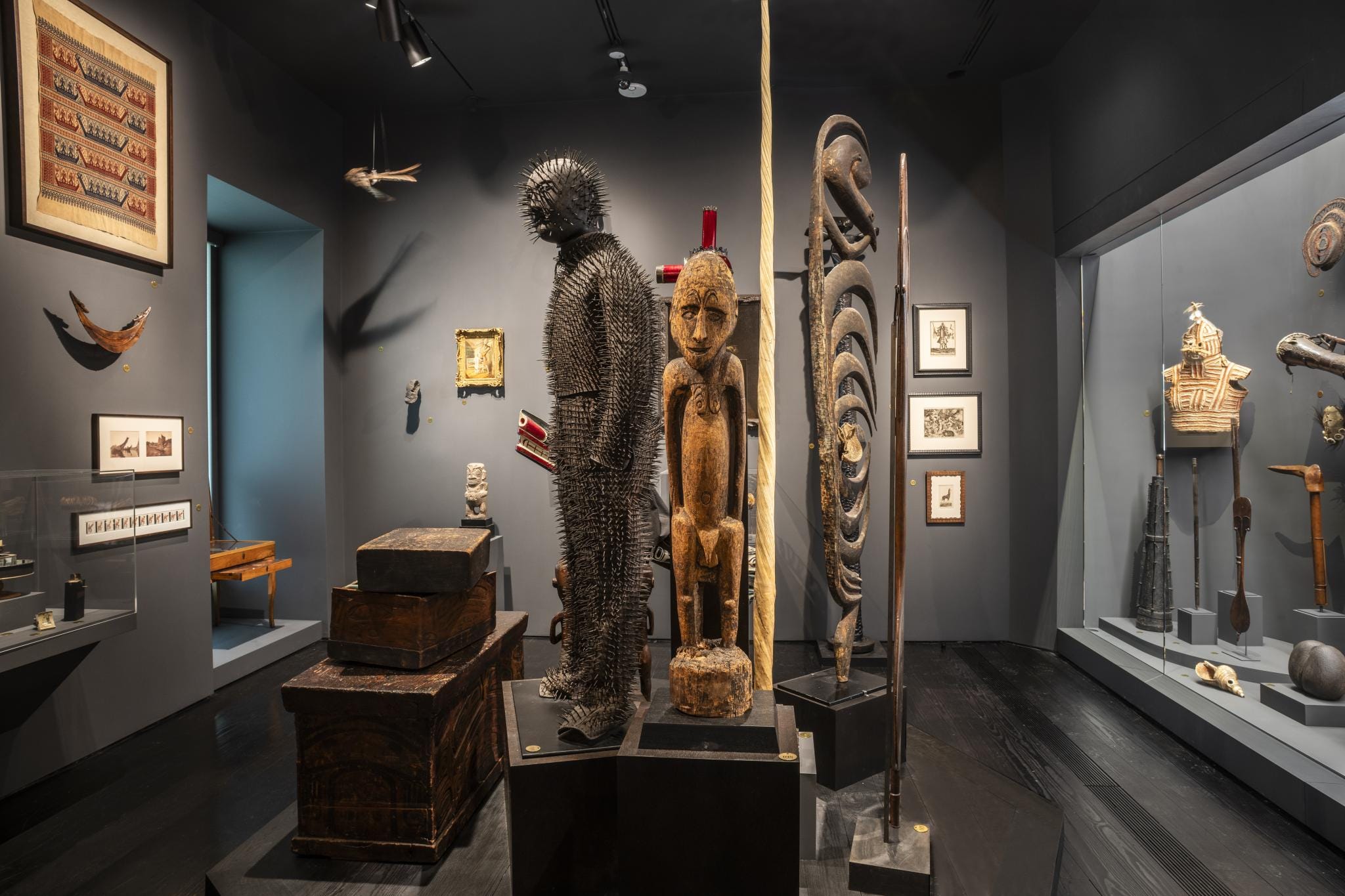
Related to that, I think, is that Surrealism never had a unified look. If I asked you to imagine a Cubist painting, we would probably picture something that looks relatively similar. But Surrealism is very different. In the canon, we have Magritte’s paintings of bowler hats and fluffy clouds, so precisely painted that they look photographic; we have Meret Oppenheim’s teacup; we have Wifredo Lam; there are automatic drawings, and collaborative exquisite corpses. There is abstraction, representation, photography, sculpture. Surrealism became something quite open or fluid. A lot of artists saw it as an invitation rather than a closed system.
I wager most people picture Dali’s melting clocks when they think of Surrealism. Were the Menils supporters of Dali?
We do have a work in the collection that they acquired in the 70s, a drawing, but they were not major collectors of his work. Dali had a real genius for self promotion and provocation and an interest in pop culture, and he embraced having his art seen in not just a fine art context. I wonder if that is part of the reason why his name is more familiar to many people than other Surrealist artists. Dali and Magritte both created paintings that capture the real world, but with something crucially out of sorts. Something is amiss, like the melting clocks, or the face covered with ants. In addition to that, both created representational paintings. Max Ernst’s work is not legible in that same way. He is not an abstract painter, but he is not creating realistic paintings of the real world, either.
Contradiction was important to Ernst. How is it important within Surrealism in general?
The famous line I have in mind about contradiction is “as beautiful as the chance encounter of a sewing machine and an umbrella on a dissecting table,” from the 19th century poet, the Comte de Lautréamont, who predates the Surrealists, but who they took up. Ernst phased this idea of contradiction slightly differently: two things coming together on a plane that does not suit them. That contradiction can be present in a painting, but where I see it most operative, where they literalise it, is in the Surrealist love of collage. They are putting two things, two clippings, two cut-outs from magazines or newspapers, together on a plane that does not suit them. Something comes from that juxtaposition that was not present within the two components individually. So many Surrealist artists made collage works on paper, in part because of their broad interest in the possibilities of juxtaposition, and the charge that could result from it.
Is collage well-represented in the Menil Collection?
Yes. We have collage works on paper by many artists associated with Surrealism, as well as postwar and contemporary artists who were influenced by the Surrealists. Then there are works that might not be thought of as collage, but in a way are. We were speaking about the Meret Oppenheim exhibition, and her famous fur-lined teacup, from 1936, is a collage object. The French word colle, the root of collage, means glue. The way that work was made was to glue fur to the teacup, saucer, and spoon. The key operation in collage is this kind of uncanny juxtaposition. Something seems familiar, like an ordinary tea set. It’s something we see everyday, so it fades into the background. Then, through this small but radical gesture of covering it in fur, the tea set becomes different, uncanny and uncomfortable. That is the magic of this act of putting two things together that seem like they should not belong.
Many Surrealists were first Dadaists. But Dada was nihilistic. Was Surrealism’s embrace of contradiction an acceptance of the absurdity that ignited Dadaism?
I see that interpretation. There is an organising force within Surrealism that was not present in Dada when it kicked off in 1916. Dada is more diffuse and explicitly anti-art. And yes, this interest in contradiction is at the heart of Surrealism. A lot of the visual strategies are about creating a sense of surprise or dislocation in the viewer — I am looking at something that seems familiar, but something is off, so now I am in the world of the unfamiliar. Surrealism also had an ambition to affect daily life, and had a real political force. A recent exhibition in Munich, Surrealism and Antifascism, addressed some of the episodes of resistance that figures like Ernst and Breton, or Claude Cahun, took up. That’s really important: Surrealism wanted to reform the way we think about our human existence and our relationship to others. And there is something about the artistic strategy of defamiliarisation that goes to that aim, or ambition. We have become so used to our everyday life that we do not really notice it. We are going through the motions without having awareness. Being surprised or shocked or confronted by something unfamiliar or uncanny was meant to be an awakening. So there is a political charge in that idea.
Does that make Surrealism a hopeful movement for us today?
In some ways, yes. One thing I find hopeful in it is the multiplicity we were talking about earlier. That there are so many artists, writers, poets, dancers and musicians who took inspiration from Surrealism, transformed it and made it new again. Eventually, over the years, the movement became a home to so many types of artists from so many different backgrounds. That goes back to the fact that there is not one aesthetic. There is a set of philosophical principles, like the idea of freedom, and making the familiar unfamiliar, and certain political commitments against fascism and totalitarianism. Some art movements from the past might not feel as alive as Surrealism does today. I am not sure hopeful is quite the right word. But inspiring. Or instructive.