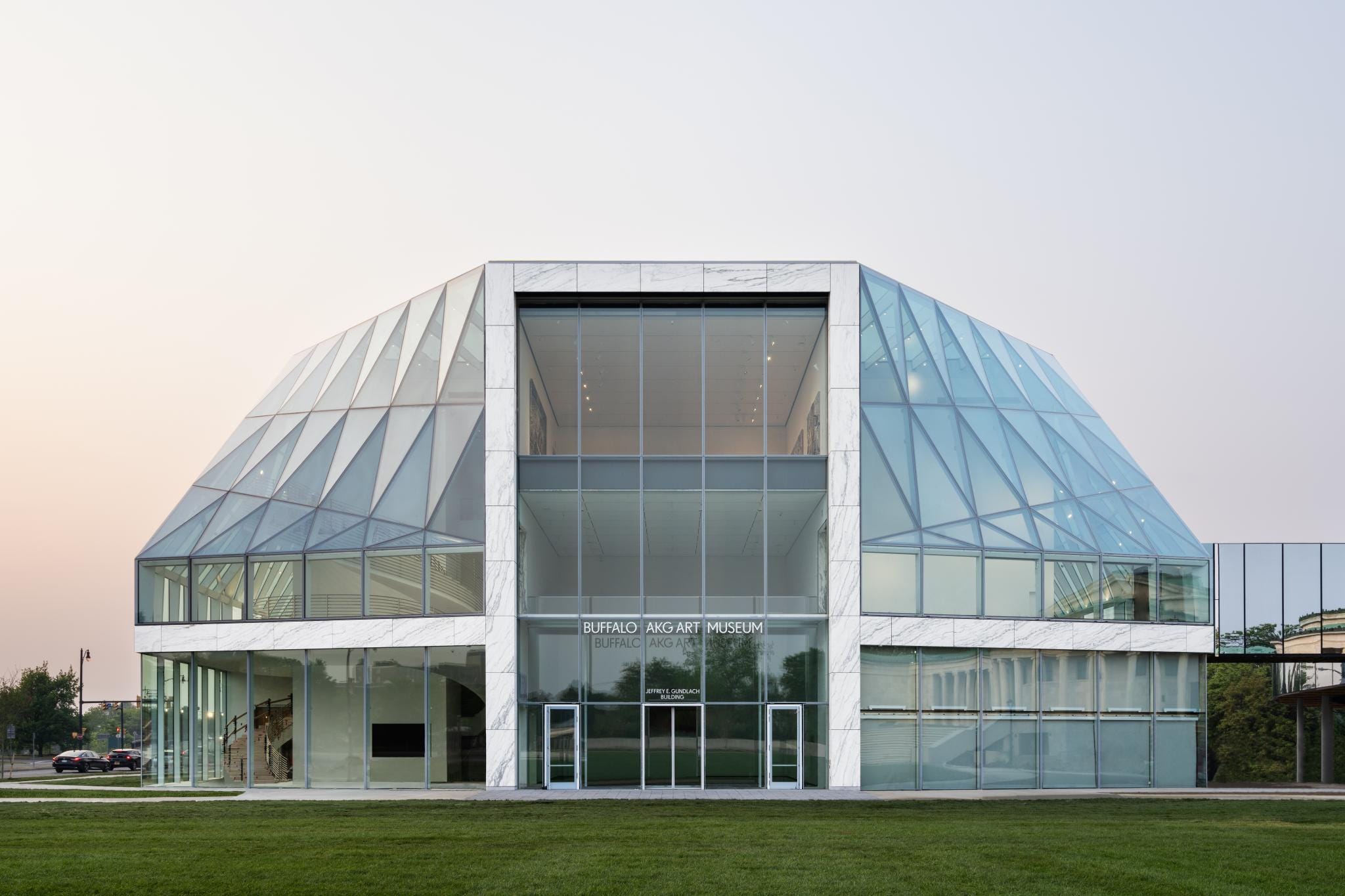
Originally published in AMA Art Magazine, 2026
A landscape painting can also be a time capsule, in more ways than one. It can show what an artist was doing at a particular point in their life, helping to explain their artistic evolution. And, faithfully executed, it can also give a good idea of what nature was up to at that particular time and place. That first part may be of interest to art lovers; the second could be more important to scientists and policy makers.
“Northern lights”, an exhibition originated at Fondation Beyeler in Basel, Switzerland, that then traveled to Buffalo AKG Art Museum in New York, features more than five dozen landscape paintings depicting boreal ecosystems. They were all created by Scandinavian and Canadian artists between 1880 and 1930. From the current vantage point, a century on, it is indeed fascinating to examine the ways these artists ended up influencing art history. The exhibition also makes disturbingly clear how much the part of the world these artists painted has changed.
“We are looking at paintings that depict the boreal forest, so of course that brings us into the future easily,” says Helga Christoffersen, Curator-at-Large at Buffalo AKG, and co-organiser of “Northern lights”. “What does this mean at this moment, to make a historical exhibition that depicts this forest? Looking back at the context when this work was produced, it depicts this glorious outdoors, but it is also very clear that artists were aware of the forest’s fragility. Some of these painters were actually buying the land they were painting to preserve it, because logging was on the rise at that time on an enormous scale. It was in their face that the forest was getting cut down.”
Future forests
When the “Northern lights” exhibition debuted at Fondation Beyeler, it included a contemporary digital work (absent from the iteration of the show that traveled to Buffalo). Created by Danish artist Jakob Kudsk Steensen, this work is titled Boreal dreams (and is available to view online). It basically visualises how the boreal landscape will adapt as the planet warms due to climate change. Steensen created the work in collaboration with sound artist Matt McCorkle and dream scientist and writer Adam Haar, based on research they conducted at the Marcell Experimental Forest in northern Minnesota. That is where scientists created a network of giant outdoor glass chambers that surround sections of forest and simulate rising temperatures.
At + 2.5°C, the permafrost begins to melt and bogs dissipate. Microorganisms are released that change the environment and also change the physical makeup of human beings. At + 4.5°C, a tipping point is reached where the chronobiology, including circadian rhythms that affect sleep of plants and humans is affected. Finally, at + 9°C, the boreal environment is completely altered to the point where the only way we can experience it is either in our dreams, or through artistic or technological recreations such as paintings or digital environments.
“Boreal dreams is a very important component of this project, Christoffersen says. It puts some pieces together for the audience. Minnesota is the southern frontier of the boreal forest. That is where the composition of the ground is changing. We as museums, we show historical material, things created in the past, but then we have to ask ourselves what does it mean in the present. These things are not locked in time. So what are we saying to our audience today? Why does it matter looking at these paintings now? These are the questions we need to reflect upon, not to just say these are beautiful landscapes, and clap clap clap, we should celebrate them.”
However, historical painters featured in “Northern lights” did not, for the most part, focus their work on the environmental destruction they were witnessing — and neither, for the most part, does the exhibition; a notable exception being The yellow log (1912), a painting by Edvard Munch that depicts several sickly looking, felled trees in an otherwise healthy forest. Rather, the painters engaged in something more like a loving celebration of the boreal world. They tapped into what Christoffersen calls “a painterly relationship with nature” — using the subject as a way of exploring their personal artistic innovations. The title of the exhibition might suggest those innovations included painting the actual northern lights, the aurora borealis. But only one painting in the exhibition shows them — an undated study done in northern Norway by Swedish artist Anna Katarina Boberg (1864-1935). “From the outside, people say, ‘oh, they have these dancing lights in the sky, all of the painters must have painted them’, Christoffersen says, smiling. But no. There is only one painter in the show who dedicated her life to painting the northern lights. She did it for 30 years, traveling with her little skin suit — but that was an extreme. Many of these painters were much more occupied traveling across Europe and connecting to avant-garde conversations at the time, in a painterly sense. But if you look at those painters and think about their work, what you can say is that across the board light played an enormously important part in their innovations. Absolutely, what these painters mastered was an ability to paint light. There is such a change of light at this latitude because of the climate, because of the forest and the very outspoken seasons. There is a lot of painterly material, if you will.”
Nordic connections
Another important thread in the “Northern lights” exhibition’s story is the influence the Scandinavian artists in the show had on the evolution of Canadian art history. The show includes a trove of ephemera documenting something called “The exhibition of contemporary Scandinavian art”, which traveled the US starting in 1912, and visited the Albright Art Gallery (now Buffalo AKG) in January 1913.
“A number of artists who were on the forefront of the Canadian avant-garde, John Edward Hervey MacDonald in particular, traveled across the border to see that exhibition in 1913, Christoffersen says. The boreal forest these Scandinavians were painting was the same as the forest in Canada. This was a watershed moment for Canadians. It is more complex but in short you could say the Canadian artists felt that they saw a unique and characteristic path to interpreting a northern landscape. It became this launch of a painterly language, a movement, an avant-garde that set out with a project to specifically give voice to a Canadian identity and to a particular Canadian style of painting. It was very influential for the subsequent formation of the Group of seven [one of Canada’s most influential Modern art collectives, Editor’s note], which came together in 1920. Our exhibition also surveys that link.”
Such a curatorial gesture — bringing fresh attention to a link between northern artists from different regions — is the raison d’être of a larger programme at Buffalo AKG Art Museum called Nordic art and culture initiative. This programme will, over the planned course of 60 years, focus significant resources on organising exhibitions and cultural programming that draws attention to artists from Denmark, Finland, Iceland, Norway, Sweden, the Faroe Islands, Greenland and the Åland Islands. It will also help Buffalo AKG assemble what organisers promise will be “North America’s leading collection of contemporary art from the Nordic region.”
Christoffersen is the Nordic art and culture initiative’s founding curator. She says the project emerged in part out of a process of reflection that occurred during the museum’s recent multi-year closure for renovation and expansion. “I think the last few years have shaped institutional missions all around, Christoffersen says. The art world has grown so large and so fast, it is hard for a big museum to say they are modern and contemporary and they present all the important modern and contemporary art in the world. That rings very shallow.” Instead, she says curatorial departments are now being organised in specialised ways that are often geographically driven. Rather than trying to pretend they can show everything, they focus on the particular strengths of their collection. “For example, if we focus on Chinese contemporary art, we are already way behind, Christoffersen says. Several other museums have already dedicated decades (or centuries) to that direction. So we ask, is there anything we can add? That is the major factor that focused our attention on the Nordic region, a place in the world that has many solid histories, great museum traditions, great artistic traditions, very active art scenes to date, but is also a part of the world that is under-represented in America.”
There are, in fact, few if any institutions anywhere, even in the Nordic world, that have been organised to specialise in Nordic art. There are some that centre one nation — Swedish art, Danish art, Norwegian art, Icelandic art, etc. But Buffalo AKG is looking at the Nordic region in its entirety. “Given its wingspan of 60 years, we can do something extraordinary, Christoffersen says. We can build the biggest collection of Nordic contemporary art anywhere. The potential is that we can move a very big needle in terms of access and understanding of this part of the world. We can also dig a little deeper, to see just how closely we are all linked. It is a bridge. In our current climate, to say something mild, these cultural bridges are important and they matter. It is good to be reminded of the things that are shared.”