Originally published in AMA Art Magazine
“Tell Clyfford I said ‘Hi’”, on view at the Clyfford Still Museum in Denver, Colorado, includes examples from a body of Still’s work most people have never heard about — representational images Still created in the mid-1930s during visits to the Colville Reservation, an Indigenous community consisting of twelve Confederated Tribes in the American state of Washington. These works document the people Still met on the reservation, as well as the landscapes he saw and the work that was then happening on the Coulee Dam, a massive infrastructure project that flooded the Columbia River and destroyed many Indigenous sacred sites.
It may surprise people to learn that Still was an accomplished representational painter before transitioning into abstraction. But there is an even better surprise lurking in this exhibition — a surprise of didactic proportions. Along with the usual museum labels, the ones that add advanced context to an artwork, are labels sharing impressions of the works offered by children. A label for PH-762, a massive, 238.8 × 393.7 cm abstract canvas Still painted in 1970, reads, “I like the colours… white, yellow, red, black and… GREEN! A green frog! — Charlotte, preschool, Nespelem Head Start”. A label, for PH-194, a smaller abstract painting from 1947, simply reads, “I love this picture soooo much. — Jules, preschool, Nespelem Head Start”.
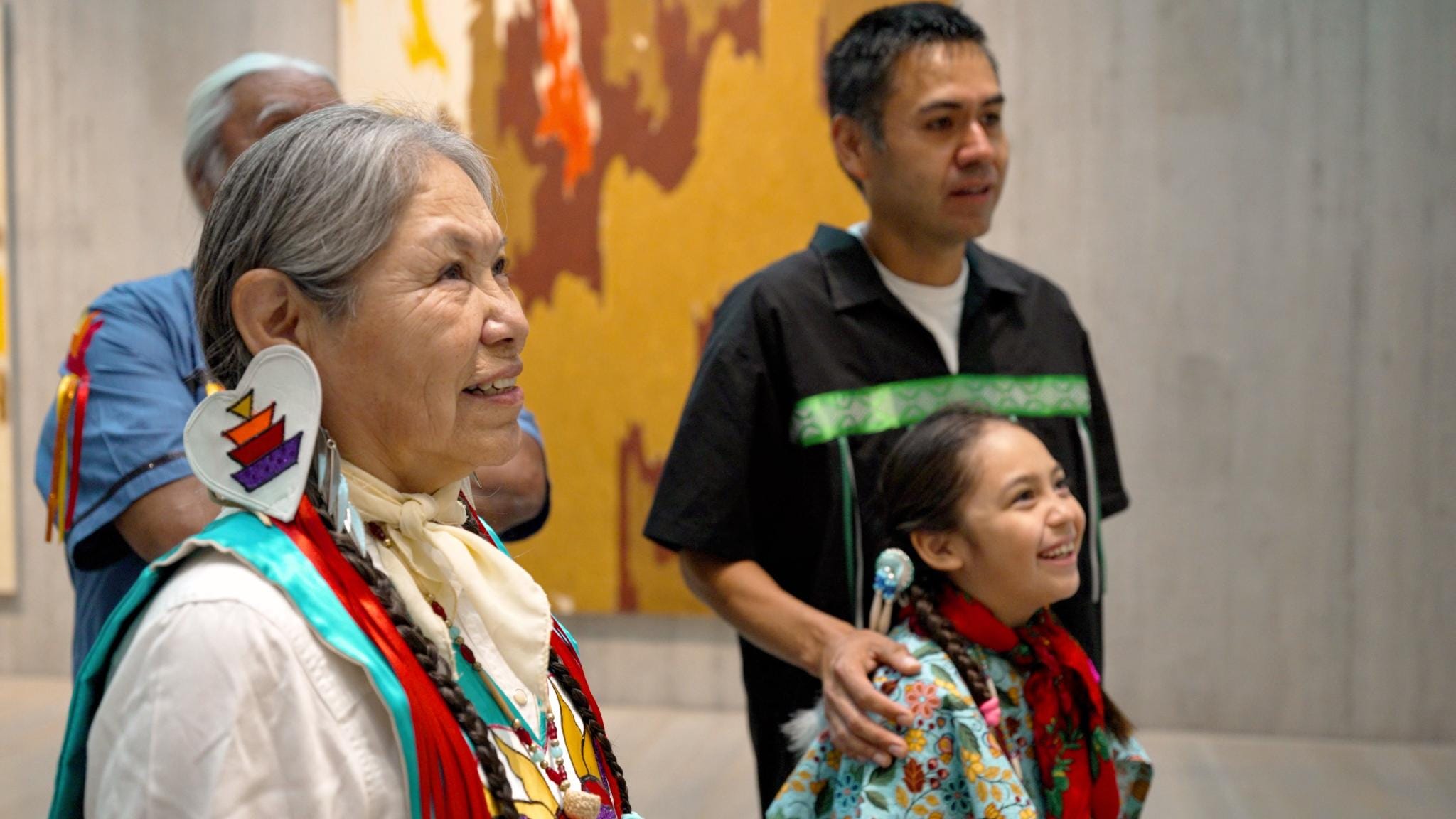
Nespelem Head Start is one of several schools currently operating on the Colville Reservation. Children from those schools co-curated “Tell Clyfford I said ‘Hi’”. Some of the kids are descended from people whose portraits are in the show. “The kids were able for the first time to see images of their relatives from that time,” says Michael Holloman, an enrolled member of the Colville Tribes who teaches courses in Native American art history and studio arts at Washington State University, and helped organise the exhibition. “It was remarkable for the children to recognise their homelands and their great grandparents or great-great grandparents.”
But Holloman was particularly excited that the children’s curatorial choices did not stop with the representational images they recognised. “They included work Clyfford did later, his more noted abstract work, Holloman says. The children absolutely embraced that work and brought their interpretations to it in a way that I think would have made Clyfford proud. Because he really did not want to provide descriptions and interpretations directly about his work. He wanted people to have their own kind of take. And the children, of course, were more than willing.”
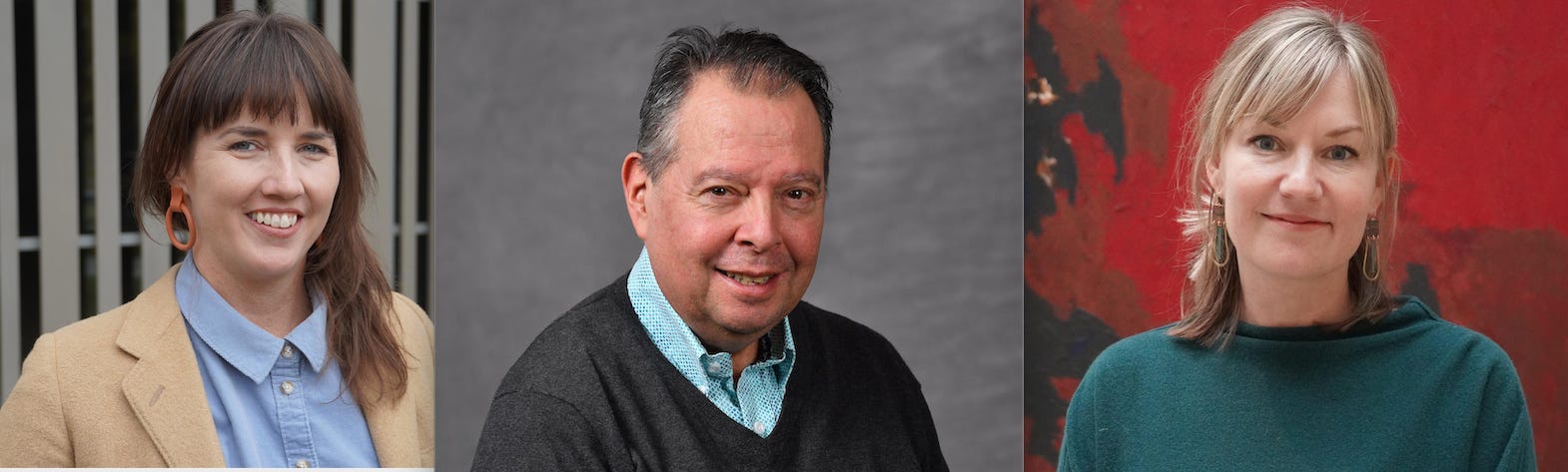
“Kids are just so fearless when it comes to approaching Still’s work,” says Bailey Placzek, curator of collections at the Clyfford Still Museum. Placzek leads the project alongside Nicole Cromartie, director of learning and engagement, to include kids’ perspectives on wall labels. The idea first emerged during preparations for an earlier exhibition in 2022, called “Clyfford Still: Art, and the Young mind”, which Placzek and Cromartie also co-curated with children. “That project was life-changing for me, Placzek says. Since we opened in 2011, it was always such a conundrum for us — how do we make people not feel like they need an advanced degree to understand these works? Multiple people came forward and said, I love these early galleries showing his representational works, but as soon as I hit the first abstract gallery, you lose me, I feel uncomfortable.”
Placzek realised kids did not have those hangups. “The ‘Young mind’ show taught us that kids just dive right in and engage with the works with no preconceptions about what they think they should know, or how they should talk about it,” she says. So she and Cromartie started documenting what children said and did around the paintings, and adding those impressions to wall labels and to the descriptions on the website. “Children are so confident, they are so playful, says Cromarite. They just walk right in and are like, this is a nacho or whatever. There are barriers that adults put between ourselves and abstract work because we think we need an art history background. Children just do not have those kinds of hangups.”
“The vast majority of adult visitors reported that reading the children’s perspectives on the wall made them feel more confident in their own interpretations of the abstract works, Placzek says. That was just a light bulb moment for me, as a curator for this collection. So, from that moment on, we decided every exhibition, no matter what it is, we are going to have children’s perspectives in the galleries. Then to have this opportunity with the Colville school children, to have their perspectives on works that they have this tie to, is really exciting.”
Elder building
Visitors to “Tell Clyfford I said ‘Hi’” may be curious how an artist associated with New York came to have such a deep connection with an Indigenous community in Washington. It is true that Still is associated with Abstract expressionists, a group of artists sometimes referred to as the New York School. He was, in fact, the first of that group to free his work from representational imagery. His earliest New York shows, in the galleries of Peggy Guggenheim and Betty Parsons, were cited by his contemporaries as crucial influences on their own paths to abstraction. But Still’s relationship with those other artists was tenuous, and he was exhausted by New York. He had a Western state of mind: born in North Dakota, raised in Washington State and moved with his family to rural Alberta in his 20s, where he worked on his father’s farm. When he started painting at age 15, most of his works were Western landscapes and depictions of farmers.
After earning his undergraduate degree in Spokane, Washington, he enrolled in graduate fine art courses at Washington State College (WSC). That is when he began visiting the Colville Reservation. He was so impacted by those visits that he convinced WSC to invest in a summer art programme there, for which he became one of the first teachers. Still continuously made artworks during this time, but barely showed them. When he died in 1980, his last will and testament stated, “I give and bequeath all the remaining works of art executed by me in my collection to an American city that will agree to build or assign and maintain permanent quarters exclusively for these works of art and assure their physical survival.” More than two decades later, Denver won the bid to become that city. The collection they received from Still’s estate consisted of 93 percent of Still’s total lifetime output — 750 oil paintings on canvas and 1,300 works on paper, including the works he made on the Colville Reservation.
Nicole Cromartie, director of learning and engagement at the Clyfford Still Museum, says outreach to the Colville tribal community has been paramount to the museum’s mission from the beginning. “They have been incredible thought partners for the museum team, she says. They have been instrumental in identifying some of the portrait sitters, and building on the notes that Still had in his diary about the community and cultural traditions.” “Tell Clyfford I said ‘Hi’” was born from a discussion between Cromartie, Placzek, Holloman and John Sirois, the traditional territories advisor for the Confederated tribes, about how they wanted their partnership to continue in a way that felt reciprocal and equitable.
“John Sirois said, we want you to involve our children, Cromartie recalls. He said all of this knowledge that is being held at the museum, it does not matter if we are not passing it along to the children. He said, it is important for us to build our elders. That really shows their respect for children, which is very value aligned for me. I am very much led by children. In my own practice, children have been some of my greatest teachers.”
Holloman echoes that sentiment. “Intergenerational memory and importance is so much a part of Native American culture within the region of the Columbia River Plateau. It is so much a part of who we are as a people. And with that comes protocols, activities, your relationship to a community. All these things are helping instil and strengthen an understanding of oneself within that relationship.”
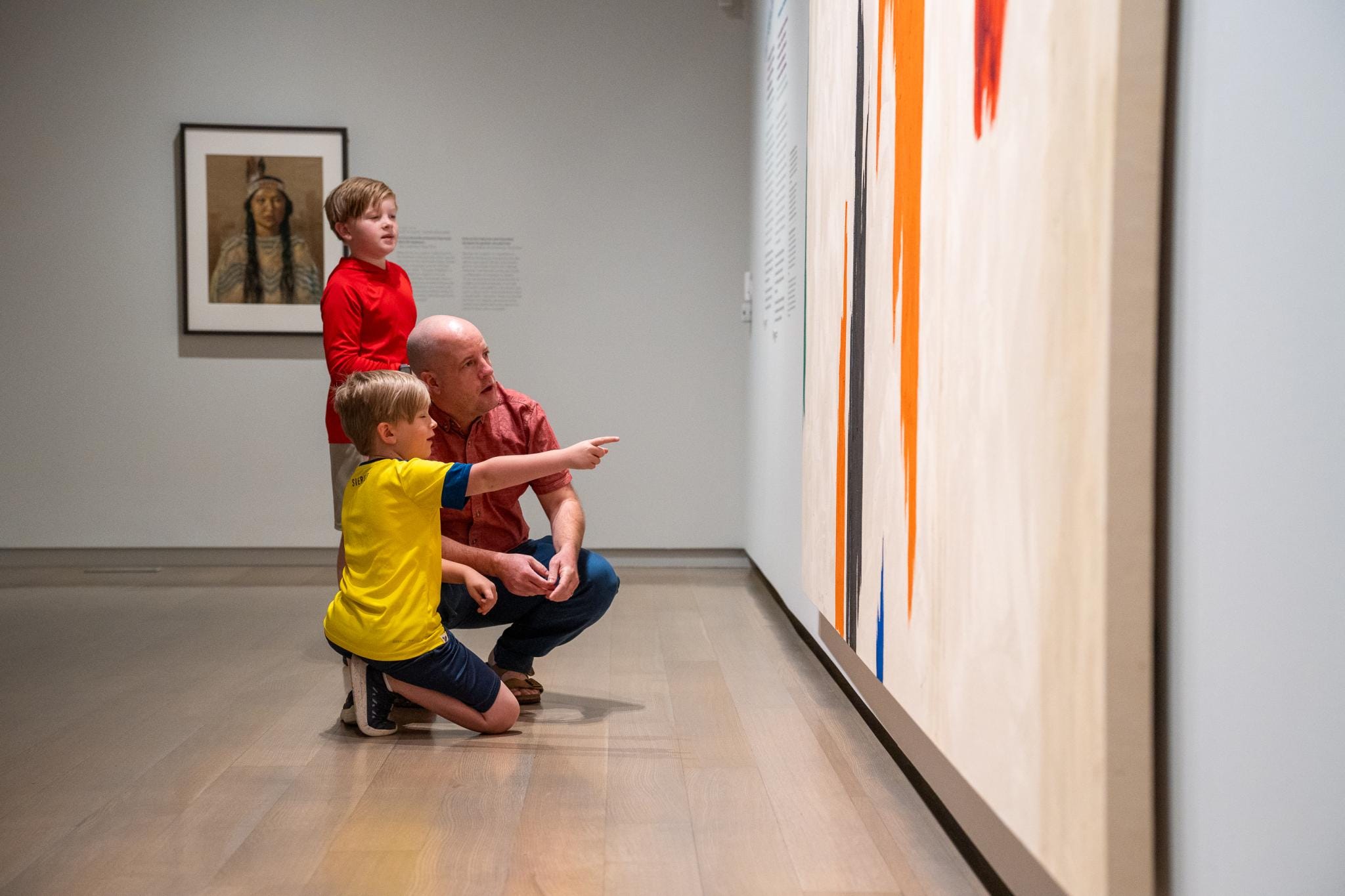
Working from what Sirois said, the museum team made reproductions of Still’s Colville Reservation works as well as all other works from the collection that could conceivably be available for an exhibition, then distributed the reproductions to three tribal schools, and invited the kids to select the works that were most meaningful to them. It was exciting for everyone involved to see how many of Still’s abstract works the kids were choosing. When the kids were brought into the museum to spend time in front of the actual works, they were amazed by the scale of the paintings and had no trouble sharing their thoughts and feelings. There was an atmosphere that said every opinion was valid and everyone’s thoughts and feelings were of value. Holloman remembers how at the opening the children were still exuberant, talking about the things that they were seeing in the paintings. With a smile, he says: “They were talking about Clyfford’s work before we could tell them that the things that they see are not what they are seeing. That was spiritual. That freedom of expression and emotion is something that we celebrate our children to have.”
Forever young
Cromartie studies the aesthetic preferences of young children, and although there have not been extensive studies on it, she says the research that exists is fascinating. “Young children are really drawn to work that they themselves could create — explorations in colour, texture, composition. For a lot of adults there is this idea of, “oh, my kid could do that, so it is not important.” It is not valued. But for children it is this really empowering thing. They see a Clyfford Still on the wall and they are like, I could do that. He is an artist, I must be an artist. They flip this idea on its head. They realise art does not have to be a depiction of your parents or a rainbow or a house. It could be about how you feel about those things.”
As children get older, around age eight or nine, Cromartie says they become more interested in reproducing the world precisely. That is when they start to determine whether or not they are a good artist based on how much their drawing looks like the thing that they are drawing. “That is an opportunity for them to say, I am actually not an artist — this is not for me, because the person sitting next to me has drawn that much better than I have, Cromartie says. But abstract art is this incredibly accessible form of making art, because there is no right or wrong. And we think that is really important. We want children to feel like they have a visual outlet to express themselves.”
Cromartie adds that there is an interesting parallel between the way children approach making art, and the way that they approach looking at art. It is this freedom and openness that we tend to lose as we get older, unfortunately. But adulthood does not always have to diminish our sense of intellectual freedom. In 1955, when he was 51 years old, Clyfford Still wrote in a letter to art historian Betty Freeman that it was his “purpose in life to reveal to my time what painting can be, and how it can be made to live as the highest instrument of a man’s revelation and freedom.” Revelation — becoming aware of something previously unknown; freedom — the ability to think and act without limits. Artists like Still are, in some ways, just grown children who somehow stayed in touch with their childlike sense of wonder, a state of mind that rewards free experimentation and brings endless revelations.
This is not just an academic topic. An adult’s ability to entertain abstract ideas and value the perceptions of others has an inverse correlation with their level of egocentric thinking, which can be a predictor for a host of toxic outlooks and behaviours. Globally, close to twenty percent of adults are diagnosed with depression, anxiety or addiction, and it is estimated that hundreds of millions more suffer from these afflictions without a diagnosis. Studies repeatedly show that meditative activities, combined with a shift towards seeking out and valuing other perspectives, can significantly increase levels of joy and feelings of belonging.
Holloman says that is one of the key reasons “Tell Clyfford I said ‘Hi’” represents such a remarkable opportunity for the museum, the tribe and for all the people in between. “It is not too hard to do a little bit of research and find out the realities of the world that we exist in, Holloman says. The highest rates of poverty, alcoholism and domestic abuse, dropout rates, suicide — these are realities on the reservation. So any opportunity we have to allow the youth to keep dreaming is so important to the people. We are trying to do what we can to get these young students to keep believing, not just that you can finish school, but maybe you love the arts, you want to do something in the arts. The tribe is very committed to wanting their children to have those experiences.”
The point of this exhibition may originally have been just to reconnect part of Still’s artistic output with the people of the Colville Reservation, and to find the right way to move forward with that part of the collection. The outcome goes far beyond that. The Colville children have been transformed, and they have then given something transformational back, creating new connections for adults, including the curators who research Still’s art every day. Placzek says the process of collecting the impressions of children has become one of the most rewarding parts of her work. Sharing those reactions not only encourages free self-expression in children, and shows them their opinions are valid — it liberates adults from the cynicism or self-censorship that too often causes them to reject abstract art. The exhibition is not only about building future elders, it is also about liberating the elders we already have.