

Originally published in AMA Art Magazine
It was late May 2025. Art and culture power brokers from around the world were gathered in San Francisco for the first Creative Land Trust Summit. The event was based on the idea that there is a relationship between a city’s art scene and its reputation as a global capital. In other words, great cities are great in part because their arts and culture scene is robust. Of course, the greater a city becomes, the more expensive real estate becomes, and since most working artists are not paid well, fewer artists can afford to live and work there over time. As the city then loses its artists, its arts and culture scene declines, making the city less great.
Among those speaking at the summit were representatives from London. They talked of how their city at one time had a reputation as a vibrant hub for up-and-coming music acts. But in recent decades, a number of live music clubs, recording spaces and practice studios had closed and local musicians were having to move out of town in order to afford to pursue their careers. The city still had plenty of massive performance venues that could attract superstar talent, but the music scene below that tier was becoming a shadow of its former self. Consequently, London is in danger of no longer being seen as a place where musicians have a good chance to scale up. The same phenomena, they said, is happening in theatre, film and visual arts.
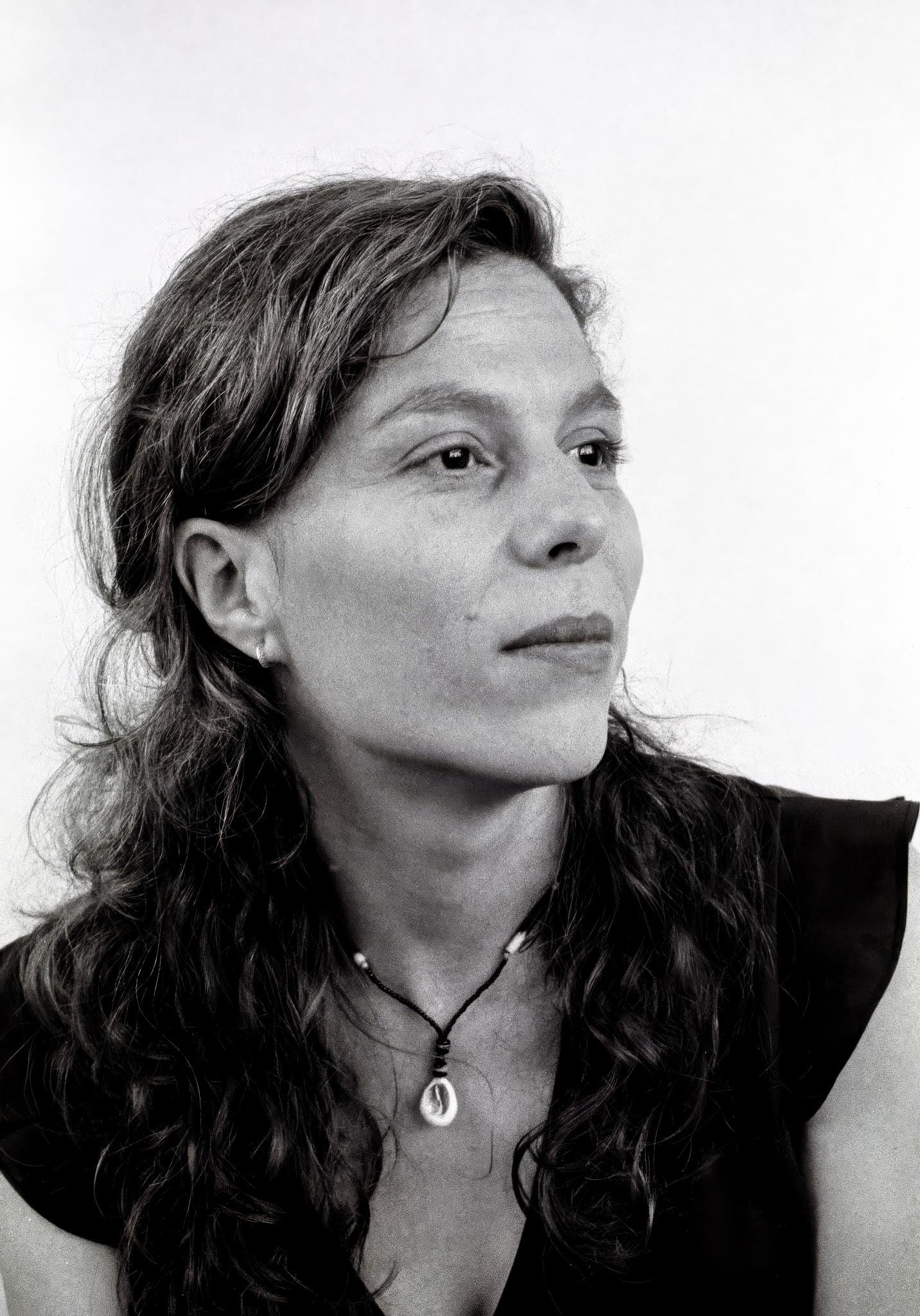
In the audience listening to London’s story was Gülgün Kayim, Director of Arts and Culture for the City of Seattle — a position Kayim had been in for less than a year, having previously served as the Director of the Office of Arts, Culture and the Creative Economy for the City of Minneapolis. Kayim also happened to be a native Londoner, earning her BA in Theater and Film from University of Middlesex. Before becoming involved in cultural governance, she was an accomplished artist in the theatre. Her life experiences had already taught her that London’s challenges are real. She was there to hear about solutions.
The primary fix offered at the summit was something called a Creative Land Trust. Basically, a non-profit entity takes control of real estate assets in a city, then manages them in such a way that artists can afford to live and work in them for a long period of time, regardless of how expensive the surrounding real estate becomes or how much the area gentrifies. The Kenneth Rainin Foundation, one of the key sponsors of the summit, pioneered this idea in 2013 in San Francisco. They have data showing that it has had a transformational effect on that city. Recently London has been trying it out. It is also being tested in Sydney.
Kayim already knew that real estate prices can affect a city’s art scene. But she has also learned that affordable live and work spaces for artists is only one piece in a larger and more complex cultural puzzle. That puzzle involves every other professional field within a community, including the non profit sector, food, beverage and hospitality sectors, transportation, parks and recreation, policing, insurance, commercial development and every level of government. What a city needs if it wants to become or remain great, Kayim believes, is a comprehensive plan for integrating art into the full fabric of the community. “I call it art based community development,” she says.
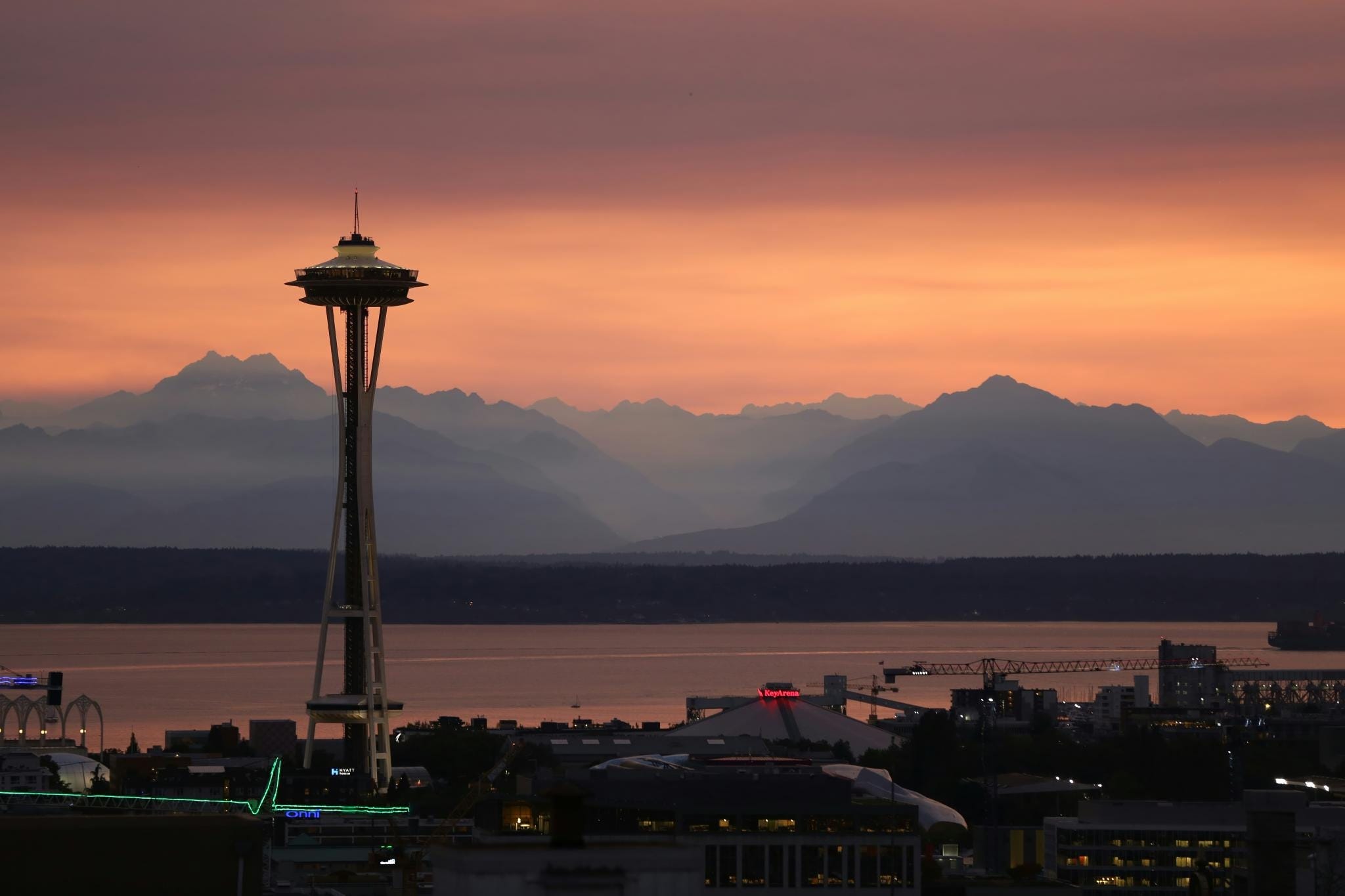
Here is an example of how it works. Kayim and her team recently initiated a project involving Seattle’s jazz community. For background, back in 2021, in response to COVID-19, Seattle launched something called Hope corps, which pays local artists to do creative work that contributes “to the well-being” of the city. The programme funds all kinds of things, from performances to education to public art. One Seattle neighbourhood that was hard hit by the pandemic was Pioneer Square. It has cobblestone streets, and is where most of the art galleries are, as well as a lot of bookstores, cafes and restaurants. It is also the historical centre of Seattle’s famous jazz scene. COVID annihilated that scene. Most of the musicians and live music clubs that had made the neighbourhood what it was were barely hanging on. Using Hope corps money, Kayim and her team funded an idea a jazz musician came up with to put on a night of live jazz in clubs all over Pioneer Square. The funds paid all of the musicians, so the clubs had no expenses and the public could attend for free. Massive crowds showed up. The streets were packed. Food trucks came out. All the bars were full. That was a Tuesday in the middle of winter, and it was the best night the neighbourhood businesses had seen in years.
“That is what art based community development looks like, says Kayim. Ask yourself, when you go to big cities, what is it about that place that is attractive? It is hard to put your finger on, but I think it is that burst of energy. My role is to mobilise art to make the city vibrant; to leverage art and culture as an asset for telling the story of place; and to make sure artists get paid for their time.” Kayim acknowledges that a lot of this is what she calls “internal ball playing”, meaning it is not exciting. There are issues that have to be dealt with around land, zoning and development. She says: “It is the invisible hand of government. The purpose is to create the conditions to have an environment where things will happen. For example, it is the permitting environment that allows street musicians to exist. Whether a glass blowing studio can exist in one part of town is all about zoning. It is the affordability of space that allows artists to live and work in town — then you can have open studios. It is all the mechanisms of government that make it so this can happen.”
One of the most visible ways any city engages with the visual arts community is through public art. Seattle was one of the first cities in the United States to embark on a large-scale, official public art programme. Funds to manage the collection come from a percentage of capital budgets, including from utilities, the department of transportation and the construction of new roads and buildings. The city’s collection currently stands at around 4,000 pieces. Kayim’s office is responsible for managing it. She says: “The Jonathan Borofsky statue in front of the Seattle Art Museum, the giant hammering man, that is ours. We also have a portable collection. For that, our curators buy artwork from local artists that we hang in city offices everywhere. That collection is around 3,000 objects. Walking into city hall you will see the artwork. That is another way we focus locally.”
Kayim’s office is currently managing the public art element of one of the biggest public works projects in the United States, Seattle’s new Waterfront Park. Designed by the same company that designed The High Line in New York, this massive project involved the deconstruction of part of a highway and the construction of a new walkway connecting the waterfront with Seattle’s famous Pike Place Market. The public artwork component is significant. Of course, public art investments are tricky, in part because art is subjective. That issue aside, Kayim says the most complex part of her office’s work is communicating to everyone involved how layered and nuanced the whole process is. It is not just a question of commissioning an artist to make something cool looking that can be installed along a walkway. Most of what Kayim’s team deals with has nothing at all to do with the aesthetic value or meaning of the art.
She explains: “Public art has become very institutionalised. The money is flowing through specific channels. We have to consider legal issues and liabilities. Also, our collection is aging. We are thinking about legacy, as in how we are going to deal with this collection in the future. Our maintenance budget has not grown along with our collection, which means our restricted dollars do not allow us to keep feeding money into maintenance. That is an issue for the entire field of public art to consider. Some people are thinking the concept of temporary public art is something to take on. Temporary meaning 20 or 30 years. Permanence is lifetime, generational. Where are the resources going to come from to make that so?”
That issue of permanence has been front and centre in Seattle recently. As soon as Kayim arrived in her new position a year ago, she was pulled into an ongoing negotiation between the city and Seattle-based artist Don Fels about a public sculpture he had created decades before, called Paragon. The negotiation had become bitter and Fels had made multiple pronouncements in the press decrying the city. His conclusion: “I think public art has made a wrong turn, leaving behind the community-based impetus of public art that those of us who got it started in Seattle decades ago so believed in.”
The sculpture in question is an elevated boat made of wood and metal. It was installed in Seattle’s Village Park and Shoreline Habitat in the early 2000s. It was built with reclaimed wood that was not designed to withstand decades of wind, water, sun or pests. Over time, ants and the weather caused the wood to decay to a point where the large, heavy object posed a serious risk to anyone standing beneath it. The initial contract between Fels and the commissioning entity did not include a contractual obligation to maintain the work. Neither did Fels endeavour to maintain it over the years. Once the damage was identified, the city’s public art maintenance budget was not sufficient to repair or rebuild Paragon. The decision was made to deaccession the work from the city’s collection.
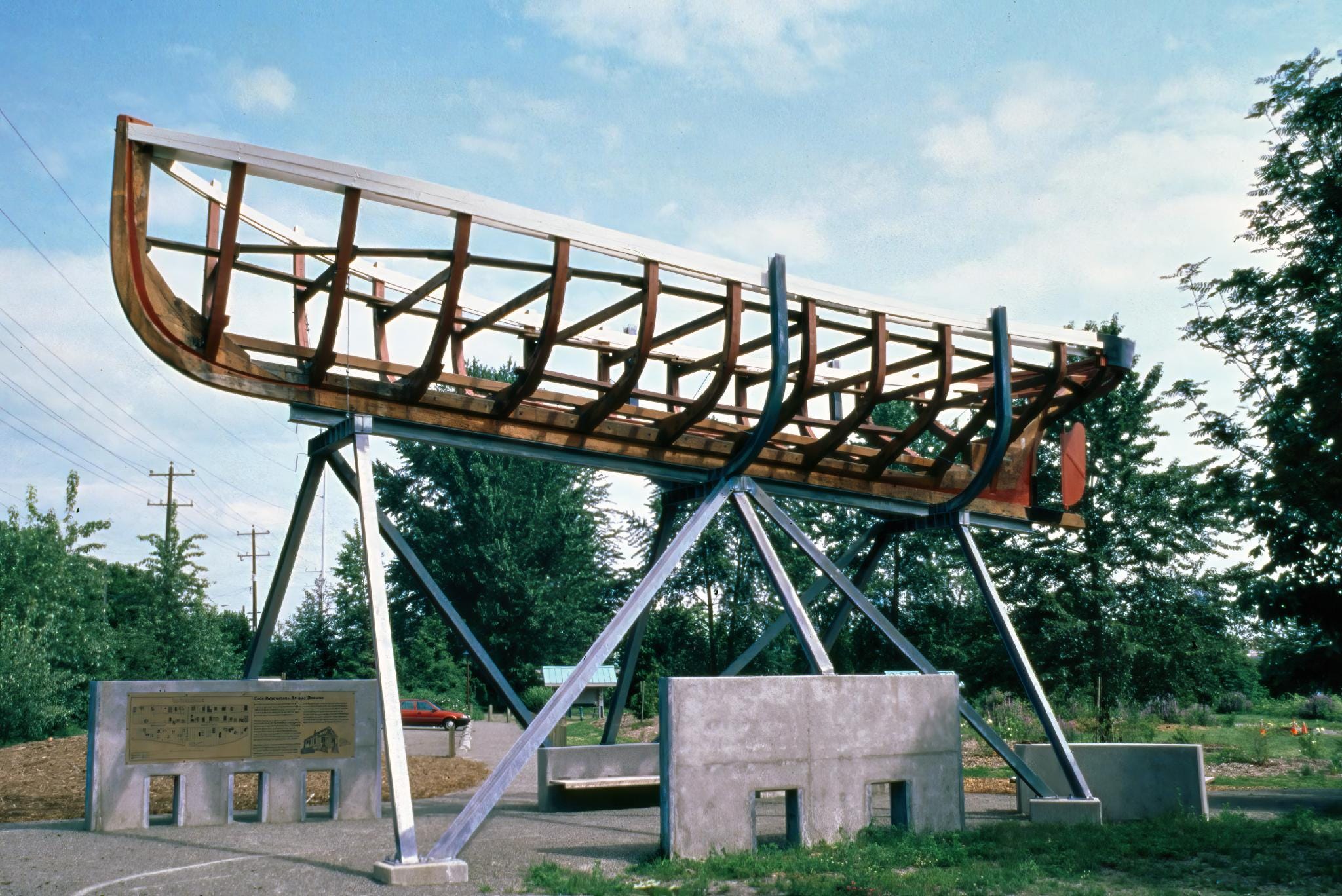
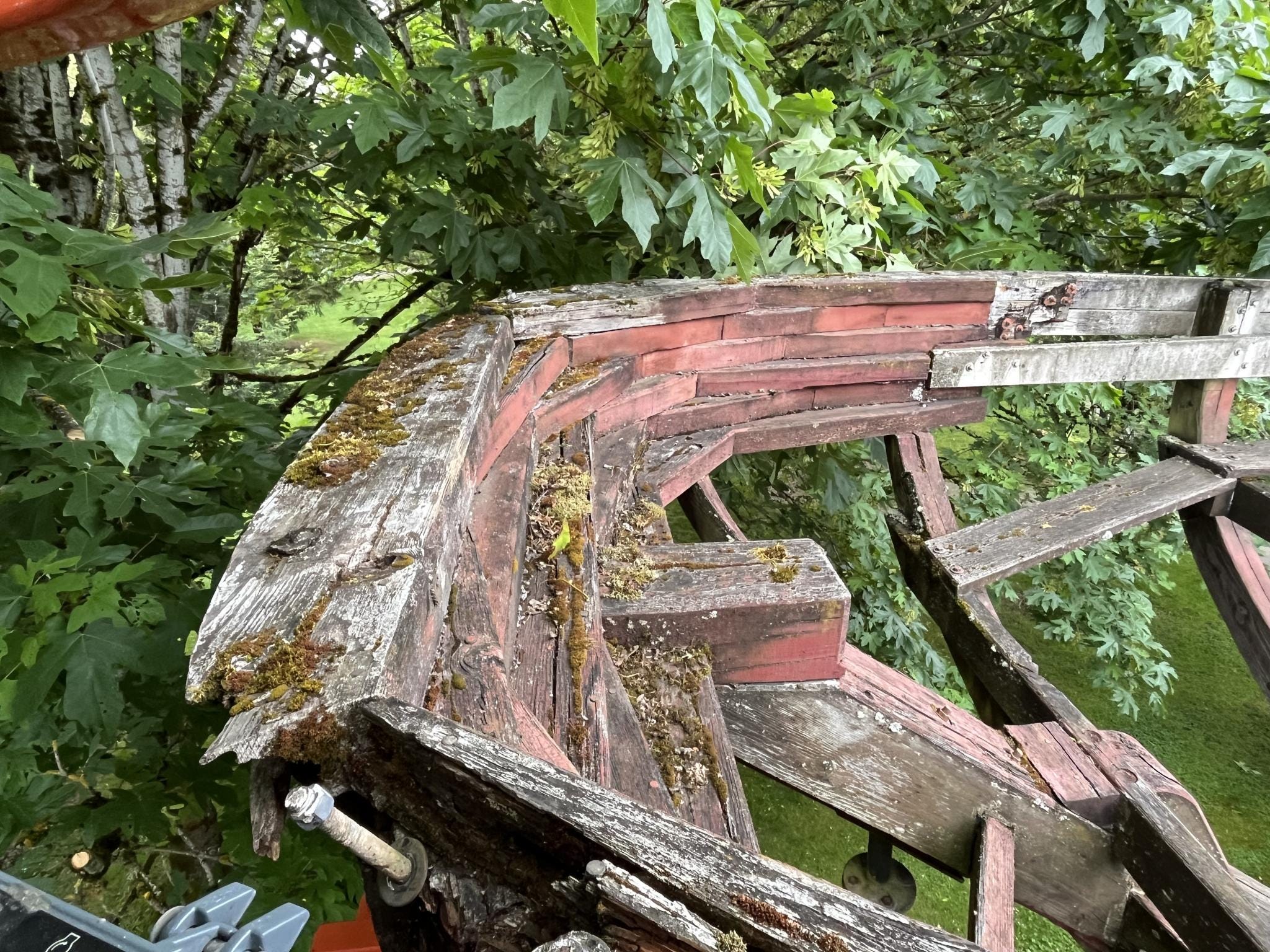
Kayim explains, “Paragon was a collaborative effort with the port. They own the land. We did not commission the work. Our program was new at the time, but we were asked to look after the work after it was made. The piece was built with methods that at the time were fine, but now would be problematic. We have a limited budget to do specialised care. We have on staff a specialist who goes piece to piece, but we have 4,000 pieces. So in the scope of what we have, we need to ration our efforts. We did not neglect the work. We dealt with the work in the order we always do. But it had inherent flaws. We do not take it lightly.” Kayim further notes that Fels perhaps misunderstands the intent behind the deaccessioning process. The city is only deaccessioning the work in order to administratively remove it from the books. If Fels rebuilds it, the city intends to reaccession it. There is already a new space reserved for it when and if the new work is complete. Says Kayim, “We have to follow a process where the source of the money dictates where we can put the art. So if there is a big construction on the waterfront, we can put the art on the waterfront. There is no construction where Paragon is, so we cannot put it there.”
The city has already lost two court cases in the past over other artworks that affirm the limitations Kayim is working under. Fels, meanwhile, recently acknowledged, “I like Gülgün and do not envy her position.”
The reality is that public artists do not usually have to deal with the same administrative details as people who work in public art governance. The artists perceive bureaucrats as anti-art, when in many cases they are simply facing limited resources — or, as in the case of Paragon, they are trying their best under difficult conditions to mitigate challenges caused by the poor planning of others.
Such is the humdrum reality, or internal ball playing, that forms the foundation of that buzz Kayim talks about — the buzz that makes a city feel exciting and turns it into a culturally significant place. Cities can buy up spaces and rent them on the cheap to artists; they can fund symphonies and festivals and museums; they can pay publicists to convince tourists to visit. But what ultimately makes a city great is the work people like Kayim and her team do behind the scenes to create the conditions in which artists can do their work. Support has to flow freely between all the stakeholders. That is the definition of creative trust.