Originally published in AMA Art Magazine
Something becomes iconic when it symbolises something larger. Think of Russian icon paintings, which depict biblical Christian figures with halos. The paintings are not, themselves, divine, but they are symbolic of the power of the Church and thus venerated as objects that transmit divine messages.
The word icon comes from the Greek eikon, meaning an image or likeness. That explains why, historically, it has referred to works of art. But today almost anything beloved is called iconic. Cher is iconic. Gucci is iconic. The baguette is iconic. These are not gods; nor are they images; but they represent values that people cherish on an almost-spiritual level.
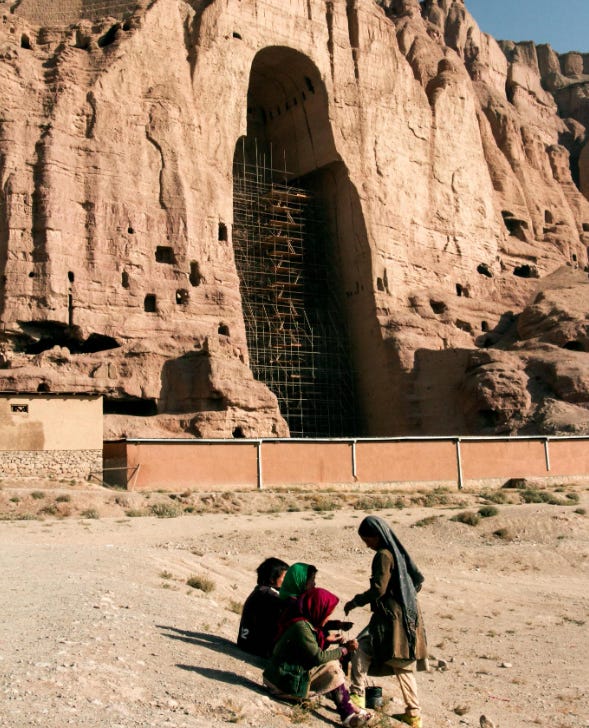
Iconoclasm is what happens when someone destroys an icon. Iconoclasts do not hate the icon, per se — they oppose its messages or the values it represents. By annihilating it they think they can annihilate what it stands for. One of the most notorious modern examples of iconoclasm occurred in March 2001, when the Taliban destroyed the Buddhas of Bamiyan, giant statues carved into the side of a mountain in Afghanistan. The Bamiyan Buddhas were carved around 1500 years ago, presumably to venerate Buddhism, though no one is certain. Insisting they were guided by their interpretation of Islamic law, Talibans ordered the Buddhas’ destruction (along with the destruction of every other statue of a human in Afghanistan) to give “praise to Allah”.
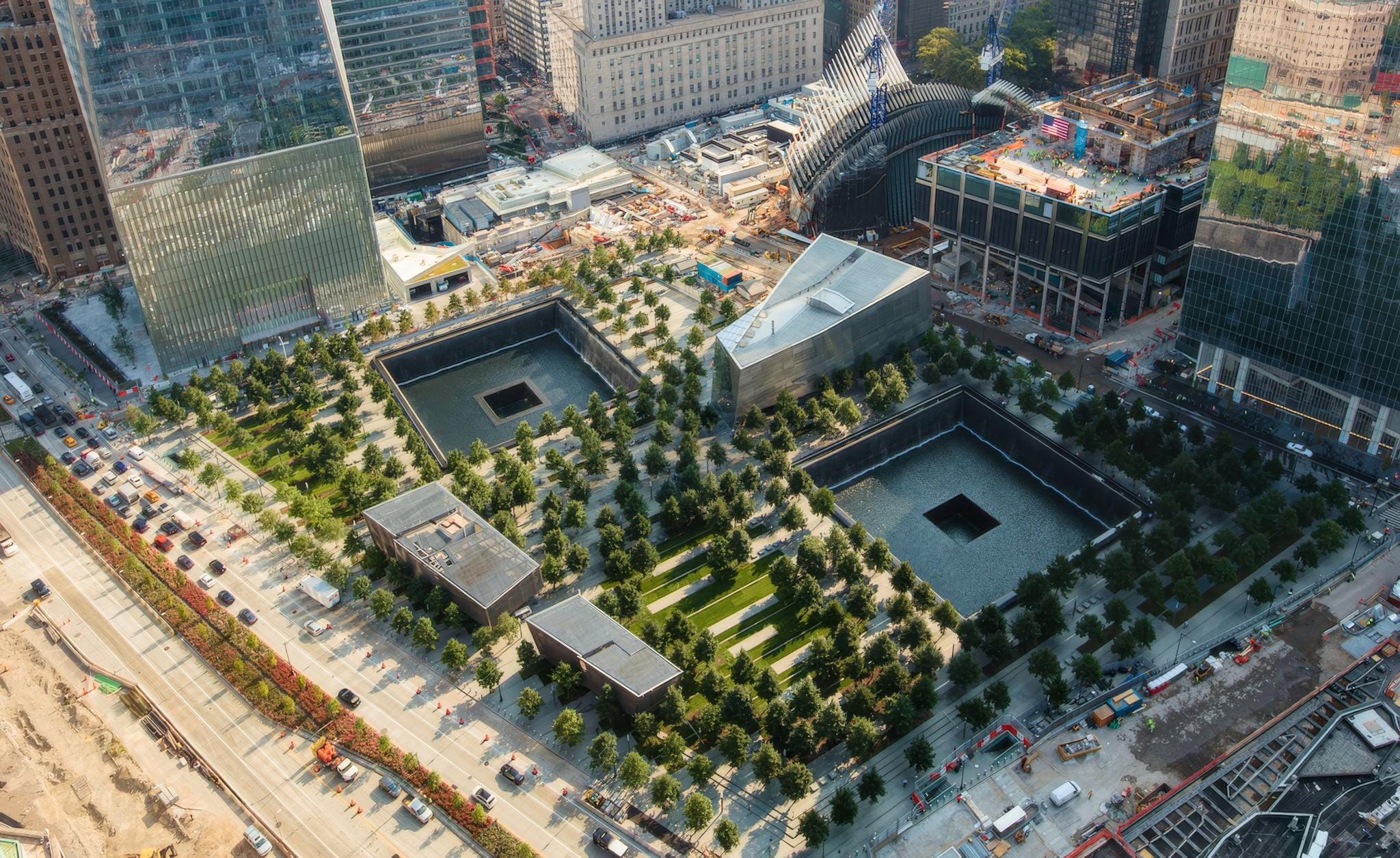
On 11 September of that same year, members of al-Qaeda attacked the United States. They crashed two planes into the World Trade Centre in New York, crashed another into the Pentagon, America’s seat of military power, and hijacked a fourth plane that went down in a field in Pennsylvania — it is unclear what its intended target was. The attackers were known to be associated with an Islamic organisation, but their known targets were not religious symbols; they were economic and military symbols. The attacks are nonetheless considered iconoclastic — an attempt to destroy the icons of secular gods.
“Utter destruction of the image tends not to work. It not only effaces the past so as to produce the tabula rasa of ignorance, but it also leaves a spectral gap, activating the deep desire to replace the image.” — James Simpson, Harvard University
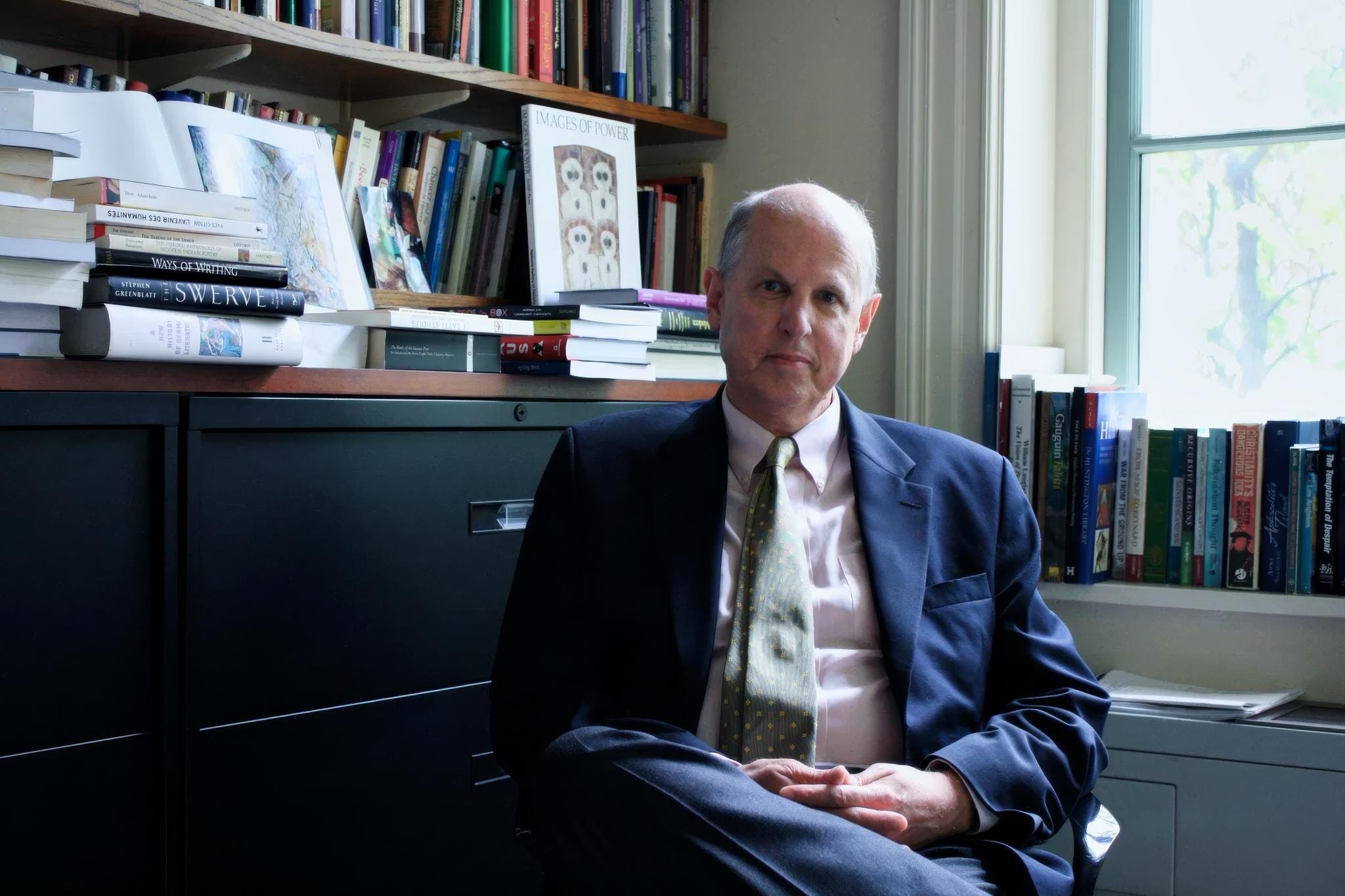
Despite the extreme violence of the attacks on the Buddhas of Bamiyan and on the United States, and even despite footage of them being broadcast widely and repeatedly around the world for more than two decades, the messages of Buddhism and of American economic and military influence are still ubiquitous. Is that simply testament to the power of these particular icons? Unlikely, says James Simpson, the Donald and Katherine Loker Research Professor of English at Harvard University, and a leading expert on iconoclasm. It is just the latest evidence that iconoclasm is, and always has been, doomed to fail.
Spectral gaps
When Simpson first started studying the subject around 2000, he thought iconoclasm was something relatively recent. “I thought it was a minor aspect of a much larger early modern phenomenon, namely Reformation, starting in 1517, he says. It turns out, however, to be a major topic with world historical significance. The change from one historical dispensation to another is, for example, almost always accompanied by iconoclasm. Revolutions characteristically turn aggressively on the symbolic edifice of the ancient régime, hammer in hand. Break the images of the old order (e.g. statues of the polytheistic gods, of saints, of kings) and you deliver a visceral blow to the cultural order upheld by those statues.”
Despite its inherent drama, Simpson says iconoclasm is almost always ineffective. “Utter destruction of the image tends not to work. It not only effaces the past so as to produce the tabula rasa of ignorance, but it also leaves a spectral gap, activating the deep desire to replace the image.” The crevices in the mountain cliff that once held the Buddhas of Bamiyan are still there; everyone remembers what was in them. Artists have even projected images of the Buddhas back into these empty spaces. The Buddhas were destroyed, but the idea of them remains. Similarly, in New York, architects Michael Arad and Peter Walker designed a pair of reflecting pools on the footprint of the destroyed Twin Towers. Titled Reflecting absence, that monument is a direct reference to the “spectral gap” Simpson describes. The emptiness only strengthens and spreads the values the iconoclasts were attempting to destroy.
Despite its obvious fruitlessness, iconoclasm has only gotten more prevalent in recent years, especially in the West where the preservation of cultural objects and sites has traditionally been seen as a mark of modern sophistication and respect for the past. “We use the catch-all word “heritage” to designate crafted objects of special historic and cultural status, no matter the tradition from which the object arose, Simpson explains. When we in the West witness destruction of “heritage” artefacts and/or buildings, we tend to react with horror at the barbaric practices of some cultural “Other”, whether that other be Islamic revolutionaries or, not so very long ago, the young cadres of the Chinese Cultural Revolution of 1966-1976. We care about the past; we do not smash stuff. That complacent projection of barbarism onto some other does not prepare us either for understanding our own long history of revolutionary iconoclasm or for our own, contemporary practice of iconoclasm.”
Simpson points out several recent iconoclasms in the West, including the Rhodes Must Fall campaign in 2015, which demanded removal of the statue of Cecil Rhodes from the façade of Oriel College at Oxford; the toppling of the statue of the slave trader Edward Colston in 2020, after which the statue was thrown into Bristol Harbor; and the removal of more than 155 statues of Confederate leaders throughout the United States. “We too break things”, Simpson says.
Museum as iconoclast
Simspon divides iconoclasms into six stages. The first is “unlicensed iconoclasm” or the destruction of icons by individuals or loosely organised private groups. Next comes “licensed iconoclasm”, which is backed by the authorities. Next is the “resurgence of images, both material and mental”, which is when the destroyed icons are memorialised or replaced. Then comes stage four, the “resurgence of licensed iconoclasm”, a re-invigorated attempt to destroy all those newly created icons along with whatever pre-existing icons were missed in stages one and two.
The futility of stages one through four throughout humanity’s earlier epochs eventually gave rise to stages five and six, which Simspon calls “museum culture; aesthetics and the cultivation of taste” and “safe ‘iconoclasm’ within the sacred space of the museum.” As Simpson explains it, iconoclasm “triggers a long and largely unstoppable historical process. The image breaking provokes the restoration of images, which provokes more breaking, which provokes the new solution of the museum, where the process begins again.”
Of course public museums are not iconoclastic in the sense that they physically destroy the icons they collect. Rather, they act as agnostic storage houses where icons are transformed through admiration as aesthetic objects. Their new status as art disconnects icons from whatever religious meaning they once had. They have not been smashed, but they have been metaphysically neutered. “Museums are places of asylum for images, says Simpson. The religious image sits safely in the quiet, not to say implicitly sacral atmosphere of the protected museum, set paratactically beside secular images (landscapes, or still life, say), as examples of something we decide to call “art”. That appellation licenses us to look in safety.”
The museum also supports a concept of “official art history” that is separate from religious history or political history. This creates “discourses around ‘heritage’ and ‘aesthetics’ to allow us to look at cultural artefacts over which our ancestors may have violently fought, Simpson says. My Protestant ancestors may have wanted to imitate Moses, who destroyed the cultic image of the Golden Calf. Now instead we make pilgrimages to Rome to see Bernini’s statue of Moses; we consider the statue as somehow ‘good’ for us not because it will save our souls by repudiating idolatry; it is good for us because a great artist sculpted it.”
The non-violent, museum-sponsored form of iconoclasm not only diminishes the influence of icons by changing public perception of them; it also transforms previously sacred images and objects into collectible commodities. The sledgehammer, Simpson jokes, has been replaced by the auction hammer. “Of course the museum is never the end of the story, he says. The cycle repeats itself within the museum: the differently sacred ‘heritage’ artefacts now themselves become targets of iconoclastic paint and hammer: climate activists, for example, have defaced many artefacts in western museums since 2022.”
The veneration of paints
The world’s first known public art museum was The Kunstmuseum Basel. It opened in the mid-17th century. It was about a century later that Joseph Wright of Derby painted An experiment on a bird in the air pump, a painting that Matt Wilson, art writer for the BBC, contends was the first work of modern art. Its modernity, Wilson says, is defined by its departure from art’s traditional role of transmitting religious or political values. It offers a secular, complicated view of humanity instead.
Ironically, the popularity of secular art since the rise of “modernity” has resulted in art itself becoming an iconographic institution. Each modern artistic innovation or movement has its believers and its saints, some of whom even have chapels in their name (the Rothko Chapel; Louise Nevelson’s Chapel of the Good Shepherd; Tadeo Ando’s Church of the light; the Ellsworth Kelly Chapel). Meanwhile, religious institutions have continued to commission secular artists to create original artworks for their houses of worship. Just a few examples: Picasso and Matisse both made art in service to Christian churches, while contemporary French artist Véronique Joumard recently designed new stained glass windows for Cathedral Notre-Dame in Bayeux.
Thus, museums destroy the religiosity of icons, only to create secular aesthetic saints who receive notoriety by making new icons for the same religious institutions the museums attempted to neuter. Meanwhile, modern art’s progressive march continually generates an expanding pantheon (or canon) of artistic, aesthetic and conceptual icons who now inhabit the secular sacred museum space like ancient gods haunting a stone temple.
In that context, could reactions against art — from critics, art schools or individual artists — be considered a form of soft iconoclasm? “The image in Western culture is always under threat, says Simpson, not least because the image is public and potentially lethal if we treat it as God, which is to say if we practice idolatry. I will only say that the transfer of value from religion to aesthetics saves the image but also potentially kills it. The auctioneer’s hammer is another art killer. I could not help but admire Banksy’s inspired and hugely funny iconoclasm, as he triggered a paper slicing instrument to destroy from within an image that he had just sold at auction seconds ago for a vast price.”
Of course, Banksy’s iconoclasm was itself a failure, since the shredded painting sold again at auction for an even higher price. As Simpson reminds us, that is always how it goes — every icon falls under one type of hammer or another, and every iconoclast eventually realises they cannot erase the icons of their enemies, as they always endure, either in the museum or the spectral gap.