(Originally published in AMA Art Magazine)
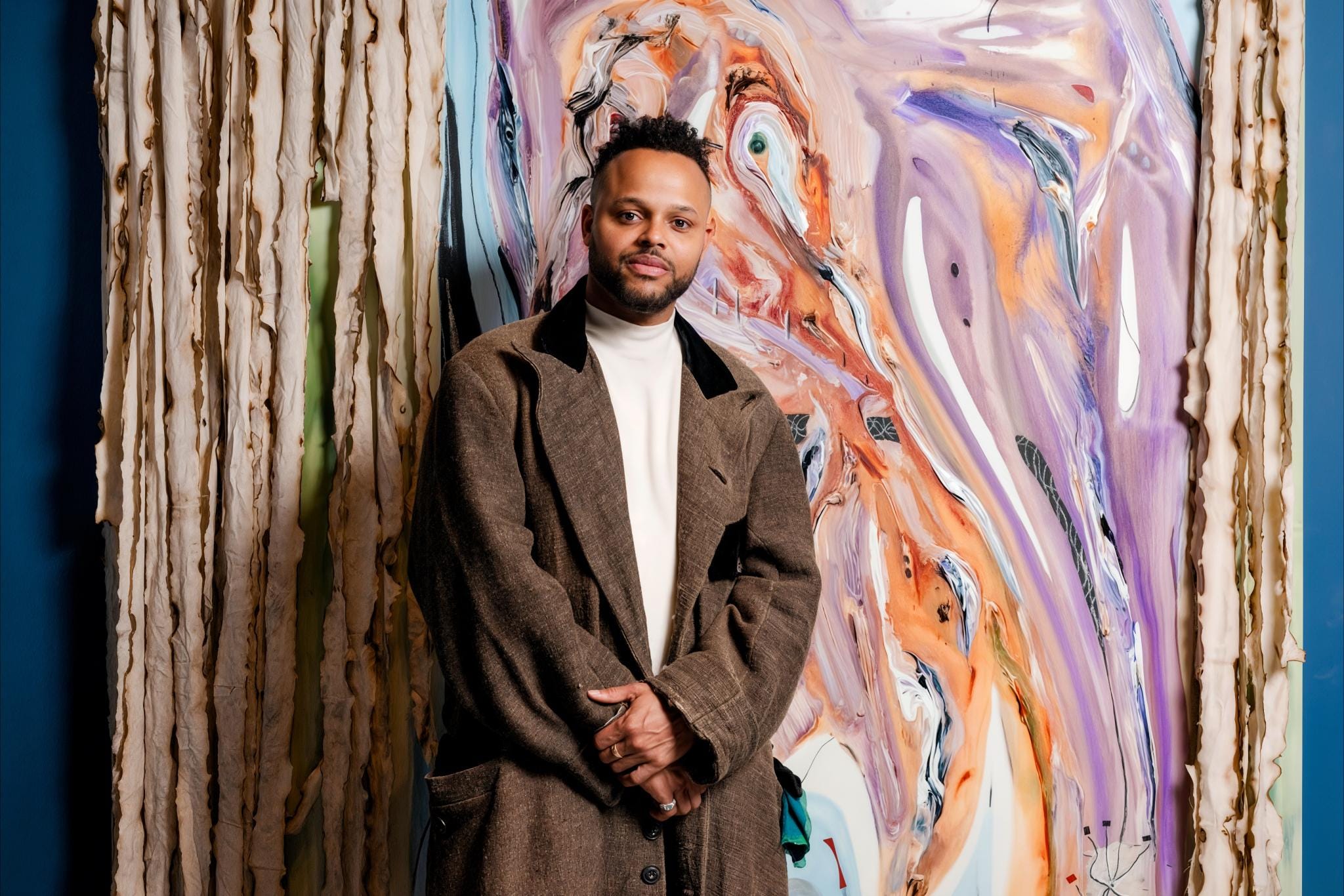
Haitian-Canadian artist Manuel Mathieu had no idea he was on the radar of anyone associated with the Venice Biennale.
“Out of the blue, I received an email saying that they want to invite me to participate in Koyo Kouoh’s exhibition”, Mathieu recalls, referring to “In minor keys”, the main group exhibition Kouoh curated for the 2026 biennale. “I lost my mind. I was like, what is going on? To be honest, I never thought that I would be on that list at all.”
Mathieu then realised he did have a connection to a member of the curatorial team: Marie-Hélène Pereira. A year or so earlier she had visited Montreal, where Mathieu is based. A mutual connection told her about Mathieu, so she called and requested a studio visit.
Mathieu accepted the invitation, and over the next nine months he worked with the curatorial team to bring together what became one of the largest single-artist contributions to “In minor keys”, including five paintings, one mosaic, 14 sculptures and a video installation titled Pendulum.
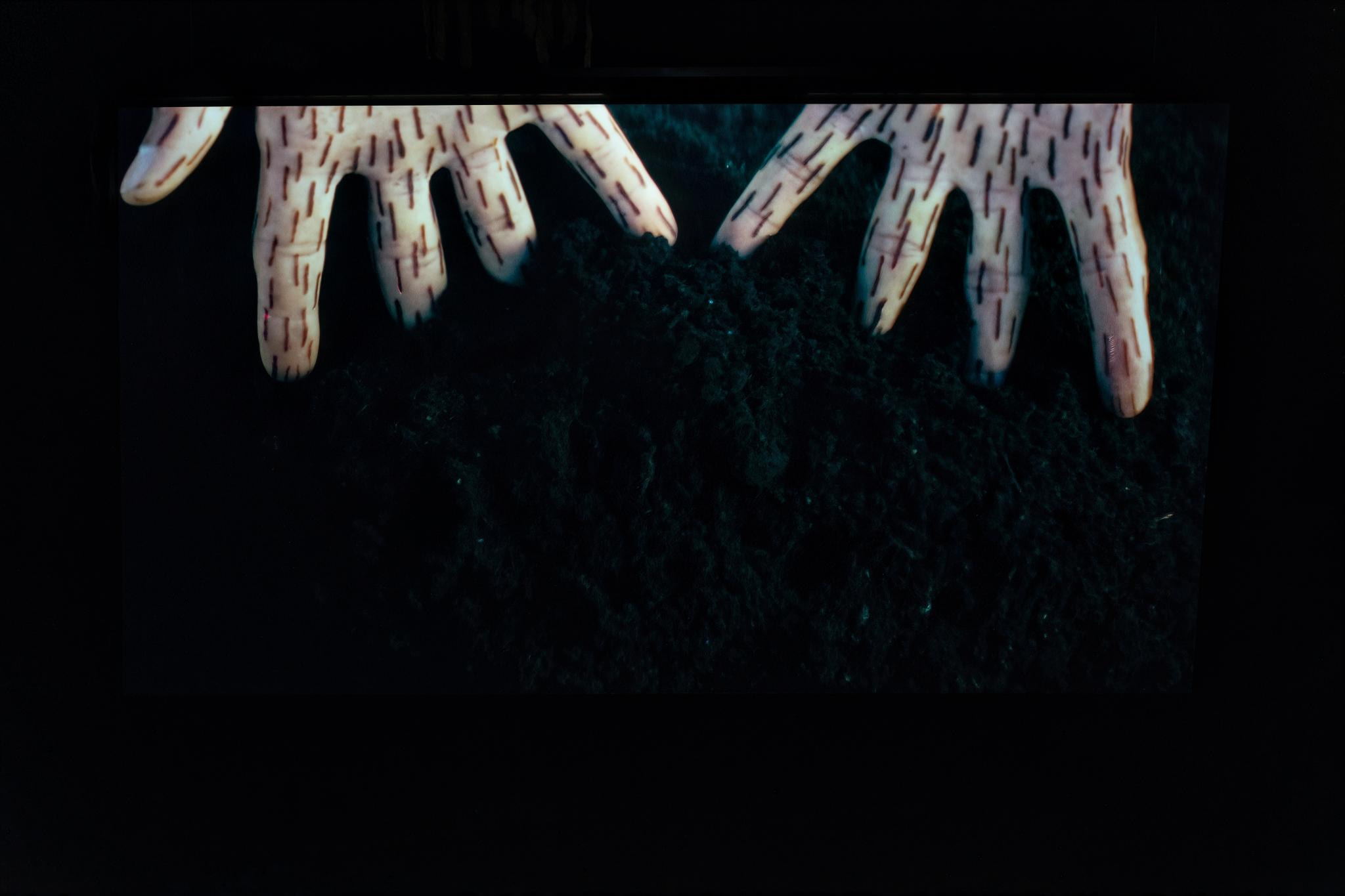
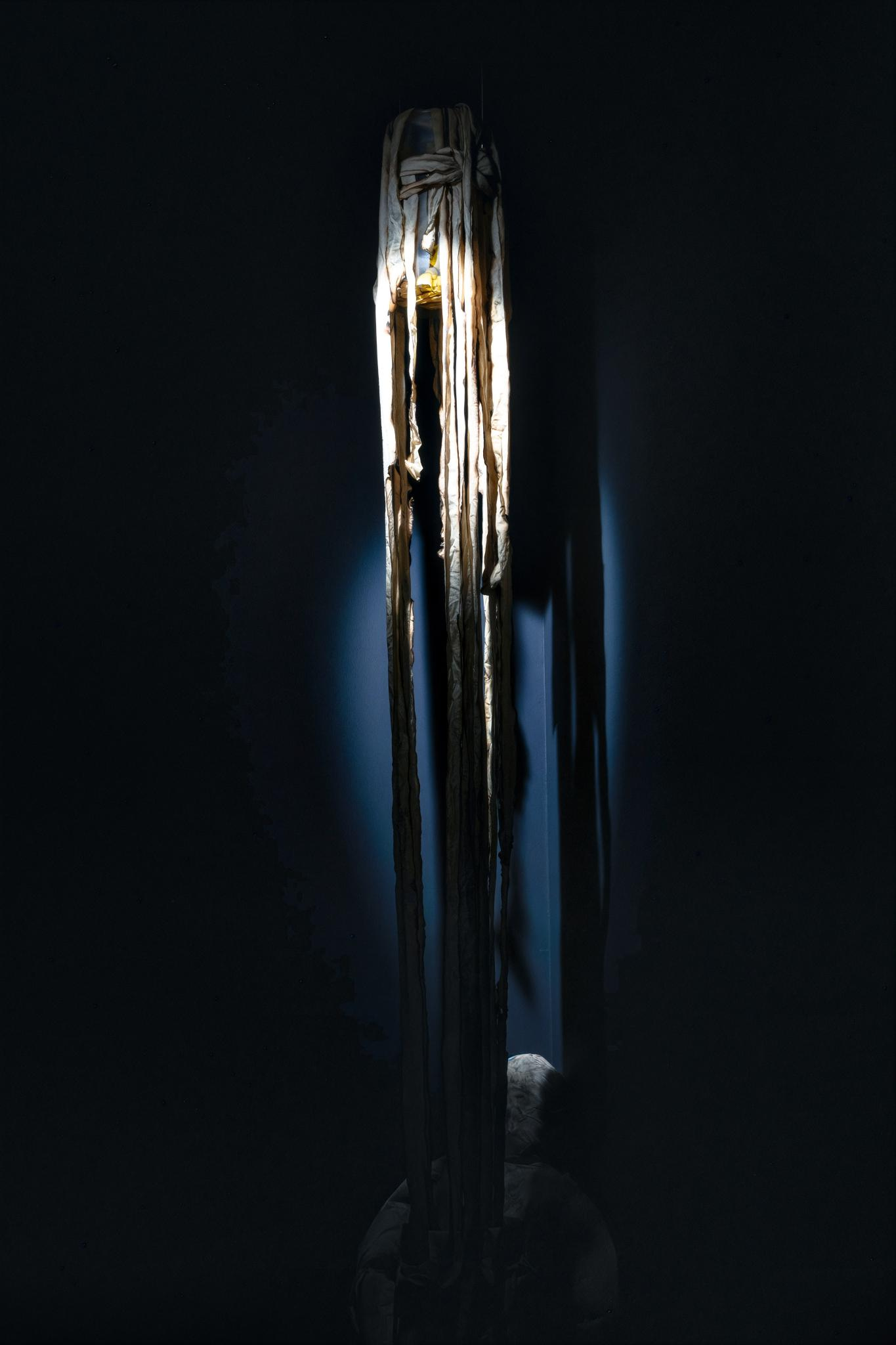
The video has a strong connection with the soil; it opens with a woman walking through the woods and climaxes with a group of characters falling down together into the dirt. Aware that Mathieu had recently started a perfume business (for which he designs both the glass bottles and the scents), the curators asked if he could create a custom olfactive element to accompany the video. The aroma he created, evocative of the earthen setting of the film, gradually diffuses into the exhibition space from soaked fabric suspended from the ceiling.
Mathieu’s largest painting in the exhibition is titled Genocide. He says it does not reference any particular genocide. “There are many artists talking about that topic in the show,, and I think it is important not to point in any direction, which genocide, because there are many going on. It is an instrument of oppression, a vacuum of violence and a tool of erasure, basically, that is being applied in many places in the world right now.”
Political violence is personal for Mathieu. His family fled violence in Haiti when he was a child. For the past several years he has been producing a film project documenting the country’s ongoing social and political ruptures. What he sees happening there could happen anywhere, he believes.
“There are three things that are extremely important that people do not talk about enough,” he says. “Impunity, abuse of power and violence. That is exactly what is happening in my country. And it is like a copy paste. You can also apply it to this place, this place, that place. My own country is a fucking mess right now. My neighbourhood where I grew up, the house I grew up in, the people I know, what is happening to them? That alone is putting a weight on my shoulders. I do not need to go further than that. But then being exposed to such violence on other people is a way to make you realise you ain’t shit. What it is saying is that what is happening there or to Palestine or Congo could happen anywhere else in the world.”
Mathieu’s choice to centre these topics in Venice is rooted in his belief that pain is a crucible that has the potential to transform. “I do not think we should be afraid,” he says. “You can tell we are getting so close to the heat that you can feel the burn. Especially nowadays, reality is tearing us apart. You are like a walking contradiction. You are seeing things that bring rage and empathy within the same 20 minutes. A good exhibition is something that manages to peel those different things apart inside of you, make you get closer to them and witness them and question them. I think this show does that.”
Melancholy and joy
When Koyo Kouoh was selected to curate the group exhibition for the 2026 Venice Biennale, it generated a lot of excitement. She was already one of the most consequential curators in the world: a museum director, Guggenheim juror, foundational collaborator on 1:54 Contemporary Art Fair, advisor to world leaders and a routine inclusion on lists of the biggest art field influencers.
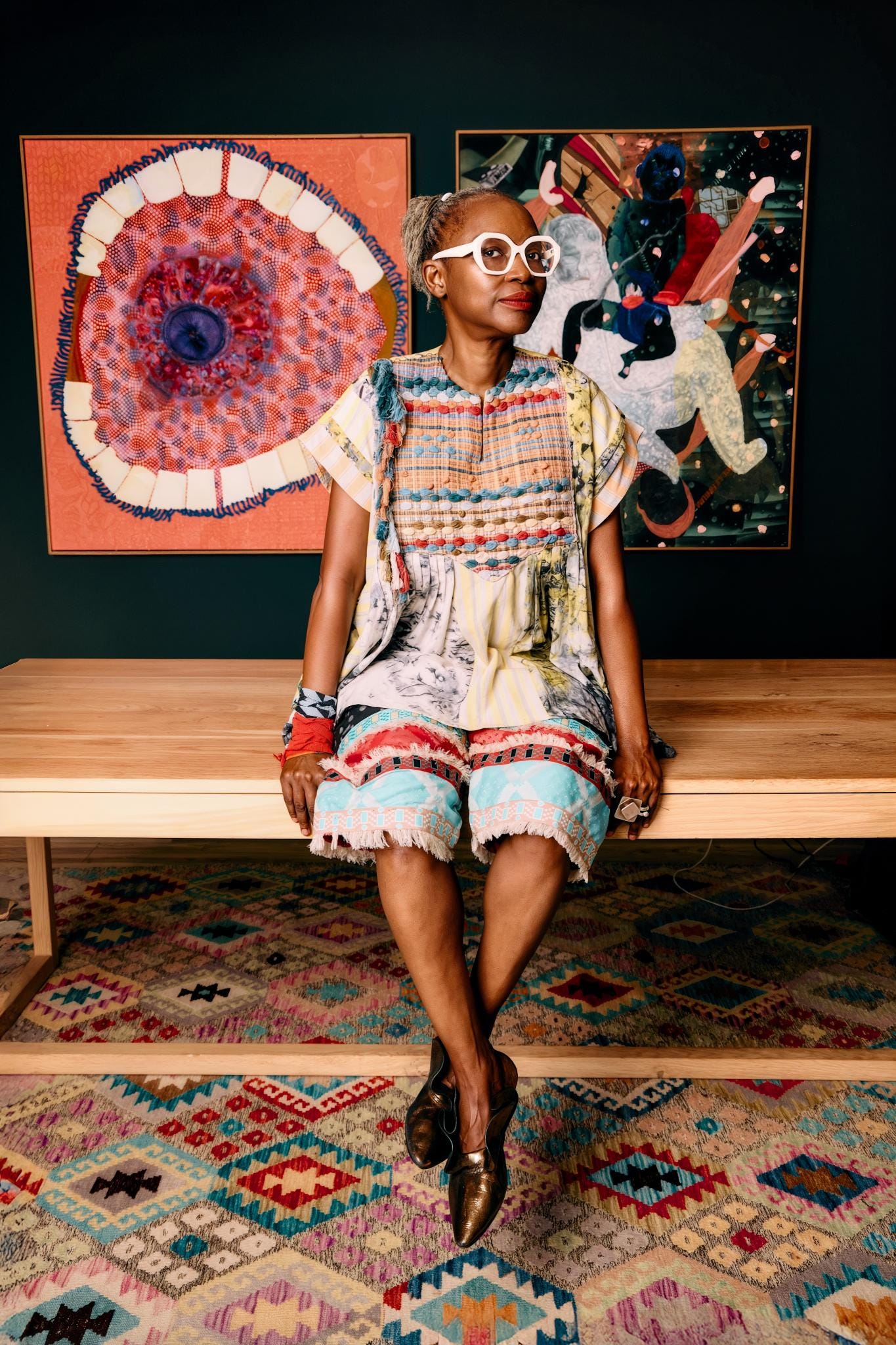
As the first ever African woman to curate La Biennale, Kouoh represented the promise of something transformative. That promise began to take shape when Kouoh released her three-page curatorial statement in April 2025. The opening paragraph read, “[Take a deep breath] [Exhale] [Drop your shoulders] [Close your eyes]. This is an invitation to encounter these words in the immediate physical, meteorological, ambient and karmic conditions in which they meet you. To shift to a slower gear and tune in to the frequencies of the minor keys. Because, though often lost in the anxious cacophony of the present chaos raging through the world, the music continues. The songs of those producing beauty in spite of tragedy, the tunes of the fugitives recovering from the ruins, the harmonies of those repairing wounds and worlds.”
The next paragraph featured a quote from author James Baldwin: “There is a reason, after all, that some people wish to colonise the moon and others dance before it as an ancient friend.” Kouoh then went on to define the phrase “minor keys”: first, as a musical structure, and second, as small islands. In music, she wrote, minor keys are “often associated with strangeness, melancholy and sorrow”, while small islands known as keys tend to be remote sites beyond the madness of global troubles where “joy, solace, hope and transcendence” can manifest.
The islands of the Caribbean, of which Haiti is one, are among the most famous keys in the world. Modern Haiti was created out of both cataclysm and hope; it is the world’s only nation founded by slaves who overthrew their captors. Mathieu’s words, and the works he made for La Biennale, elucidate the dual definition Kouoh offered in her writing: a mixture of melancholy and joy, sorrow and transcendence.
As Mathieu says of himself, “I bring god the devil with me always,” a contradiction a lot of people today call divisiveness, but one essential to the duality of Kouoh’s theme.
Polemic pandemic
A month after releasing her curatorial statement, Kouoh died unexpectedly of cancer. She had instigated a celebration of “joy, solace, hope and transformation” just as she was disappearing into “strangeness, melancholy and sorrow”. She was 57.
Her edition of La Biennale has gotten more controversial in the aftermath of her death. On one side of the tug-of-war has been Kouoh’s curatorial team, working in earnest to fulfill her vision of bringing 110 artists, duos, collectives and artist organisations together to give voice to the “frequencies of the minor keys”. On the other side of the rope has been the global art press, which has devoted almost the entirety of its reporting to the national pavilions, which, as usual, are being dominated by noise and nonsense from war criminals, politicians, power brokers and protesters, whose toxicity Kouoh’s curation is intended to subvert.
It’s fair to ask, why report on the national pavilions at all? They are intended as propaganda. The group exhibition should be where journalists focus their spotlights. For participating artists, the group exhibition of La Biennale is often the pinnacle of their career, the result of decades, if not a lifetime of personal struggle. The personal stories of how they got there are often epic. When press coverage collapses, righteously or not, into a curmudgeonly bitch-fest, those are the stories drowned in the deluge. Is that not a net loss for humanity?
Maybe. But maybe not.
Kouoh was not afraid of debates and dualities, and neither is Mathieu. “It is a very polemic Biennale,” Mathieu says. “I mean, you saw the jury resign. It is part of our time, I guess. But I think it is good that it is happening in the art world because it is a sign that we are actually very sensitive to what is going on in the world. We are not completely oblivious, which could have been the case.”
The biennial is many different things at the same time, Mathieu explains. “You can be touched profoundly by beauty and at the same time, in the same room, be questioned about what you are experiencing inside of you. I think the power of a good curator is to be able to balance it out so you have moments to breathe, to reconnect with yourself, and other moments to just feel the disdain. That is part of the whole experience.”
Yet, prior to actually arriving in Venice to install his work, Mathieu was in a much different place mentally. He was feeling overwhelmed by global politics, and even questioning whether he could continue.
“It is hard for artists to work right now,” he says. “I am about to be 40 years old. It is the first time in my life I am questioning my capacity to change the world. I have never once woke up in my life and looked in the mirror and said that I will not change the world. I will. I am here to make this world better and I will change the world, period. There are no doubts. Yet, for the first time I am questioning is it possible still? There is something putting pressure on us, on our humanity, in a way that is questioning our soul, the value of our soul, collectively. It is difficult to create from that place.”
His doubts did not disappear magically. Rather, they were assuaged through the experience of interacting with the other artists who were also in Venice installing their work — the other “minor keys”.
“Here I do not feel like I am alone,” Mathieu says. “I feel like we are all in this together. I feel like all the artists are delivering something that is deeply rooted in their souls. They have a level of empathy, a level of consideration, a level of caring that I feel every day. At least we have that. At least we are in this together. I am talking about younger artists, older artists, sculptors, performers, whoever. You can tell they are doing this because they believe that they are preserving something that is necessary for us not to fucking lose our minds. And I see how the work next to me is connected to the work behind me and connected to my work. I feel like they managed to choose a group of artists that are really together, screaming or chanting to the same kind of music.”