

Originally published in AMA Art magazine
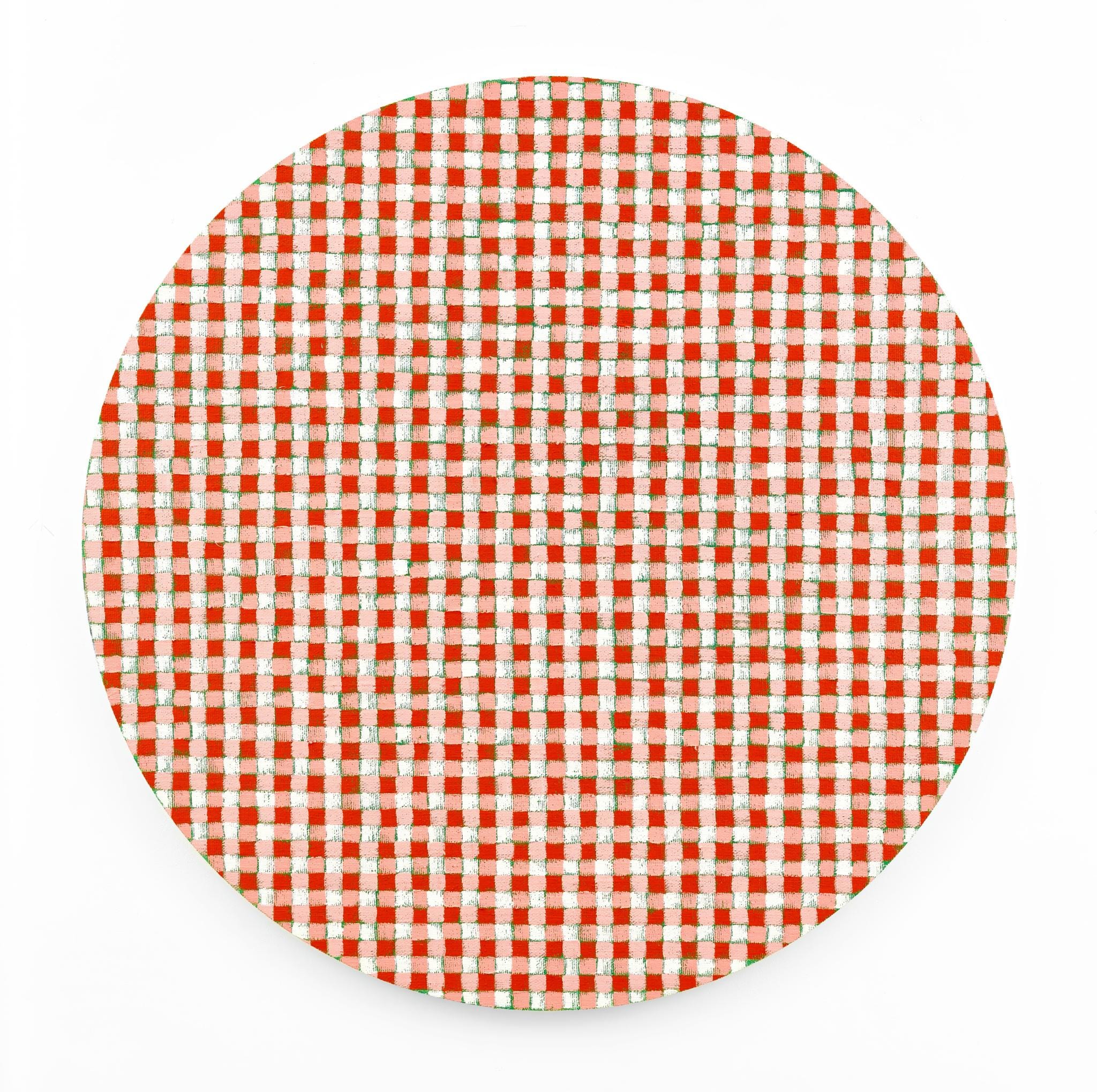
Michelle Grabner is an esteemed artist, curator, gallerist, critic and professor. A Guggenheim Fellow, she curated the 2014 Whitney Biennial and soon after was named by Artnet as one of the 100 most powerful women in art. Her work blends formal abstract visual strategies with hints of everyday life — jam lids, brooms, bleacher seats or gingham table cloth patterns — an approach that invites viewers into what Grabner calls an “intellectual engagement” with the familiar.
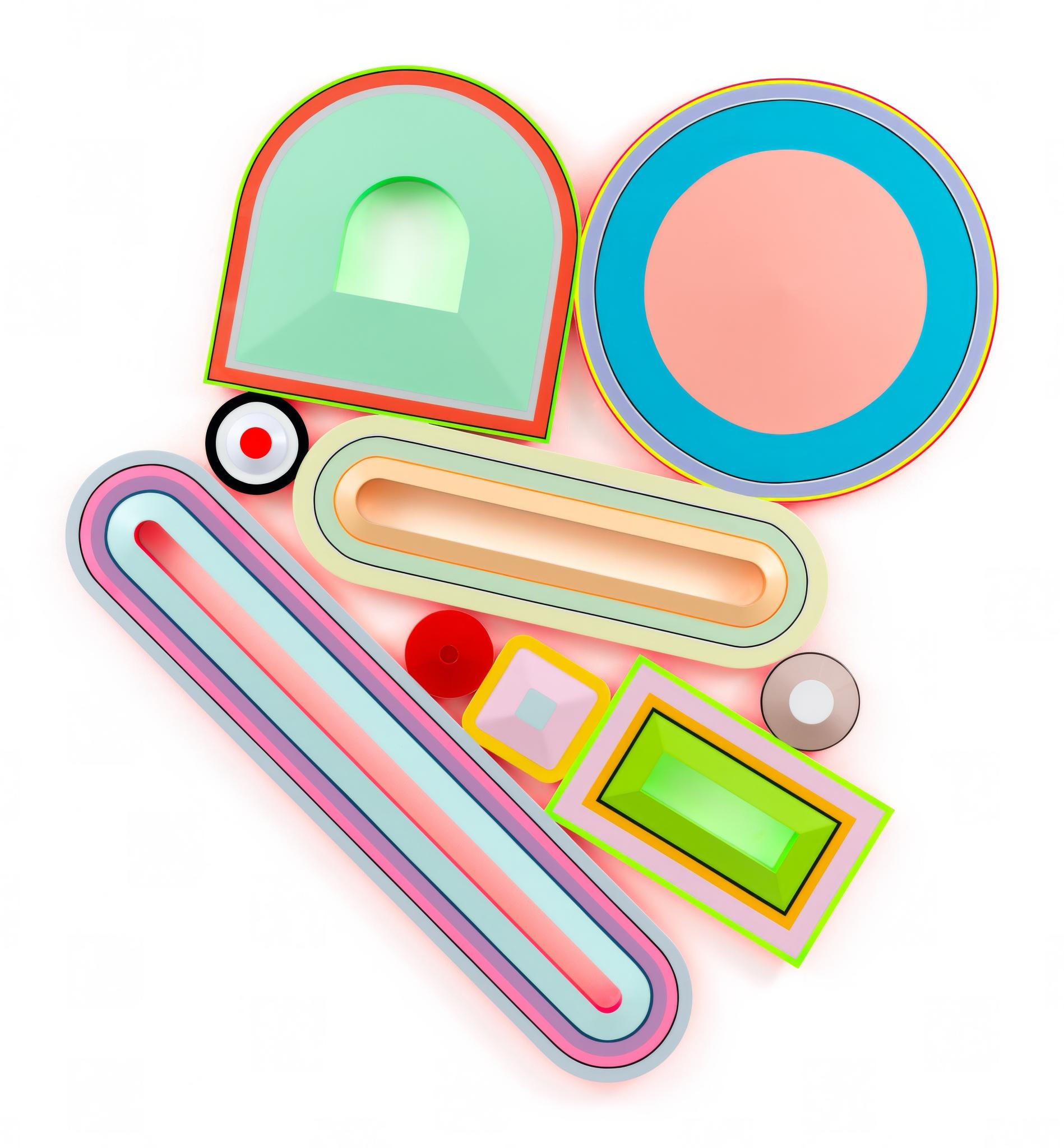
Beverly Fishman is also a Guggenheim Fellow, Anonymous was a woman awardee and former Head of Painting at Cranbrook Academy of Art. She makes abstract art rooted in the visual language of Big Pharma. She is best known for her wooden relief paintings, which are abstracted from pill forms and sometimes combined into multi-forms — a visual chemical cocktail. The high-gloss auto paint Fishman uses emits a glow, creating nuanced colourfields around the work and in the carved out spaces, which Fishman calls missing doses.
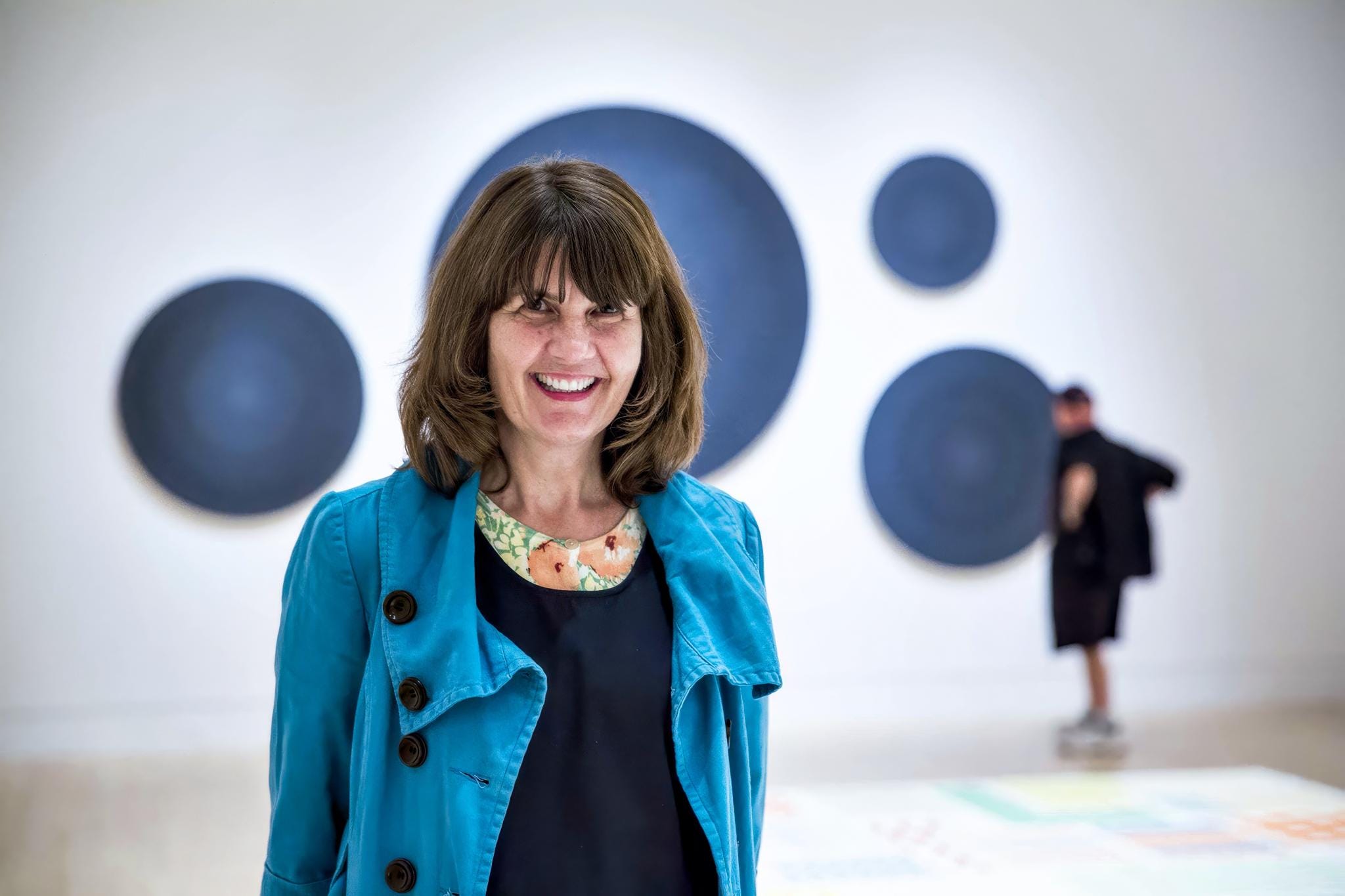
Both Grabner and Fishman are considered abstract artists, though they both also intentionally reference the objective world of recognisable imagery. Asked if she is thinking about specific messages or contemporary political concerns when she is working, Grabner says, “Absolutely. My work is highly critically thought through. I am hoping that that which becomes familiar, nameable, let us say a gingham pattern based on a grid, can be translated into a different kind of formal interpretation. The grid allows for a kind of sameness that can in some contexts be profoundly boring and redundant. But in another kind of social situation, where we are living in too much information, that predictability may be a handhold and may be really important. And with the gingham pattern, I am talking about … the idea of a grid carrying an anecdote to the chaos of too much information, too much political slant, the constant teasing out of truth and fiction in that daily information. That grid structure gives you a predictable, dependable framework.”
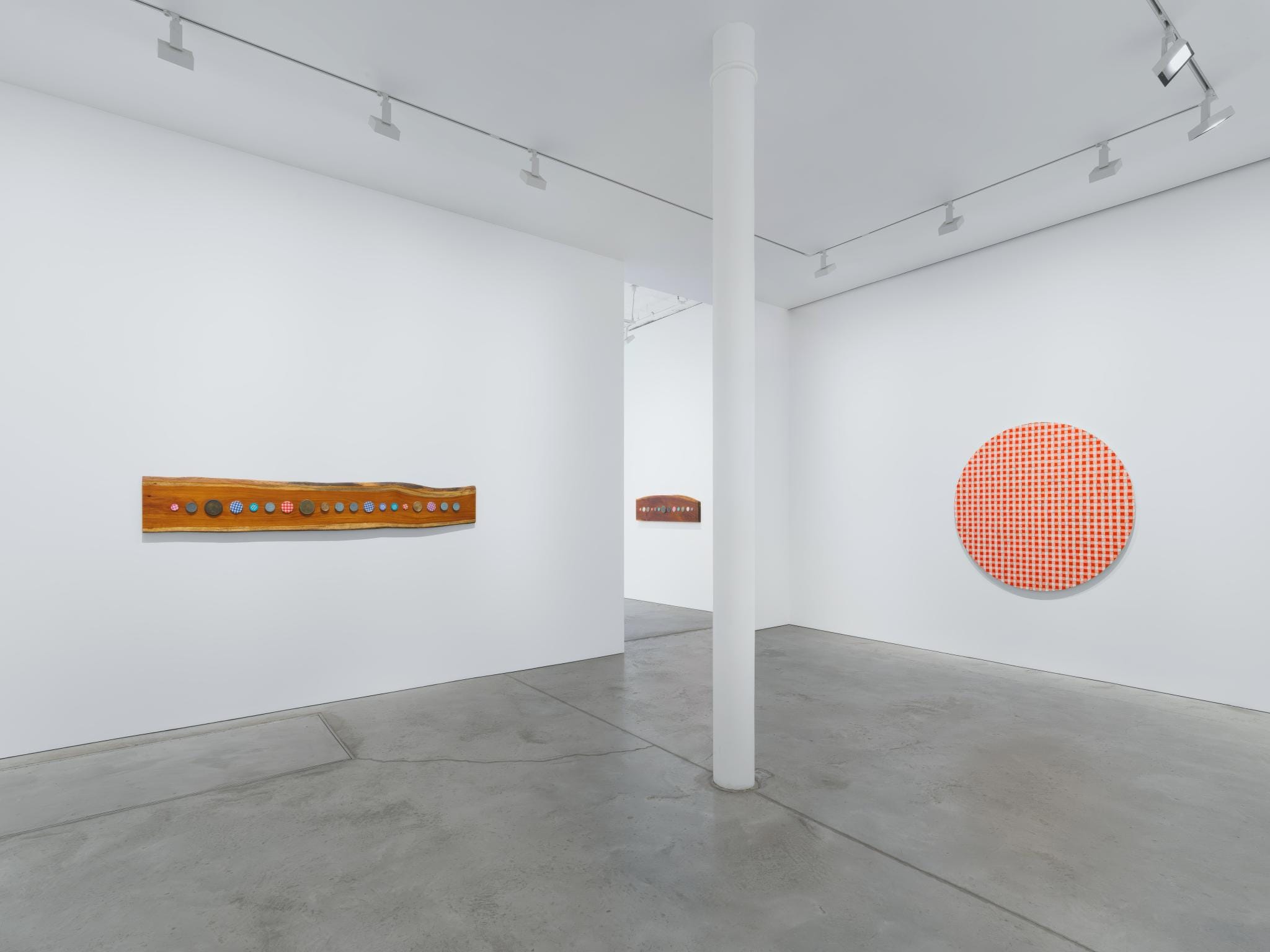
Grabner hopes that the grid will offer enough comfort to viewers that they will stick around to enter into a more complex relationship with the work, which allows for deeper personal interpretations. “There are many modes, hopefully, ideally, of intellectual engagement in the work, Grabner says, but there are a lot of viewers that I leave behind. It is not a good time. We are very literal. So if it looks like gingham, it is gingham. It is hard to get some sorts of viewers to actually think about the grid or think about the other vocabularies that are in it, and think about them abstractly as opposed to just thinking, you know, tablecloth. It is about trying to put a lens of abstraction over the thing we think we know, and then in that abstraction, doing a different kind of value assessment. Instead of taking it for granted, let it command our attention in a different way.”
Fishman similarly hopes viewers will linger with her work long enough to see beyond their initial interpretations. She is an adept art historian, and brings a multitude of Modernist abstract references into her work, including the Light and Space movement, Finish fetish and Hard edge geometric abstraction. But she is not referencing those movements or their concerns in a direct way. Nor is she trying to do it as an empty academic gesture. There is always what she calls a “confrontation” happening in her work, between aesthetic concerns and directed political content referencing society’s relationship with the pharmaceutical industry.
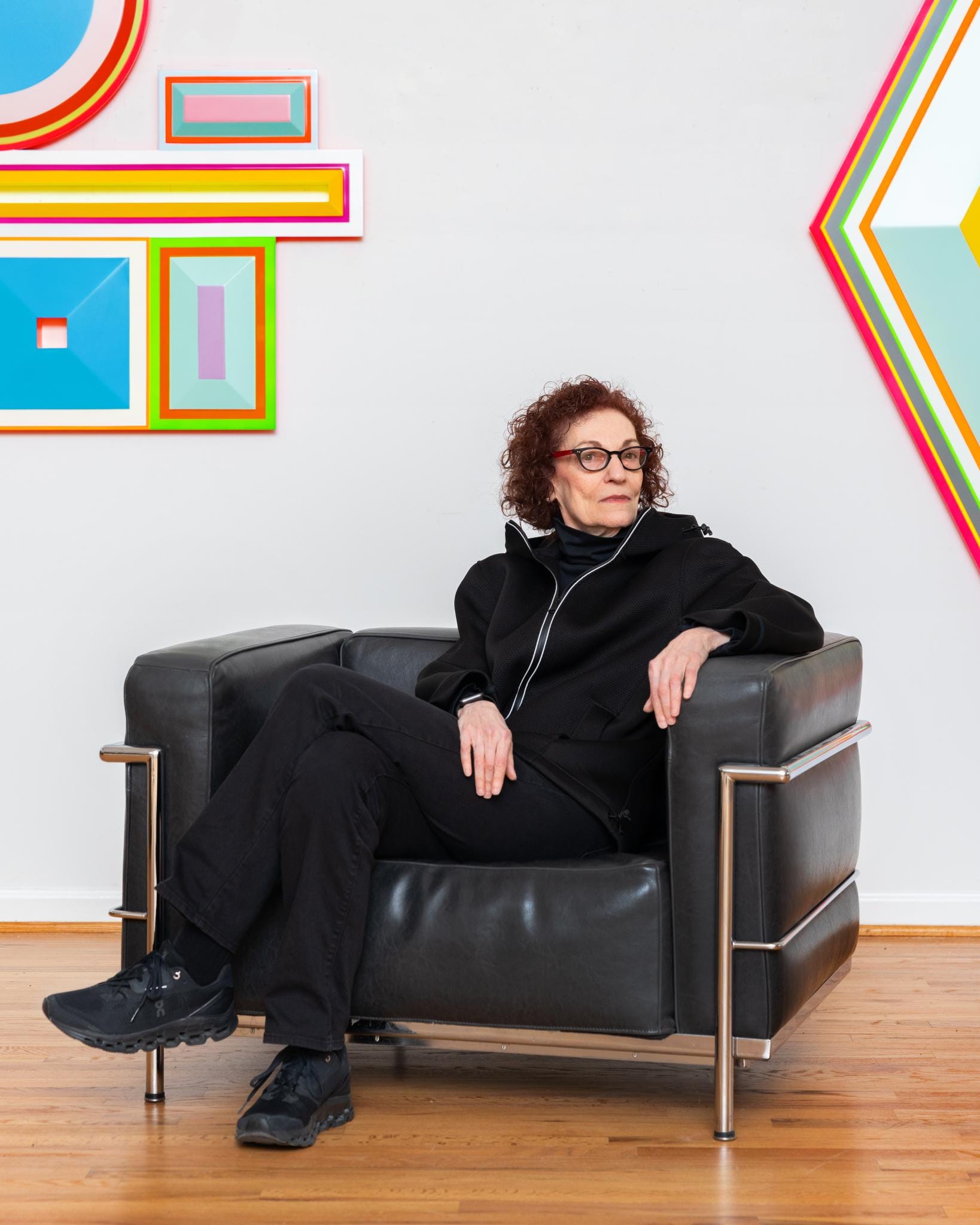
“I wrestle with abstraction, Fishman says, and I have done this for decades. But my work has always been connected to the contemporary cultural moment as well. It has never been pure abstraction. It has always had its source in real life issues circulating in contemporary culture and society. And I think as much about these social and political issues as I do about abstraction, to be honest. So there are two sources of inspiration for my work. I have a deep knowledge of the history of abstraction and my work comes from an engagement with this history: I want my viewers to recognise that my art emerges from this history and that it is deeply thought out and felt on an aesthetic level. But, for me, my work has also always been about confronting something in society that, in my mind, is really important: the role that Big Pharma plays in our lives, how medical imaging breaks down and transforms the human body, how color helps to construct both gender and identity. But I have never wanted to be didactic about my thinking. I have never wanted to be obvious or literal. I hope one could have an aesthetic, transformative experience through abstraction… and then realise through the mind that there is a lot more going on in the work than that.”
Cultural currency
Abstract art has always been an easy target for criticism from those who feel art should be a political tool, because it seems to lack obvious narrative content. However, the lack of obviousness is, in fact, the most political part of abstraction — it allows people to think for themselves. Freedom of thought is in short supply today, as are other qualities often inherent in abstract art, such as experimentation and beauty. These things are reserved more and more for the powerful and the elite, who increasingly want to commodify and control them.
“We are at a point where experimentation is hard to transact, says Grabner. I have sat in front of funding boards who want to give money to an exhibition that I am curating, but they need to know exactly what an artist is going to do three years from now at that space. I tell them that no, you are supporting the experimentation of that artist. That is what you are funding. And increasingly, it just does not happen because it is hard for experimentation to be transactional, especially in that context. That is even becoming problematic in art school where federal funding is withheld if we cannot show an artefact of learning. That is a huge problem. How do you show the artefacts of experimentation? Decades ago, critique was considered a form of assessment and accepted by the governing bodies who give accreditation in higher learning. Now critique is not, by our accrediting bodies, considered a form of assessment. So the best I can do is just keep insisting that experimentation is necessary for an artist. No one will ever understand what success is if one does not fail in those forms of ignorance or experimentation. You cannot have success without — I do not want to say failure, because that seems a little cliché and easy — but without the freedom to fail.”
The cultural currency Fishman most often uses in her work is beauty. She knows that a shiny, colourful, beautiful object has the power to attract a viewer from across the room. “I use beauty, and beauty is dangerous, Fishman says, because we stop thinking. We are just drawn to it. We are just taken by it. We are just in awe of it. We lose our rational side for a bit. I hope it is something I have utilised that keeps the viewer looking longer. To stay with something longer. Then, when the beauty starts to calm down a bit, thinking might take over. Then the thought process might change. That is very important to me.”
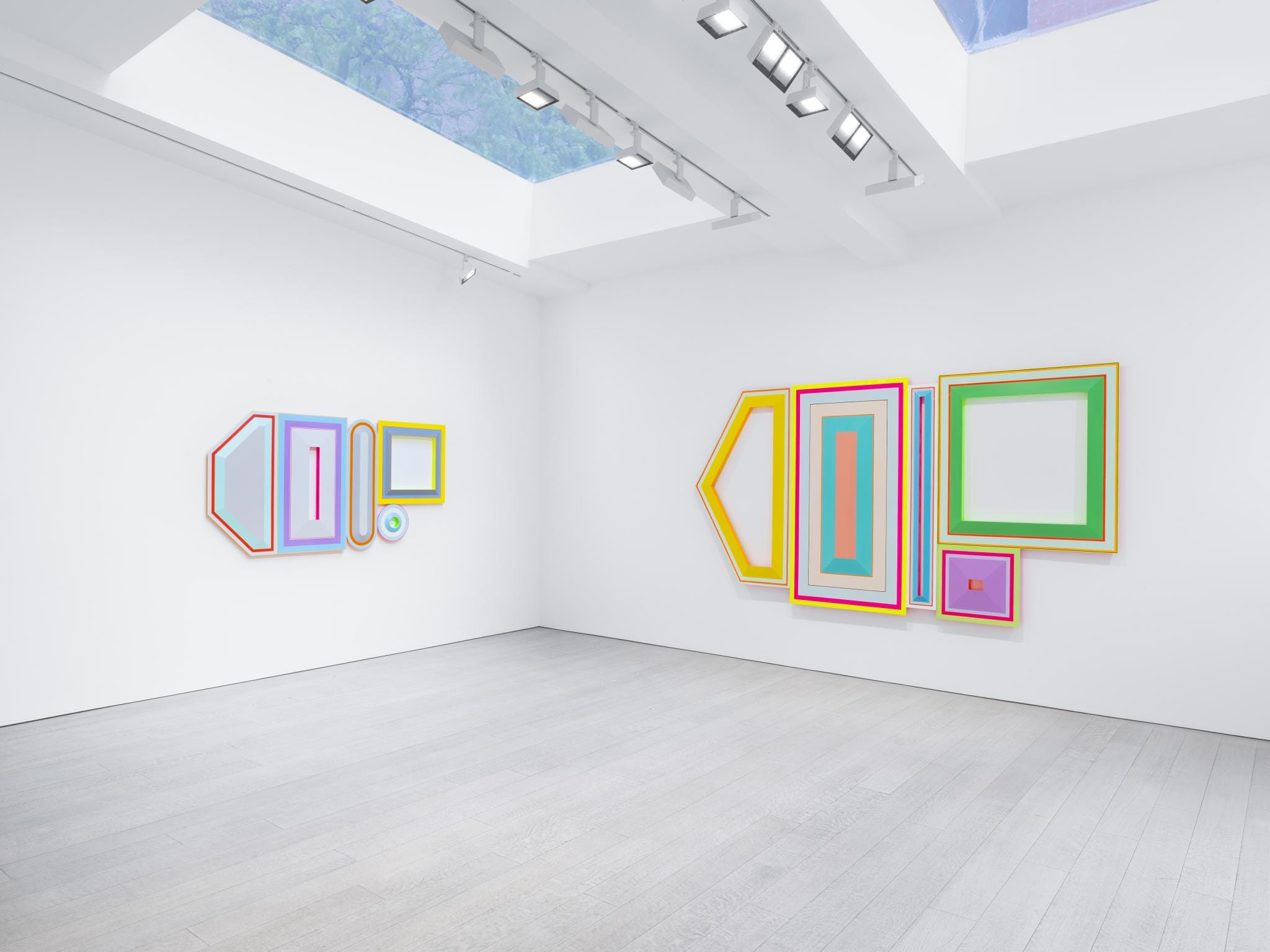
Fishman’s titles have long been an ironic foil to the beauty of her wall reliefs. A glowing, cotton candy-coloured multi-form that might look perfectly at home in a child’s bedroom might also have a title like, “Bipolar, Opioid addiction, Anxiety,” having been named after the diseases that are treated by the pill forms she is abstracting. Recently, however, Fishman has shifted her thinking about her titles in a way that offers viewers a different kind of entry point to the work. “They no longer deal with the disease, Fishman says, they deal with the cures. So, instead of it saying ‘depression, osteoporosis, anxiety’ it says something like ‘calm, stability, happiness, liberation’. That is because what was going on was, I was coming into my studio being elevated by my own work, having an experience of my own work that was different from the titles. I wanted to have an experience that did not bring me down, where I felt some joy. So the titles now are about the potential outcomes, not the disease itself. I think I am doing my job. But again, I do not want to be literal.”
Space for interpretation
Grabner has similar concerns about balancing enough stability in the work that viewers can be drawn to it, and leaving enough space for interpretation and subjective meaning. Over-storytelling, she says, is too prevalent in the art field today. “AI will tell you how to think about something, Grabner says. We are also at a time where artists and the cultural system at large are telling the artist’s story and the artwork ends up often being a prompt to that story. We are not meeting at the artwork anymore. We are meeting at the story of the artist. And sure enough artists are exceptional and have really interesting stories. But I say very carefully when I am lecturing, mostly to students, that to honour you, I will talk to you about yourself. But if I am honouring you primarily through your work, we are going to assess the work that you make. You are an artist and I owe you that.”
In addition to trying to talk more about themselves than the art, Grabner says artists are afraid that if they do not explain the work enough nobody will “get it”. Viewers are similarly terrified that they will say something wrong about a work and then be embarrassed. “This is something I deal with, particularly with young students who feel that if they get an interpretation beyond what they were conceptualising in the work, that either I am absolutely wrong or they have failed in communicating the ideas that they wanted to bring forth, Grabner says. I have to really underscore that critique is not judgment and that interpretation expands the work. You do not have to agree with it, but if there is something that you put forward that somebody else can see and assess very differently, that is a miraculous thing. That is a thing that we should encourage and not a thing that we should see as an assessment of the work failing.”
Grabner says this phenomenon comes from “over professionalisation of artists who spend a lot of time writing artist statements and articulating exactly what they are getting after. That really closes down radical or rigorous kinds of assessment and interpretation. I am really pushing back against the professional, institutionalised practice of accompanying an artwork with such highly specific language that there is no room for reassessing it, reinterpreting it.”
It is a problem, Grabner says, because it means no one but the artist can participate in the art. “As a viewer, that is how I participate: if I am just looking at something and reading 500 words that accompany the piece of how I am supposed to interpret it, then I am just consuming the work. I do not want to do that. I want to be active as a viewer and start to disentangle it — reshape it, recontextualise it, and then revisit it and see where my assessment was. And I do not have to be right. That is the fine line between consuming an idea and an object or actually participating in its meaning making. In the art marketplace, it is just easier for an audience who feels uncomfortable about art making to transact the story of the artist, as opposed to telling somebody you should feel comfortable interpreting this red square.”
Fishman adds that, for her, the most crucial element in the interpretation of abstract art is to revisit the work over a long period of time, in different circumstances, to allow interpretation to evolve. “I keep looking at it and surprising myself or something shifts, Fishman says. Or I will look at the piece in the morning light, I will turn the lights on, I will go back in the late afternoon for a different quality of light and see if something else happens. I am interested in being involved with the work over a long span of time. I think that is what makes it different from anything else in life that is immediate.”
This is one of the biggest ways abstract art intersects with politics today, Fishman says: it exposes humanity’s chronically short attention span and unwillingness to quiet their minds. “Our culture does not want to spend that much time even with themselves, Fishman says. People cannot sit in silence. They are afraid of silence and have to make noise for themselves. I sit very quietly with nothing going on, except whatever my brain wants to think about. That is scary for a lot of people, especially a lot of younger people. And I do not mean going out in nature. I mean just sitting with yourself. They are talking about AI reducing our intelligence, because our brain does not have to work so hard to create a full sentence, or redo something. If a machine can take my first impressions, my inchoate ideas, and turn them into polished prose, then I do not have to develop my thinking. I do not have to rework my thoughts, you know? It is the same way with Instagram and everything else. People will say, I saw your work. No, you did not see my work. You saw a tiny image taken from a single perspective on your phone. I had a group of students come to a show and some of them said, I never saw your work in person before. It is so different from what I thought it was. And I said, yes, it should be different. It should have something — and not a cheap trick, not something fast. Not something that is obvious.”