(Originally published in AMA Art Magazine)
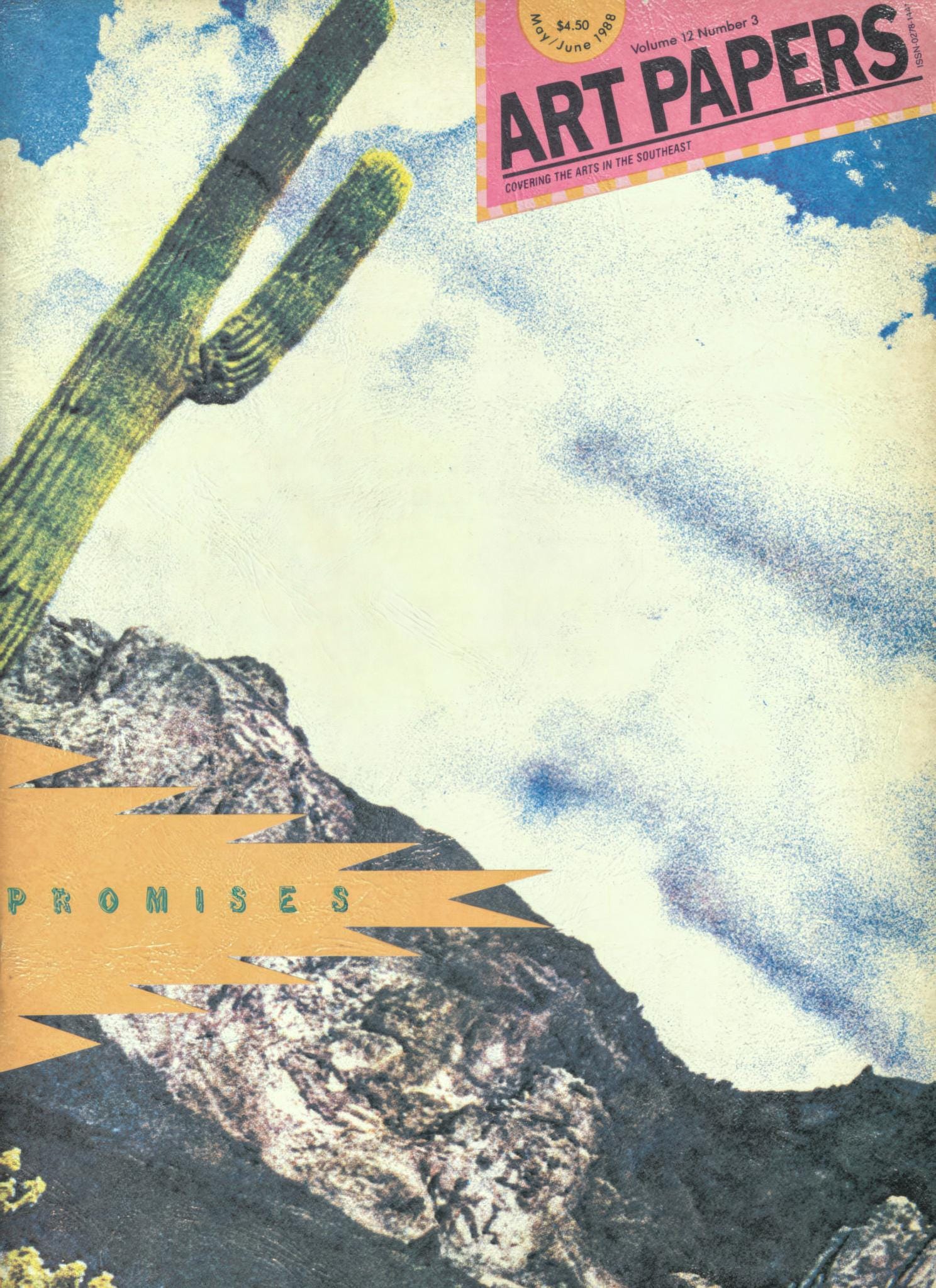
As the journalism adage goes, “Dog bites man is not a story. Man bites dog is a story.” The fact that Art Papers, a non-profit art criticism magazine based in the US city of Atlanta, Georgia, is going out of business is as dog-bites-man as it gets. The phrase “defunct art magazine” is almost redundant. It is more newsworthy that Art Papers stayed in business — publishing in print — for 50 years (most of which were post-internet).
But the real story is the way Art Papers is going out. They are engaged in a form of journalistic assisted suicide; a three-year managed death, which they compare to fire ecology.
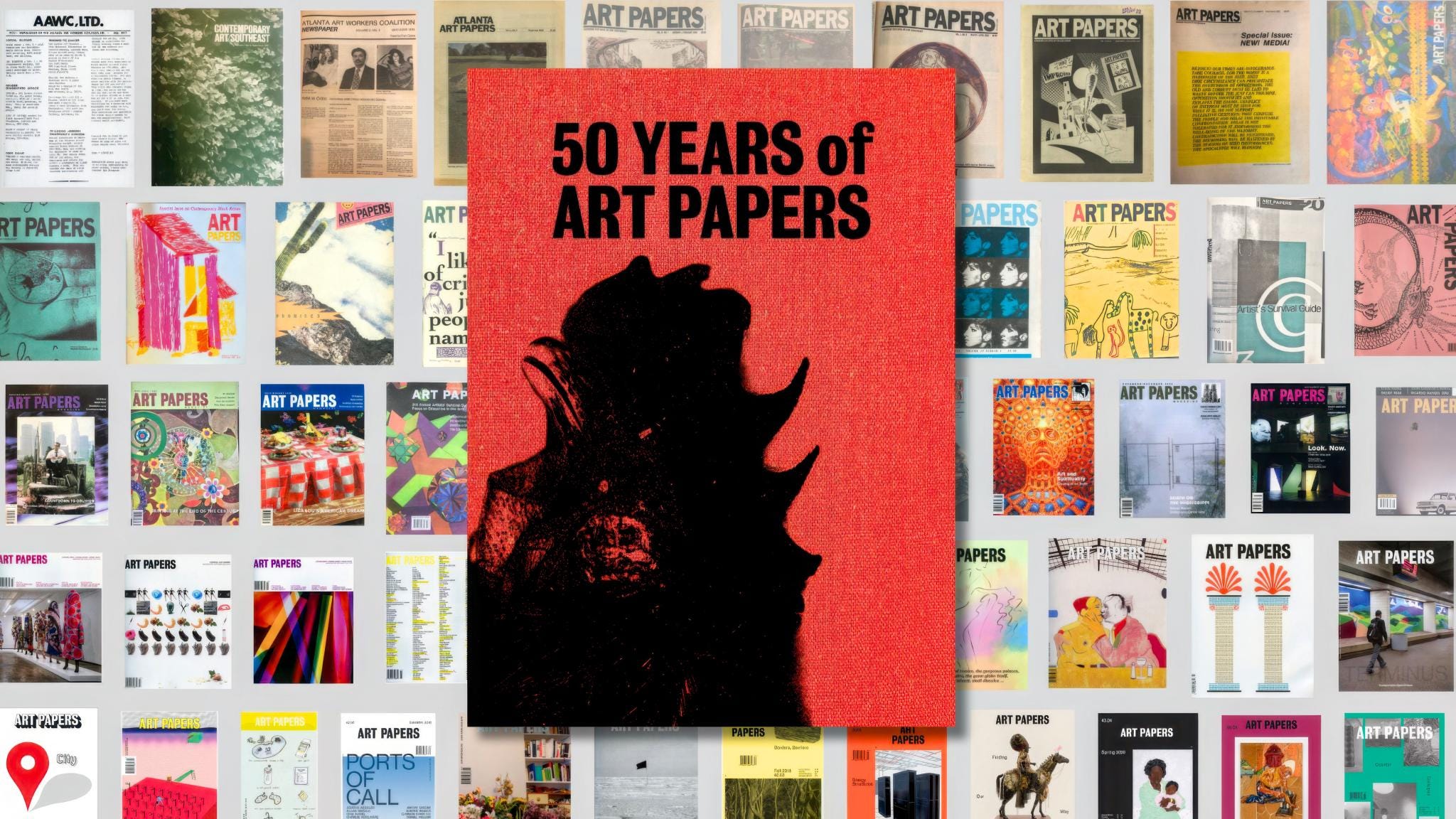
Fire ecologists study what happens when natural ecosystems burn. The destruction of old growth is catastrophic, but it also creates new opportunities for other lifeforms, particularly smaller ones. Art Papers was a tall tree in the art criticism forest, one of the last remnants of a bygone era when non-profit art criticism publications not only thrived, but dominated. It became obvious some years ago that the economic roots feeding that ecosystem were not faring well in the US. Smoke was gathering on the horizon.
“In 2023, we realised we could not sustain the organisation using the funding models we had relied on up to that point”, says Sarah Higgins, longtime leader of Art Papers and Executive and Artistic Director managing its closure. “We looked at what conditions led to that situation and it was clear there had not been any big misstep. We had a good executive director who saw us through COVID. It was not like we had a bad ED that drained us. We were doing things right, and we were doing things well… and we still could not make it work.”
Higgins estimated they would run out of money in a matter of months. “It was a cataclysmic moment for the organisation,” she says. “Where we finally landed was, instead of blipping out, just disappearing, like so many nonprofits do, where nobody knows how close to the edge they were, until they are gone, we decided to halt everything and fundraise around the idea of ending well, of having a meaningful ending, a generous ending.”
The idea was not unprecedented. In Japan, in formerly industrial areas where industry has left, there are traditional wooden houses that are now without owners. They are beautiful structures, but are being torn down because no one can afford to maintain them. Local people have, however, generated enough enthusiasm to hold funerals for the houses before they are demolished. They clean them and hold rituals within, preparing them for death. Though many of the houses have now disappeared, the rituals have also sparked some renewed interest amongst people to save the remainders.
To Higgins, the demise of Art Papers holds similar potential. While she found it impossible to fundraise around the idea of the continued existence of the publication, the fire ecology concept was compelling enough to attract funding to produce the final issues of the magazine, create a proper archive and to organise a series of public programmes at which stakeholders could discuss lessons learned and maybe spur new growth in the art journalism field. The public programmes also gave people the chance to spend some final, meaningful moments with this beautiful thing that was not meant to last, but that offered comfort and beauty while here. Maybe, Higgins hopes, some will take interest in sustaining what remains of the traditional scene. Or maybe it will all still be torn down and something new will be built. Maybe that is the natural way. “There are certain ecosystems that have evolved to need fires to germinate their seeds.”
The convenings
The first public programmes Higgins hosted were local: a series of panels, workshops and talks focused on the Atlanta visual art nonprofit community. “The conversations in that first programme series focused on adaptive models, innovative support structures, cross sector collaborations,” Higgins says, “things that were already happening that people maybe are not aware of because it is not getting algorithmically pushed to them.”
Attendees received a printed recap that included a list of Atlanta art businesses, non-profits that present art exhibitions, commercial galleries, project spaces and art handlers. “That kind of list is, of course, out of date the moment you print it,” Higgins says, “and I am sure there are things we missed. But, for the most part, it was a pretty comprehensive snapshot of what was happening in the Atlanta art community at that moment. It was about trying to create awareness around what exists so if people feel a sense of loss or grief at the end of Art Papers, they might channel that into support for what we already have.”
Next, Higgins organised a larger series of programmes that she called the Arts writing and publishing symposium, a three-day event looking beyond Atlanta at the various existing models, forms and audiences present within contemporary art journalism. The advertised goal was to bring together “key voices from art criticism and contemporary art publishing to examine the field’s present and future.” A “real-talk” approach was promised — something sorely missing in the contemporary art field in general; publishers rarely talk about why they “fail”, nor do galleries, institutions or individual artists. That veil of secrecy makes the entire industry more precarious.
In the spirit of real talk, it should be noted that while the speakers at the symposium delivered on their promise of transparency, all sixteen were based in the United States; most in New York. The only speaker from west of the Mississippi River was from Los Angeles. Every speaker was from a major city. Most art writing and publishing today is done outside the US, away from art capitals, by individuals not represented on major platforms. It could be argued these were American elites speaking about an international industry mostly run by non-elites. Despite that siloed perspective, the symposium generated insights. (Video is on the Art Papers website, and the final issue of the magazine synthesised the event.)
“What we found was that our field is full of people who are starting new things,” Higgins says, “who are choosing print because they want an analog experience, or other people who are using social media not just as a place to promote what they are doing, but as the vehicle for what they do. New projects are finding people where they are and others are embracing models that are about pulling people out of those spaces, trying to get people to disengage from the algorithmic scroll. There are interesting ideas happening in all of those different spaces, even ones with divergent strategies.”
The small survive
Students of the history of art periodicals may not be surprised by the trends Higgins describes. In 1976, the same year Art Papers was founded, the Victoria & Albert Museum in London mounted an exhibition titled “The art press: Two centuries of art magazines”, the content of which revealed that the art publishing field has always been full of everything Higgins describes: people starting new things, some seeking a more traditional experience, others using new mediums either to meet people where they are or to transform how those mediums are perceived.
Meanwhile, so many art periodicals have developed “divergent strategies” that the word divergent almost lacks meaning in the space. In 2011, art historian and journalist Gwen Allen looked into the anarchic, primordial art publishing field in her book Artists’ magazines: An alternative space for art. Though Allen covered only the preceding half century, she documented almost incomprehensible variation. With a few notable exceptions like K-HOLE’s “trend-forecasting” magazines or the New Orleans-based “conceptual nudie magazine” Mamma Tried, art publishing has gotten less innovative since Allen’s book came out, not more.
Echoing that observation, the Art Papers symposium revealed that many emerging art publishers today avoid swinging for the fences with big ideas, evidently as a survival strategy. “What I see for the future is that small is going to survive,” Higgins says. “I think about the story of when the meteor took out the dinosaurs — it was the small creatures that survived through that period. If you are small enough, you never have to bow to the money and you do not have to compromise your voice. You do not have to be answerable to forces that are going to try to draw you into service of power. You can stay limber and stay true to that ethos.”
That advice feels solid for aspiring art publishers striving to build something sustainable. Yet, again, is sustainability the point? Like those traditional Japanese houses, even beautiful things have a lifespan. It is bodacious that Art Papers published for 50 years; Higgins and her predecessors deserve credit. But future art publishers should learn the bigger lesson: starting an art magazine is an economic kamikaze mission. You need a good reason to germinate in this forest, because eventually the fire gets everyone. RIP Art Papers: you were a big tree.