

It is time again for Sonsbeek, one of the art calendar’s great enigmas. Named for Park Sonsbeek in the city of Arnhem in the Netherlands, where it has historically been held, it is basically a recurring art exhibition, like Documenta, Prospect new Orleans or the Venice Bienalle. But unlike those events, Sonsbeek recurs only occasionally, seemingly at random, as if returning only when needed.
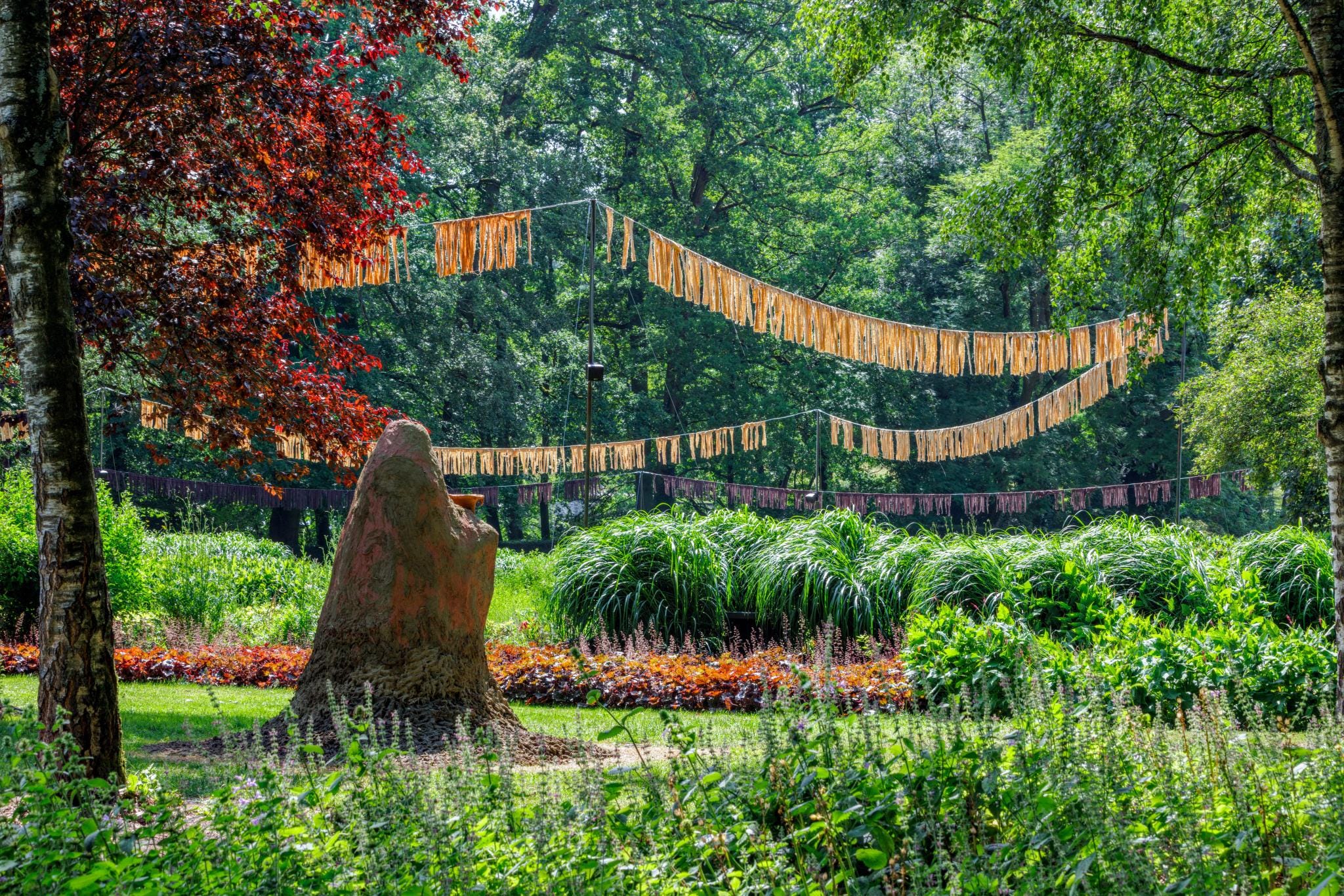
The story of Sonsbeek begins in a turbulent time, during Europe’s reconstruction after World War II. “Before the war, Arnhem was a city that was famous for their parks and the green environment,” says Orlando Maaike Gouwenberg, Director of Sonsbeek art projects. “It was this lush green city where people had their holiday house.”
That bucolic character changed radically when the front lines reached the city. The invading Nazis forced the entire population to evacuate, and many buildings were leveled.
“After the war,” Gouwenberg explains, “Marga Klompé, an alderman for Reconstruction in Arnhem, went to London and saw this outdoor art exhibition in Battersea Park. She came back and went to the mayor and said we have to do this here; not only is it good for the people who are in reconstruction dealing with trauma to have a little bit of beauty in the bleak aftermath of the war, but also as a tool to bring back tourism to the city. So the starting point was very optimistic.”
Such optimism was a radical act. The success of reconstruction was hardly a foregone conclusion. And as with much of Europe, it was not just buildings that needed fixing in the Netherlands; the whole social fabric was broken. Initial Dutch neutrality towards the Nazis had been intended to shield the country from attack, but that strategy failed. When the Nazis invaded anyway, around 70% of the Dutch Jewish population was exterminated (one of the highest percentages in Europe). Even more horribly, as the BBC reported in 2025, around 425,000 Dutch citizens are known to have collaborated with the Nazis in that murderous effort.
The Sonsbeek art festival was thus far more than an attempt to give folks something to see in the park. It was an attempt, however small, by the populace to re-establish basic trust, amongst each other and in themselves.
A history of disruption
Sonsbeek 1 opened in 1949. It included 199 works, all selected by a jury of Dutch sculpture experts. Around three-fourths of the exhibited artists were Dutch. Most sculptures were displayed in the open air in Park Sonsbeek. Admission was free. 125,000 people attended (5,000 more than the population of Arnhem at the time). Many of the works were acquired for the city’s permanent collection. It was deemed an unqualified success.
But as organisers began planning for the exhibition to become a recurring thing, big questions were raised: What public does the festival serve? Do all members of that public have the same ownership over public space? Should they be consulted about what they want from the festival? Can public art occupy nature without causing harm?
Subsequent editions of Sonsbeek have answered those questions with varying levels of success and failure. And when Gouwenberg was hired (not only to plan Sonsbeek 13 for 2026, but also to help shepherd the organisation towards a more sustainable future) she realised the questions were still as important and as difficult to answer as ever.
“Anyone comes to the park,” she says, “it is not only one type of visitor, like highly educated people or working class or only students. So how can you show experimental contemporary art and look into the future — the job of the curator, basically — and then translate it to anyone?”
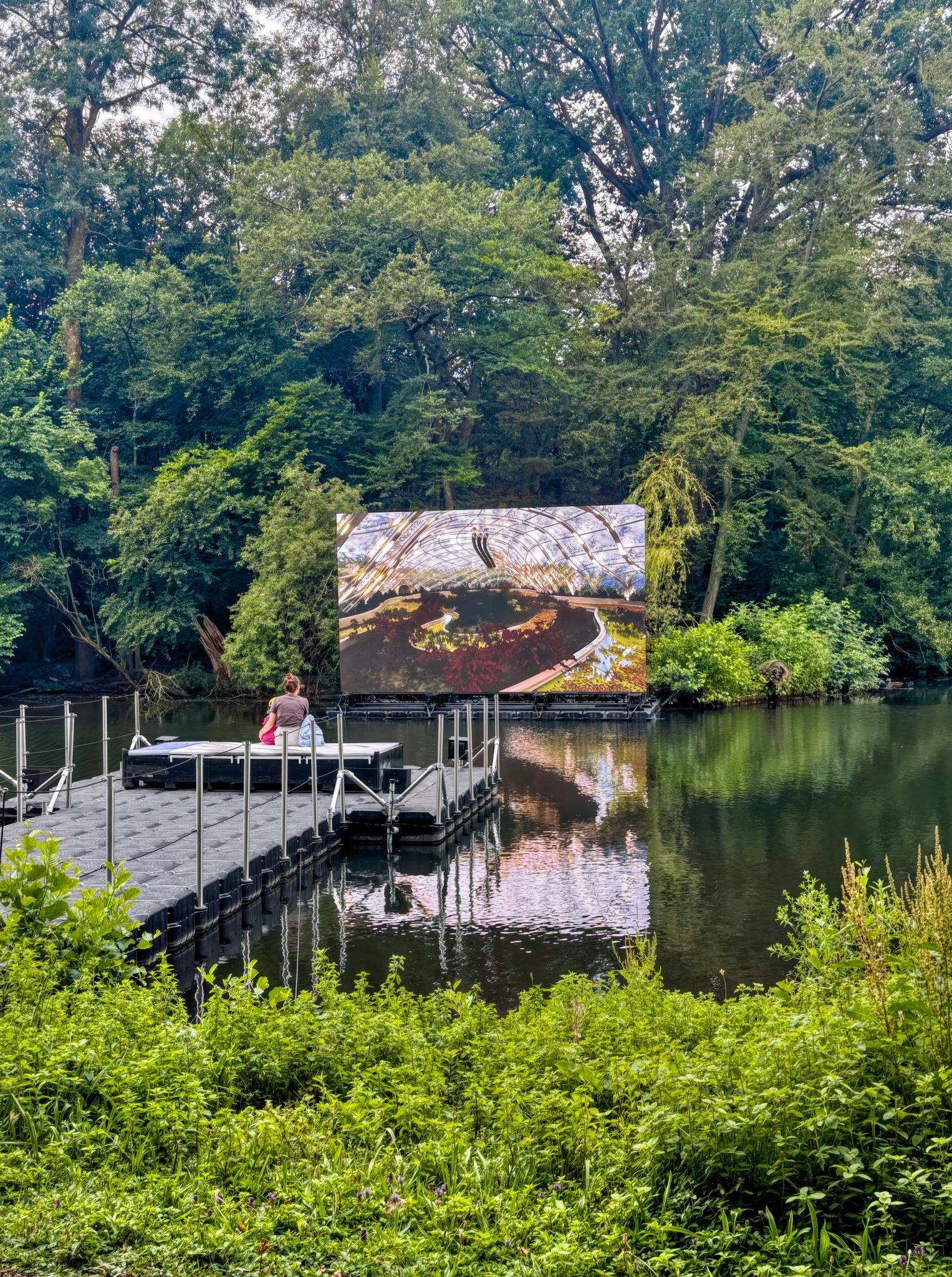
Gouwenberg invited two co-curators, Amira Gad and Christina Li, to assist her with the challenge. They attacked the question of public space head on, starting with a title for Sonsbeek 13 that strikes at the heart of the issue: “Ik hoef geen tuin, ik deel een park” (“I do not need a backyard, I share a park”).
“Sonsbeek holds a distinct position within the history of large-scale exhibitions,” say Gad and Li. “It is one of the earliest of its kind in Europe — preceding both documenta and Skulptur Projekte Münster — and emerged at a moment when the question of public space was becoming urgent in the context of post-war reconstruction. Unlike the Venice Biennale, which is structured around nation-state representation, Sonsbeek was never conceived through that lens. Its foundation lies instead in the idea of art as part of a shared civic environment, embedded within processes of urban renewal and collective life.”
Memory edit
Gad and Li furthermore gave Sonsbeek 13 a theme: remembrance. “This theme of remembrance gives the possibility that remembering is an active practice,” Gouwenberg says. “It is not like looking back and being nostalgic, but how do you use the past and present to create new stories for the future.”
Indeed, what gets remembered and what should be forgotten are questions baked into the festival’s history. It has been plagued by a lack of regularity; multiple curators have caused public outrage with their controversial choices; several editions were so poorly attended that the event was nearly bankrupted or abandoned altogether.
Initially, after the successful first edition, it was decided the festival would be a triennial. That plan held up for the next three editions, which also followed the same framework as the first edition, with sculptures mostly exhibited in the park with free public admission. However, the artistic focus shifted away from Dutch artists and towards more internationally famous names like Picasso, Giacometti, Calder, Rodin and Henry Moore. Attendance steadily declined. By the fourth edition in 1958, visitor numbers dropped to around 64,000, half that of Sonsbeek 1.
The triennial structure was thus abandoned. It was eight years until Sonsbeek 5 was organised. Instead of being juried by Dutch sculpture professionals, the works were selected by a committee of institutional experts who focused on younger artists associated with various vanguard movements. This strategy worked, attracting more than 86,000 visitors.
Five years later, for Sonsbeek 6, the decision was made to ditch the juried model and hire a single curator. That change proved monumental. Some say it was genius. Others say it was a disaster.
“The curator [Wim Beeren] took the exhibition outside of the park, into the provinces and into different institutions,” explains Gouwenberg. “It was called ‘Sonsbeek buiten de perken’, which means basically ‘Sonsbeek out of bounds’.” Exhibitions spanned the country, requiring great effort and expense from would be attendees. Locals snubbed it entirely, resulting in visitor estimates of around 17,000 to 35,000. It caused such a backlash that it took 15 years before another edition was proposed.
The curator of that edition, Saskia Bos, returned the exhibition to the park, which made it more accessible, but also made the divisive decision to encase many of the outdoor works in glass. It made for some strange scenes, of sculptures in transparent cages amongst trees and shrubs. Bos maintained that it highlighted her concept that contemporary sculpture “does not adapt to nature, let alone merge with it.” Many attendees were annoyed, but the decision to at least return the festival to the park increased attendance to around 80,000.
Seven years later, for Sonbeek 8, the first non-Dutch curator was hired, an American named Valerie Smith. Like Beeren, Smith made the disastrous choice to expand Sonsbeek beyond the park to sites all around the city. She then selected several works that outraged visitors, including a sculpture of a naked man with an erection installed near a church. Smith’s edition is highly regarded by academics today, who praise it for breaking the mould. But attendance was the worst ever: around 12,000 visitors.
Eight years later, curator Jan Hoet from Belgium again took Sonsbeek beyond the park, exhibiting works at a shopping mall and a church. And again he selcted works that outraged members of the public, including a dead horse sculpture in a tree, and a Nazi swastika made from coffee beans and legumes. Hoet is praised by art historians for his untraditional approach. But with only around 22,000 visitors, his edition, too, raises the vital recurring question of who, exactly, public art is meant to serve.
Is it a platform for curators to make their name? Is it a tool for political spectacle? Or is it an opportunity to provide something beautiful or endearing for the people whose world it temporarily occupies?
For the tenth edition of Sonsbeek in 2008, Dutch curator Anna Tilroe again returned the exhibition to Park Sonsbeek. Her concept was that artists should inspire people towards grandeur. She kicked the exhibition off with a procession of artworks through the city streets. “The procession was performed by 1,000 citizens of Arnhem,” says Gouwenberg. “They rehearsed this in the months ahead of the opening. It [was] a pivotal edition for the city and the trust in Sonsbeek. Many people are still referring to it when I speak to them.”
In addition to the 20,000 people who witnessed the procession, more than 115,000 visited the exhibition in the park, making Tilroe’s edition one of the most successful.
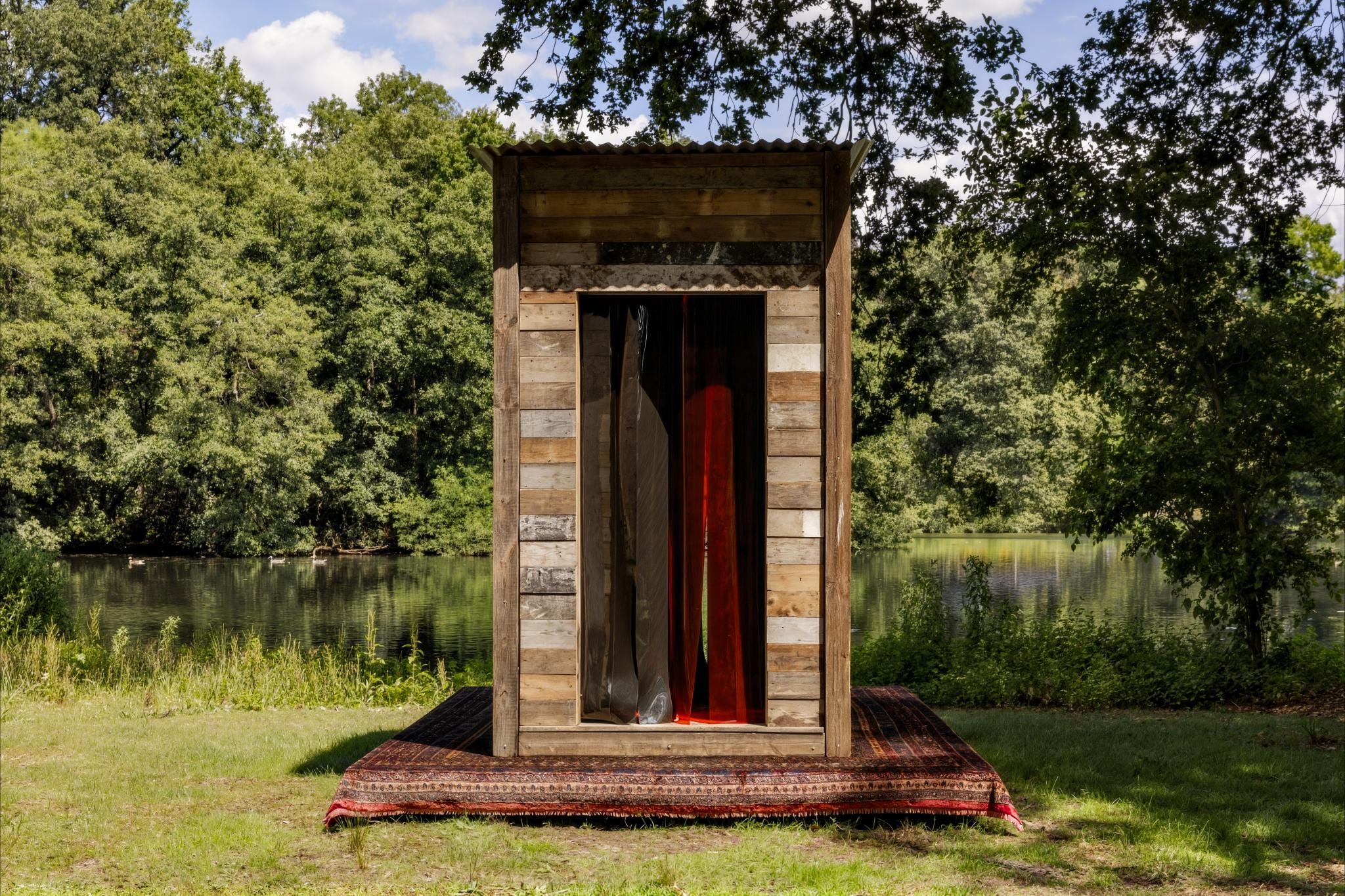
For Sonsbeek 11 in 2016, Indonesian curatorial collective Ruangrupa doubled down on the belief that art is meant to serve the public, not upset it. A year before the opening, they opened an event space in which communal aesthetic experiences were held. Then once the public artworks were installed, they held an open call for members of the public to organise events in around the artworks. This led to many unexpected events, like weddings and cooking classes being held inside the installations. The public response was enthusiastic, and visitor numbers again topped 100,000.
For Sonsbeek 12, the curatorial team again made the choice to expand to a range of sites outside of the park. They also adopted the unusual strategy of stretching the event out for four years, instead of the usual few months. They then incorporated technological strategies they explained were intended to examine “alternative narratives” about history, society and politics. It felt complicated, pedantic and out of touch with what the public had responded to in the past. Then in the midst of it, COVID hit.
“I think the concept of that edition was very strong and speaks to my own interests too,” says Gouwenberg. “Unfortunately, the communication of the artworks towards a wider audience did not fully come to fruition, which meant that some audiences felt a bit lost and excluded.”
For several reasons, the curatorial team made the decision to call it quits before the proposed four-year run concluded.
Future memories
Gad and Li say the inherent ups and downs of the festival (what they call a “history of interruption”) have shaped Sonsbeek’s identity in a positive way.
“This irregular rhythm resists the stability often associated with recurring exhibitions,” they say. “Each edition carries a sense of return, but also of recalibration. It makes clear that Sonsbeek is not sustained by tradition alone, but by a recurring need to rethink how art can engage with public space, over time, and in changing conditions.”
Nonetheless, as suggested by their title — “Ik hoef geen tuin, ik deel een park” (“I do not need a backyard, I share a park”) — Gad and Li have made the choice to return Sonsbeek to the traditional locale of the park. Gouwenberg says that was crucial for this edition, “because that is where it originated. That is where the attention has to go, because it got so dispersed.”
Gad and Li have also brought a new level of respect for the natural environment, something that has not been the norm in past editions. The park has all kinds of different ecologies, including a little swamp area, dry woods, hills, ponds and a stream. All are being incorporated in organic ways. To achieve this, Gad and Li engaged extensively with Jan Floor, the ranger responsible for Park Sonsbeek. This is not to possess or control the park, but to share it.
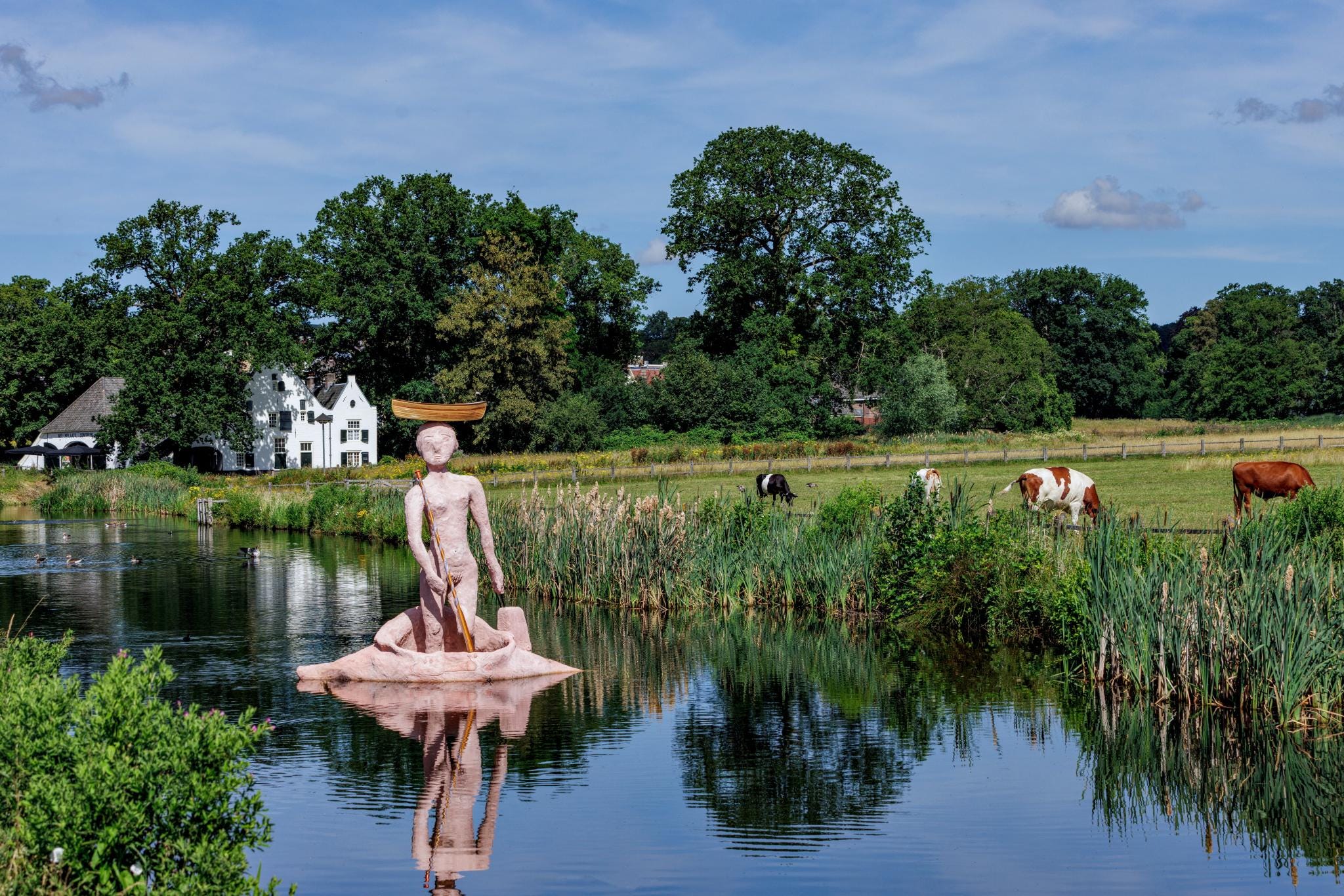
“Approaches that were common in earlier editions, such as installing works directly onto trees, or placing them along untrodden paths, are now largely avoided,”they explain, “as stronger protections are in place to safeguard trees, wildlife, and the ecosystem as a whole. These constraints have been generative, pushing us to think of the park not as a backdrop for human intervention but as a living system with its own inhabitants, histories, and agency.”
A lot is riding on the decisions Gad, Li and Gouwenberg have made. Back in 2023, after the collapse of the 12th edition, Arnhem city leaders might well have decided enough was enough. Instead they ponied up enough funding not just for the 2026 edition but also for another triennial edition in 2029, for the 80th anniversary of Sonsbeek 1. If things go well, the plan is then to settle into a regular quadrennial format after that.
And if things do not go well…it would represent a big loss for the art calendar. Something unique would disappear.
As Gad andLi put it, “Sonsbeek remains open-ended, attentive to what public space is, and what it can become. It has consistently pushed beyond the boundaries of the museum or gallery, not simply by relocating art outdoors, but by questioning how and where art can exist, and with whom it comes into relation. Perhaps most importantly, Sonsbeek maintains a certain openness. It does not prescribe how it should be experienced. Like the park itself, it is a space that must be navigated, negotiated and shared.”