(Originally published in AMA Art Magazine)
In the early 2000s, most writers with an Internet connection had a blog. There was no official blog writing style, but successful bloggers typically combined casual language with strong opinions. It was established early that journalistic rules did not apply to the blogosphere, neither did grammar. What else differentiated blogs from previous publishing platforms was that readers could post comments about articles right on the page, making blogs an international public forum with few gatekeepers, where anyone could speak and anyone else could retort.
This structure was particularly appealing for art writers, who had previously had to fight to convince persnickety editors they were educated and pedigreed enough to deserve one of the limited opportunities to get their work in front of the masses. Meanwhile, those same persnickety editors and the publishers who bankrolled their publications rightfully perceived blogs as a mortal threat to their already tenuous business model.
Within that primordial soup, Syrian-Canadian art writer Hrag Vartanian and his husband Veken Gueyikian saw opportunity; a chance to innovate a structured publishing platform that maintained the freeform, democratic voice of blogs. They called their publication Hyperallergic, and dubbed its platform a blogazine.
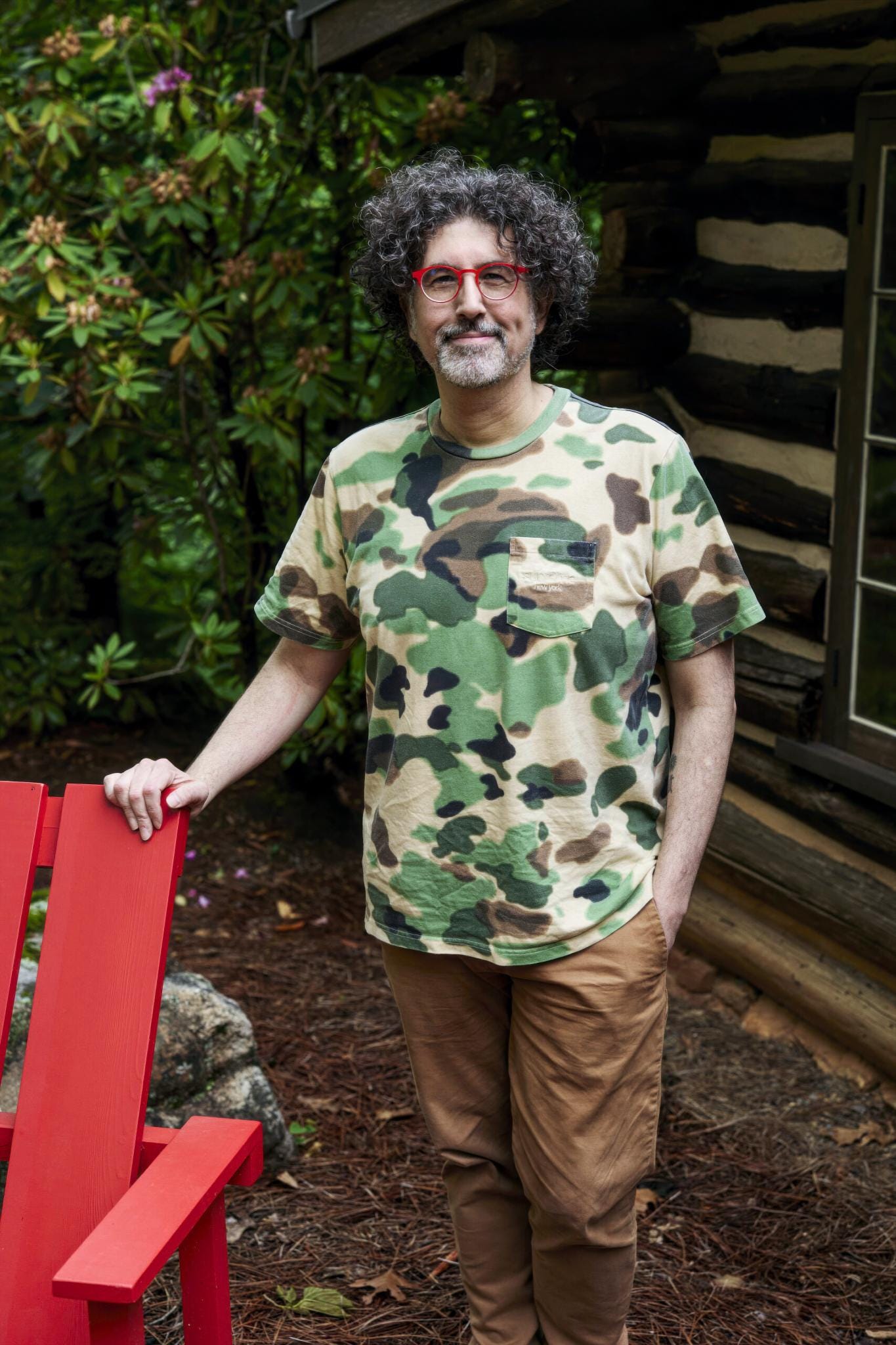
In the 17 years since, Hyperallergic has grown into one of the most widely-read contemporary art publications in the world. It is hardly the new guard anymore; most online publications long since mimicked its structure and style. It is dealing with its success, as well as emerging pressures like a struggling art economy and AI, by staying true to its philosophical roots, which above all include avoiding the pitfalls of conventional thinking. As Vartanian explains in the following interview, “good journalism challenges us to think in different ways.”
Take us back to 2009. What was missing from the art journalism landscape that compelled you to establish your own platform?
What was missing was a digital native publication that took the Internet seriously, but also talked about things that people I knew were talking about and not just these kinds of college-infused conversations. Also, an art publication that was written in a way that appealed to people who did not necessarily study art but were very interested in art in general. I had that experience with my partner and he has many advanced degrees, but he just found most art writing really uninteresting, often impenetrable. I was like, well, this is kind of ridiculous. Not everyone in my life is involved in art.
I should be able to have conversations with them and get them excited. So it came out of that impetus.
What are some of the things other art publications were not talking about?
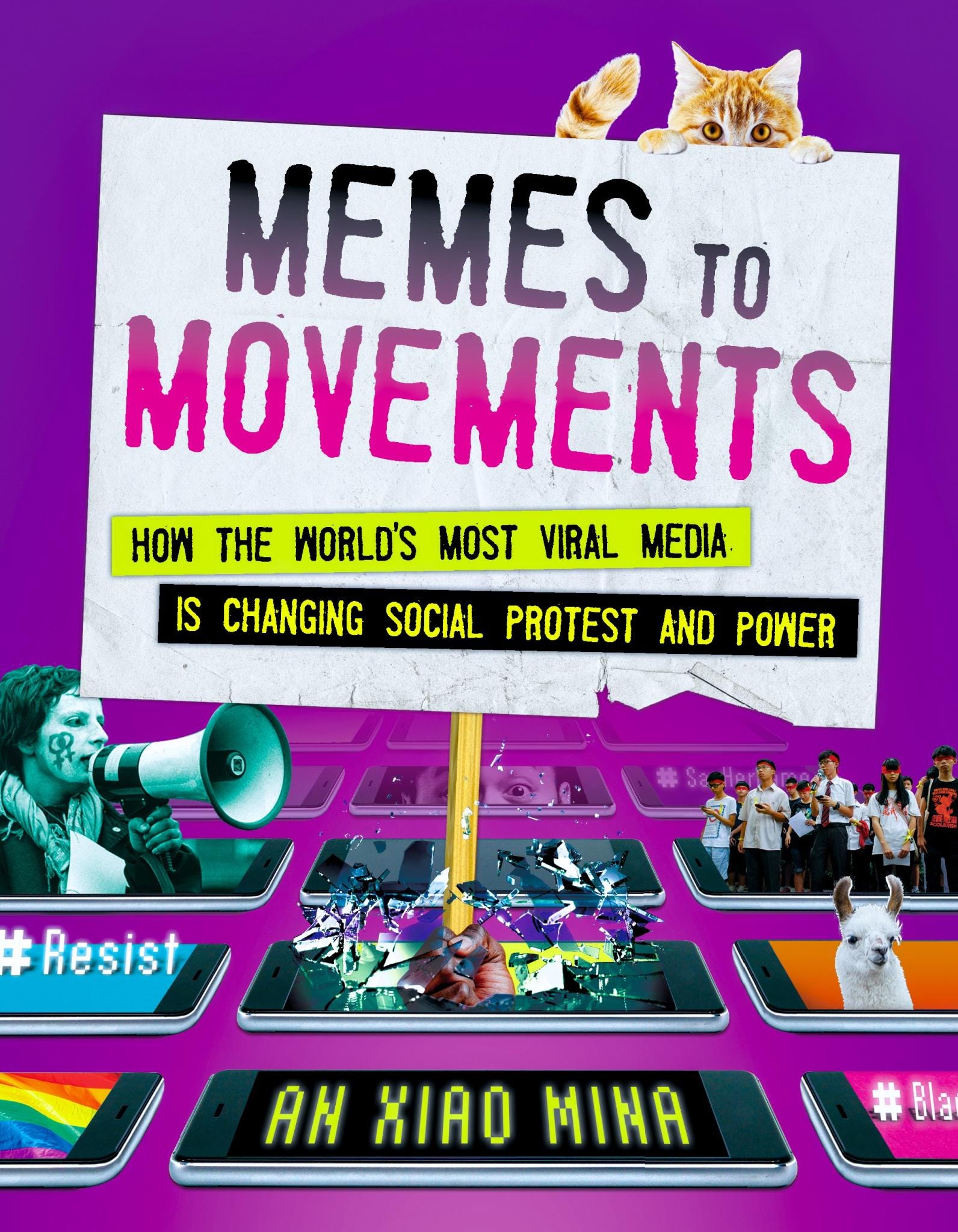
A good one that we innovated really was discussing memes. Memes were emerging at the time. Nobody was taking them seriously. They were very discarded and overlooked. We talked about them very seriously. And one of our contributors, AX Mina, ended up writing a very important book called Memes to movements: How the world’s most viral media is changing social protest and power, talking about it in a very serious way. And we have continued to push that.
Also, things like unpaid internships. When we started, they were considered just the way things are. And now people will turn their nose, be like what the hell? Why is something unpaid? But people forget that was actually just a given. People just assumed that most labor would be unpaid like that. And that was creating real obstacles.
Is your audience the general public or has a more particular audience emerged?
It changed over the years. I think this has to do more with the Internet, not just us. The Internet was more expansive and there were less barriers and, in that time, we would reach a much more, “general audience” through different social channels. That actually became very unwieldy for us, because when those audiences show up there is a lot of moderation that has to take place, in terms of comments, in particular. That was taking a lot of time and labor and resources we did not necessarily have. So we shied away from going full mass audience because we found that did not necessarily lead to the best kinds of material and the best commentary and conversations. So we like to think of our audience as people who are educated, interested in art, and do not necessarily have an art degree but might go to a museum once or twice a year. And then, of course, people who are in the industry read us too, whether they are artists or curators or dealers or art advisors, because they want to know what people are talking about.
If editorial decisions are moderated towards a particular audience, do they become predictable? And does that incentivise artists to make a certain type of work to attract your attention?
I do not think it is predictable. I think the comments we often get are from people who like the diversity of things we cover. And we often cover things that are unexpected. It could be a protest over a monument or we did a report recently about artist models and their labor issues. If anything, I think what we have done is help expand the type of art that can be noticed. Part of what we covered was because we saw a whole bunch of stuff being made that was not being covered, or was not being covered properly, or was being sensationalised in non-art publications. We all know the performance artists who get naked and then all of a sudden it shows up on YouTube where people are just commenting, ‘Oh my God, look at this naked person.’And that is not the point of the piece at all. So we are trying to create conversations that respect the artist and can also have fun, but conversations that are aware of the art history behind it and the different ideas that have contributed to it. So some artist may be influenced by what we do, and that is great. But I think most of the time it is a two-way street.
How are the economics of being an art writer today?
I do not know if there was ever good economics around it because there were never that many jobs. I think people really like to glamorise the past, but it was a much smaller field and there were only a few writers perhaps, and I think the monopoly of media, you know like sixty, seventy years ago, where a publication had so much audience and there were not any alternatives, that created opportunity for full-time jobs. I think now as media has become more atomised, it has given us freedom, but with freedom also comes the fact that we are not necessarily going to be paid as much because most art writers that get paid the most are often very connected to the market. I mean, they become salespeople. And if you want to keep your criticality and independence and you expect people to pay you a high salary, unfortunately, just like any industry, it is really a challenge. Even before, when we look at the art writers that get lionised, were they really being paid that much? Then the question is, were they doing other things, too? And I think you would be surprised. I think most of them were also doing other things. Or they just happened to live at a time when cost of living was much lower, but again, there were so few of them. But then there were other issues like white straight guys were able to make a living while black queer women were not. I try not to idealise the past. We all make sacrifices. It sucks. We all want people to be paid more for their work.
Galleries are closing, auction houses are being acquired by competitors. Is there a bigger problem in the art economy that the art media is failing to adequately report on?
That is a really good question. I think part of the reason that question is hard to answer is because the art industry is not as monolithic and it is much more varied. There are parts of the art industry that might be subject to that while other parts are not exposed. I think that is one thing Hyperallergic has been trying to support. We do not necessarily do art market journalism. We do art world journalism. We do a larger picture. So the art market is only one part of the art world. For instance, art education probably employs more art people than the art market part of our field. I know the sales numbers are sexy for some people, but that is just one part of a much bigger industry. I do not think the art market is really a good barometer of the art world. I think it is a barometer of the super wealthy. We try not to focus on the super wealthy part of the art world because I think it really distorts our perception of art going forward.
There is also a crisis in art education. Is the art media adequately sounding the alarm about that?
Well, I think there is a natural ebb and flow. For instance, I am not a big fan of art writing programmes. And as an editor who has worked in this field for so long, I do not hire from art writing programmes. I think I have hired one, maybe two people through the years, because I do not think that they are being prepared for the actual needs of the industry in the wild. People come out of art writing programmes thinking they are writing catalog essays or academic reviews. And that is just not the way the world works. You cannot make a living doing that. I find it really hard to hire those people. So I think this is also a rejiggering of the field to reflect the realities. I think there is still a very 1970s, 1980s attitude towards these educational things. I think we even see it in the way the internet is sometimes treated in some of these programmes. I am not just talking about art writing, but it is like people still pretend like the internet is not an integral part of our lives. I think that is one of the struggles. So I think there is going to be a natural change in that.
The other thing is, and this again has nothing to do with the art world, the cost of these programmes are astronomical now. We saw in the case of Cooper Union where a programme that was free and accessible opened a giant new building and all of a sudden they were in debt and had to start charging people. So there is a lot of mismanagement too that is going on. I think there are going to be some programmes that close. I think some new programmes are going to open. I think that is just the way it is. But I also think that sometimes these programmes are not responding to the realities out there. I want people to have jobs. I want them to have benefits and everything else. I want students to feel supported. And we are also seeing there are schools now that are offering free rides for MFAs and others. So there are opportunities emerging that did not exist perhaps before. I think some of the older schools that have not adapted are going to shrink. And I think we need to stop pretending it is still the 1970s art world. It is just not. It is a very different art world where our skills are used for many different things.
What are your thoughts about AI and art journalism?
Well, I would like to think of AI at its best. I am being very wishful here because I know that there are so many pitfalls but I do not want to focus on the negative because I could talk about the negatives forever. But I think of AI a little bit like a camera. Just because someone has a camera does not make them a good photographer. AI can sometimes be a good tool. The bigger issue I have is the copyright issue, the issue of stealing other people’s intellectual property without attribution — this is the biggest issue for me. And obviously, when it comes to images, that is really problematic in general, because there is a lot of stealing of images going on that really concerns me. But I think like anything, it can be a tool. Do I think it is a solution to everything? No, because I think we are also seeing that most AI generated content is pretty mediocre. That might be fine for some people but I think most of us, particularly in the art world, are looking for more interesting content that speaks to us directly. So I do not think anything is ever going to be fully replaced. But I will say, for a lot of art magazines, those back of book reviews that feel really mealy mouthed and have no opinion, they kind of sound like AI already. So there is going to be a use for it for some marketing copy, but I think good writers, like good artists, are going to stand out and are going to learn how to play with voice. I think we are going to find a change in the type of writing as a result of AI. We are going to see different ways of image making. There is going to be a backlash like there is in everything, and we are going to respond accordingly. But I do not think we are ever going to take humans out of the equation. I think that in the way that photography freed painting to do impressionism and modernism in a different way, AI might free us to create work in a different way, which I think is kind of exciting.
What would you say is the importance of media in our societies?
I think the bigger thing is I would like people to think more about media as an integral part of democracies and how culture is used, and the importance it plays. I think people discount the role of journalism in a democratic, egalitarian society. You could either just do a certain type of luxury, kind of “Wow, that is expensive, oh look at that” type of journalism. I do not know if I would even call that journalism, but I think at the end of the day, we want things to challenge us just like we do with an artwork. I think good journalism challenges us to think in different ways. So I hope people think about that because that is really how we are going to push the ball forward and how we are going to learn from each other.