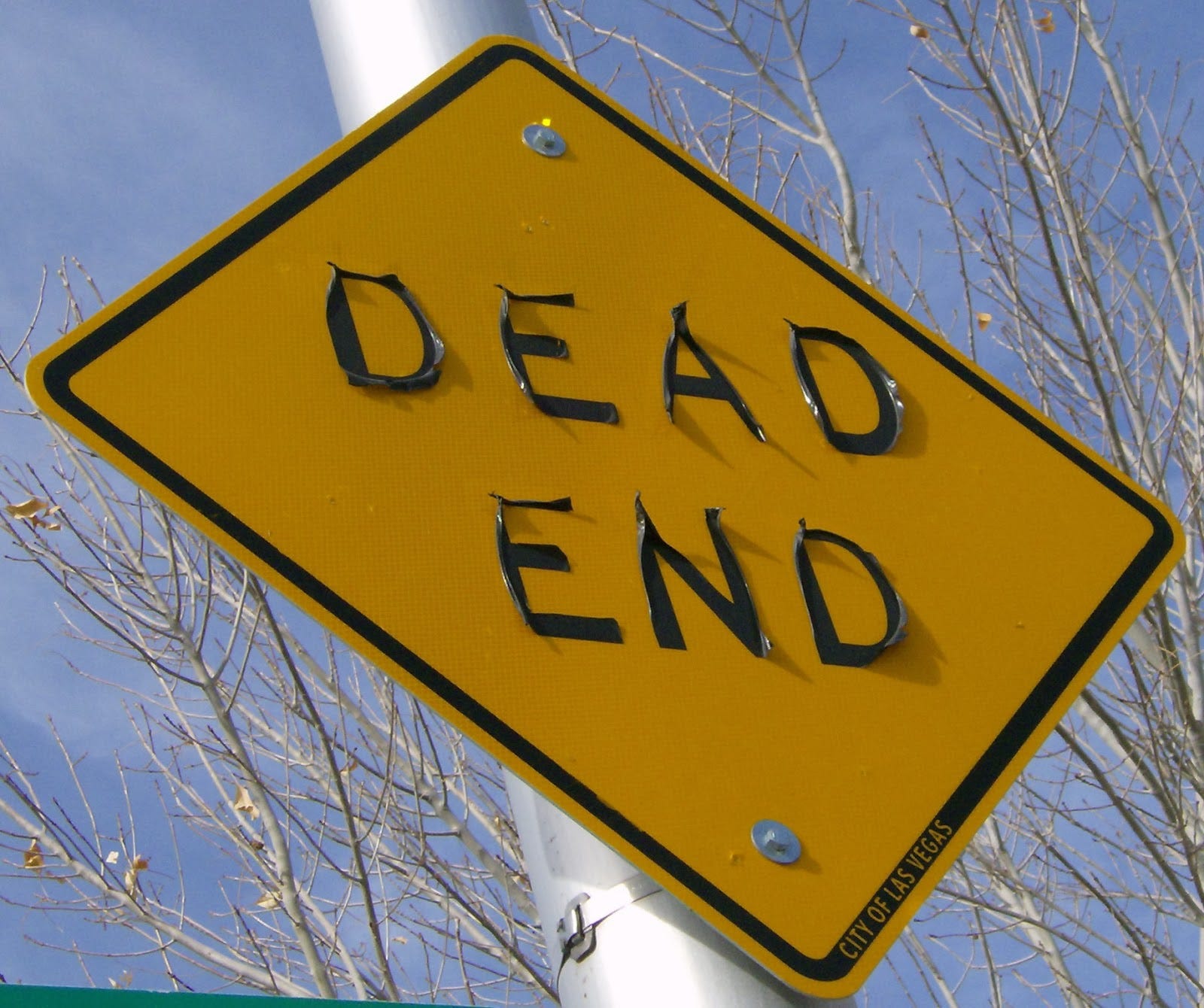
(Winner of Boulevard magazine’s Non-Fiction Award for Emerging Writers)
It’s happened again. I’m in the middle of the street with my seven-pound terrier, Rocky, stuck in place. We’re on a walk, supposedly, except when I pull Rocky’s leash, he won’t budge. He does this a lot—stops for long periods of time so he can look around for anyone who might want to say hi to him. Rocky’s tenderness and tenacity rival that of the famous boxer for whom he’s named.
I amuse myself during these moments by scanning my neighbors’ houses for evidence of deferred maintenance and making little judgments about their landscaping.
The house I’m currently scrutinizing looks dire. There’s a hole in the roof the size of a volleyball. Saplings are growing in the gutters. The grass hasn’t been mowed, I’d guess in years. There’s a rusted car in the driveway with flat tires and expired plates. I smell mold.
I’m aware of about six other neglected houses like this in my neighborhood. Someone uninitiated into the world of distressed real estate might conclude that whoever lives in them must be too elderly, too poor, too eccentric, or too lazy to keep them up.
But I know better. These houses are as forsaken as they seem.
Abandoned buildings are part of every community. Some have been lost to the bank, or are tied up in probate. Others are remnants of failed rehab projects. Some are purposefully left to ruin by speculators anticipating a market spike that will allow them to sell the place for a profit even though it’s trashed.
In the small, midwestern college town where I live, where single-family homes are the norm, about one in 30 housing units is likely to be uninhabited. In a more densely populated city where multi-unit developments are more common, the vacancy rate can be much higher.
A common refrain from journalists who report on homelessness in the United States is that the biggest reason Americans find themselves unsheltered is a lack of affordable housing. Anecdotally it seems true-ish, especially in apex markets like Seattle, San Francisco, Manhattan, or L.A., where economic disparity is the status quo. In those cities, tens of thousands of housing units sit vacant at any given time. How affordable would they have to be for someone with no assets, who’s living on the street, to be able to move in?
The United Way estimates that ten percent of the 3,377,190 housing units in Chicago were vacant in 2023. Local officials there counted 6,139 unhoused people that same year. That equates to about 55 empty housing units per unhoused Chicagoan.
Nationwide, the National Association of Realtors reported more than 16 million vacant housing units in 2023, while according to the U.S. Department of Urban Planning and Development, around 650,000 Americans experienced homelessness.
It’s hard for me not to think, Damn! We could give a vacant home to every unhoused American, and we would still have more than 15 million vacant homes left over.
But it’s not that simple, I realize.
Perhaps journalists should be asking different questions—like why supply and demand doesn’t seem to affect affordability in housing, or what the deeper issues are that cause people to lose their homes.
My wife and I lived in Indianapolis while she was finishing her BFA. I spent my days waiting tables and my nights trying to figure out how to monetize my compulsive writing habit. We rented half a duplex from our friend Amy, a part-time wine rep who sold real estate on the side. Amy always seemed to be at home reading or doing yoga. One night over glasses of whatever she was currently repping, our conversation turned to hopes and dreams. I launched into a monologue about the challenges of trying to manifest an income from the written word in the 21st century.
Amy said, “You could try being a Realtor. It’s easy money, and you’d still have plenty of time to write.”
It’s reasonable to imitate those whose lifestyles you admire, so I enrolled in a two-week course at the Tucker School of Real Estate and soon earned a desk in a Century 21 office downtown. My broker Tracy told me it was important for new Realtors to pick an area to “farm.” I chose the so-called “emerging neighborhood” where I lived. It was an area of town that had been ravaged in the 1960s when the interstate came through. Thousands of homes were demolished to accommodate the highway. Anyone with means migrated to the suburbs. Those who couldn’t afford to move found their commercial district obliterated, their community networks shattered, and their local economic opportunities practically erased. Many succumbed to generational poverty. Some hadn’t worked in decades. Meth and opioids were everywhere. Yelling, sirens and highway traffic composed the soundtrack of the place. A lot of artists lived there because it was affordable.
My first year as a Realtor, I sold 32 houses on my farm. Year two, I sold more than 100. Most of my business came from slumlords hoping to add another flophouse to their portfolio, and flippers looking to fake-house some shit-hole with fresh paint and carpet, then sell it to someone who didn’t know better, maybe on a rent-to-own scheme.
About 90 percent of the houses I showed my clients were foreclosures. The doors and windows had little stickers warning unauthorized people to stay away. Typically, the inside was trashed by copper thieves, junkies, or bored teenagers. Many were full of feces—some human. I learned to bring gloves, shoe covers and N95s to showings.
The unsettling but statistically undeniable conclusion at which I arrived was that, on any given day, about a third of my neighbors’ houses were in foreclosure or otherwise abandoned, and most of those showed evidence of break-ins or illegal squatting.
Meanwhile, Amy was correct. My average transaction only required about ten hours of my attention. My income tripled and I found myself with plenty of time to write. My main contribution to the literary canon from that period amounts to an existential slog through the multi-layered absurdities of my easy, strange job.
When I left the real estate game, I hoped never to return to it. I wanted to forget the horrors it had shown me that were lurking at the intersection of domesticity and unrestrained capitalism. I went back to subsidizing my writing by bringing food and drinks to people who were sitting down.
When my wife was accepted into an MFA program in Las Vegas, I once again found myself looking for side gigs to help keep the lights on.
A newbie to the atomic desert, I got smitten with the idea of jobs that had a sense of site specificity. I briefly worked as a rock rearranger in the geological wastelands Las Vegans refer to as their yards. I waited tables at the greasy breakfast dive of a cheap motel in the part of town locals called “old Las Vegas” (i.e., built before 1980). For a few months I wrote short articles for a gambling website, in which I predicted the probable outcomes of professional sports games. The point of that job wasn’t to guess the winners correctly—the point was to guess wrong in a way that sounded convincing enough to get someone to make a losing bet. I was let go during baseball season, because I was right too often. (Pro tip: it’s all about the pitchers.)
One day I saw a posting on Craigslist for a job that sounded, as the saying goes, like it came right out of central casting. The ad was for a company seeking someone with previous real estate experience who would be willing to put themselves in potentially dangerous situations in order to take pictures of houses. (In addition to my brief experience as a Realtor, I also happen to have a photojournalism degree and a 2nd degree black belt.)
I applied and got an immediate response inviting me to interview with the CEO of the company, someone named Kris, at her house in a gated neighborhood in the posh Vegas suburb of Summerlin South. Kris met me in her driveway. She was wearing Louis Vuitton sunglasses and smoking a cotton-candy-colored cigarette. She opened the passenger door of a giant F-150 with monster tires and said, “Hop in.”
The inside of her truck smelled freshly Armor All-ed. We drove around her neighborhood slowly.
“What’s that accent?” she asked.
“I didn’t know I had an accent,” I said.
“You sound like Opie,” she said. “No offense, darlin’.”
“None taken, ma’am,” I said.
“What do you think of the heat, Opie?” she asked.
“I’m trying not to,” I said.
Every house we passed looked basically the same: tan stucco McMansion, red clay tile roof, palm trees in the yard. We stopped in front of one.
“Is it vacant or occupied?” Kris asked.
I guessed, “Occupied.”
“Why do you think that?” she asked.
“The lights are on inside,” I said, “and those palm trees look well maintained.”
Kris nodded. We drove some more. She asked if I had been to California. I said yes. She said she was going to move there once she socked a little more money away.
We stopped at another house.
“Vacant or occupied?” Kris asked.
“Vacant,” I said.
“Okay. Why?”
“Well, there’s like three newspapers in the driveway.”
“Who the fuck reads newspapers, right?” Kris laughed.
“I mean they look like they’ve been there for a while,” I said.
She nodded. “You’re gonna do just fine.”
We went back to her house, and I was officially hired as a horrible monster, aka a Mortgage Field Inspector, or MFI. That’s “Muffy” to the acronymical.
Muffies work for the evil doers, or rather a subsidiary network that thrives, pilotfish-like, off the scum of the sharks we call the mortgage industry.
Picture some homebuyer who has fallen far enough behind in their mortgage payments that their lender has taken steps to foreclose. This person may or may not have already abandoned their former home. If they have, the property may or may not have already fallen prey to squatters, vandals, metal thieves or appliance pinchers who target empty houses. The lender wants to know whether anyone is living there, and if so, who, and if not, whether anything has been stolen or broken. The job of a Muffy is to go to the address in person and find out.
Did you realize there are people who do this for a living?
Have you ever looked outside and seen someone sitting in their car photographing one of your neighbors’ houses? Has anyone ever knocked on your door and said they were there to “confirm occupancy?” If so, chances are you met a Muffy.
Kris told me that experienced Muffies can knock out six inspections an hour if they’re efficient. The pay was $8 per house.
I know that’s not lawyer money or anything, but for a writer/waiter married to a painter/student, it was a potential fiscal upgrade. It also carried the stink of weird fun, a gonzo mix of driving around a city that shouldn’t exist, taking pictures of derelict houses and staring chaos in the eye.
I briefly even felt lucky to get the opportunity, though I now suspect every applicant got an interview, and anybody who wanted the job got it.
Welcome to Fabulous Las Vacant
My first day as a Muffy transpired clumsily. Incompetence was a factor. Feelings were another. I managed only two addresses per hour, although I gathered how six an hour could indeed be possible. There was no shortage of foreclosed houses in Vegas based on the number of addresses Kris assigned me for the week. And the addresses were easy to hopscotch to since they were packed so close together. Hell, thanks to the systematic job Nevada’s developers, Realtors, mortgage brokers and city planners did bundling their contribution to social collapse into tidy hamlets, ten an hour might be possible. At least, for someone with no heart.
For me with my functioning sense of empathy, the search for evidence that people whose lives were falling apart still occupied the home they had lost to the bank was not revealing itself to be a task amenable to haste.
My first two addresses were labeled PFV, or “pre-foreclosure visitations,” which simply required me to park across the street and take pictures from my car documenting whether humans still lived there.
The first PFV was clearly occupied. For proof of life I photographed a pit bull tied to an olive tree, a fresh Christmas wreath, and a shot through the curtains of Spongebob Squarepants playing on a big screen TV.
I concluded the second PFV was vacant, based on the unread mail deluging from the mailbox; a shoe rack hanging from a dead cactus in the front yard; and a smashed flower pot next to a pile of children’s clothes in front of a half-open, dented garage door.
My next five addresses were labeled FF, meaning they were fully foreclosed houses. According to Kris, FFs were previously confirmed to be vacant and secured. All I had to do was get the key from the lockbox, enter the home and photograph whatever was going on inside.
My first FF smelled like rotting flesh from the street. I remembered this smell from my Realtor farm back in Indianapolis. It likely meant that a wild animal had gotten inside and come to some sad end. There were other things it could have meant. Worse things.
Lacking proper PPE, I declined to enter the house.
The next FF appeared vacant and projected no unwelcoming odors, so I entered. Inside, I found the remnants of a campfire in the middle of the living room floor and a stained mattress in one of the bedrooms. There was a pile of liquor bottles in the kitchen sink, and the sliding glass door to the backyard was open. I told myself it was probably the work of neighborhood teenagers. As with the smell at the last place, there were other possible explanations, which I preferred not to contemplate.
FF number three, too, looked vacant, except something about the place gave off a creepy vibe. The windows were covered with plywood. I knew from my real estate days that, by and large, banks replace broken windows, they don’t board them up.
Kris had informed me that there are multiple reasons people might try to make it look like a house is vacant when it actually isn’t. Some are relatively innocent, like frightened squatters. Others are more dubious, like meth labs, amateur brothels, or human trafficking depots (her examples).
I felt a powerful urge to stay away from this place, but for whatever reason, I walked around back and saw one window that wasn’t boarded. As I approached it, an arm shot out swinging a knife. My karate training kicked in—I ran.
The next two FFs were both obviously illegally occupied. In such cases, my instructions were to block the driveway with my car, get out and be blatant about taking pictures so whoever’s there knows they’ve been seen. Kris gave me fliers to hand the interlopers, telling them they shouldn’t be there, with numbers to call if there has been a misunderstanding.
A red Cadillac was parked in the garage of the first place. I blocked the driveway with my car, got out, and was being obvious about taking pictures of the Cadillac, when a woman dressed head to toe in black leather jumped out of the back seat and charged at me, screaming, “You videotaping me?” I tossed a flier out the window at her as I drove away.
At the next house, I saw a shirtless old timer standing in the yard drinking a beer as I pulled up. I got out of my car, and he went inside. I knocked on the door, then saw that the foreclosure stickers had been half-ass peeled off, and the lockbox had been destroyed, which is supposed to be impossible. I took a picture of the shattered, allegedly indestructible thing, then taped a flier to it.
I had an epiphany during this sequence of misadventures, that all houses have something in common; they exist both as concretions and abstractions. A house is a pile of materials, but it’s also a locus for human struggle.
A squatter with no money and no resources has an advantage over someone living on the street. The squatter has a center around which their life can revolve, and maybe regain some kind of shape. They have an address.
Maybe that’s obvious.
Anyway, my first day as a Muffy left me with mixed emotions: about being chased; about the feeling that I was both predator and prey; about being a participant in a social apocalypse, and also a documentarian of it, like a minor war journalist.
I learned there are upsides and downsides to the gig. The biggest downside: sadness. The biggest upside: lots of time to listen to the radio. I vibed out the whole day to the Diplo XFM station, cruising the sun-cracked Vegas streets, bouncing from catastrophe to catastrophe, cranking the bass, feeling like my molecules were being rearranged.
And I learned that when your job is to bear witness to fractured lives and scrambled dreams, you need to be a realist. It’s tempting to believe all people who have lost or are losing their homes are victims of some cadre of soulless douchebags laughing around a shiny table in a skyscraper somewhere in New York. But even before taking this job I personally knew foreclosed homebuyers who were complicit with the criminals at the banks, who took loans they knew they could not afford, who willfully suspended logic long enough to believe some appraiser who told them their house had recently mysteriously doubled in value, allowing them to take out an adjustable rate home equity line of credit for more than they originally paid for the house.
How many of these humans whose doom I was now chronicling were taken by liars and thieves? How many of them helped do this to themselves? They were all victims, no doubt: victims of their pipe dreams, of bad policy, of greed, of circumstance and, yes, of douchebags.
And I have no doubt that any of them could easily have been me. Whoever you are, whether you’re broke, or part of the 1%, or anybody in between, something we all share in common is our capacity to self-destruct.
Where Soso Meets Blissville
I awoke on day two of being a Muffy feeling happy and grateful to have this strange and exciting thing to do. I was also lucid about how much I would rather the world of Muffies not exist.
Life is bittersweet, or in other words: Soso Blissville.
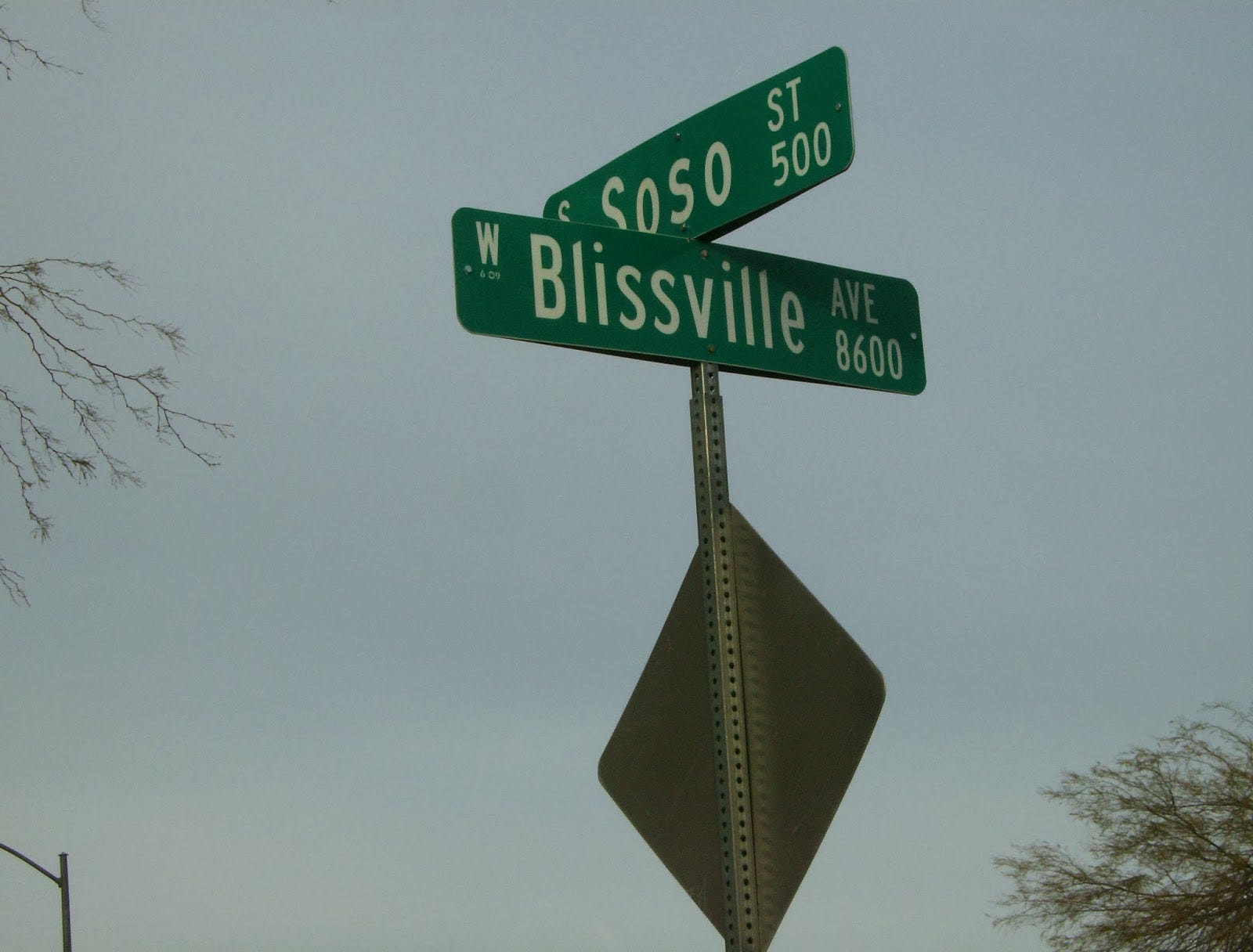
I shit you not, that was the location of my first address on this day—the intersection of Soso Street and Blissville Avenue. The man I met there inspired in me one of the most Soso-Blissville feelings of my life: a deep melancholy combined with a sense of calm about humanity’s ongoing, slow-motion disaster. He showed me what might be possible for any of us if we could learn to remember our lessons but forget our mistakes.
I pulled up as the man was hoisting a bulging cardboard box into the bed of an already overloaded pickup truck. Three kids were playing with sticks by the curb, laughing. The man was whistling while he worked.
I nodded to him and said some words he indicated he didn’t understand. Then he said something to me that I couldn’t understand.
I handed him one of my tri-lingual fliers, with the bad news written in English, Spanish and Mandarin. He scanned the flier, looked at the boxes stacked in the back of his truck, and gave me a wistful smile that said, “Yep. Time to start over.”
Was he the homeowner, I wondered? A tenant? He didn’t seem defeated. Disappointed maybe. But the kids were laughing, and he went back to whistling.
Whatever forces brought him to this moment, had he forgiven them? Whatever he had done, or not done, had he forgiven himself? What does it take to forgive? I once heard a Holocaust survivor on a documentary say she forgave Hitler. Compared to that, anything must be forgivable.
Maybe I’m projecting my desire to believe in resilience onto whatever moxie I felt this man was showing me. Maybe he was secretly bitter. Maybe he was there robbing the place. Maybe those weren’t his kids. Maybe they were his kids, and right after he loaded them into his truck he drove off a cliff.
Or maybe I really was tuned into something in this guy’s personality. Maybe this was him at his best. Maybe I met a human who knew how to be at peace, even in the midst of their unraveling. Maybe it’s possible for me to learn to be as he seemed to be; to tell myself when it all goes wrong that I can always start over, whistling all the while.
Or maybe I’m a rainbow dreamer. If so, I was in the right neighborhood, because my second address of the day was at the intersection of North Rainbow Blvd. and West Dreamers Way.
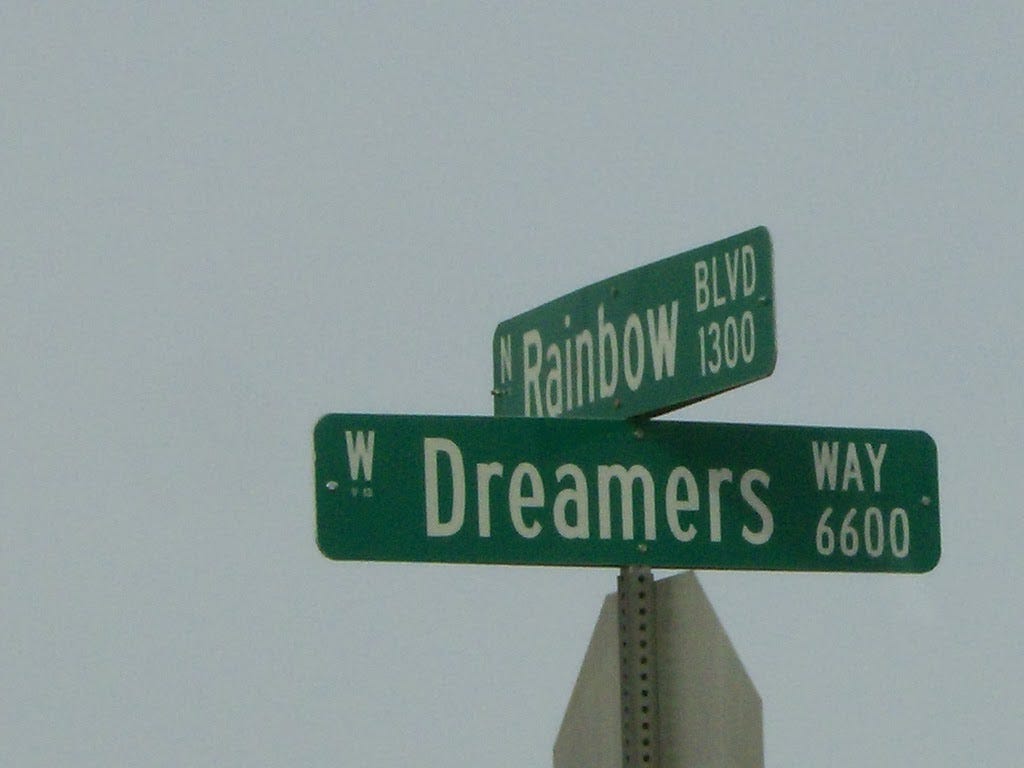
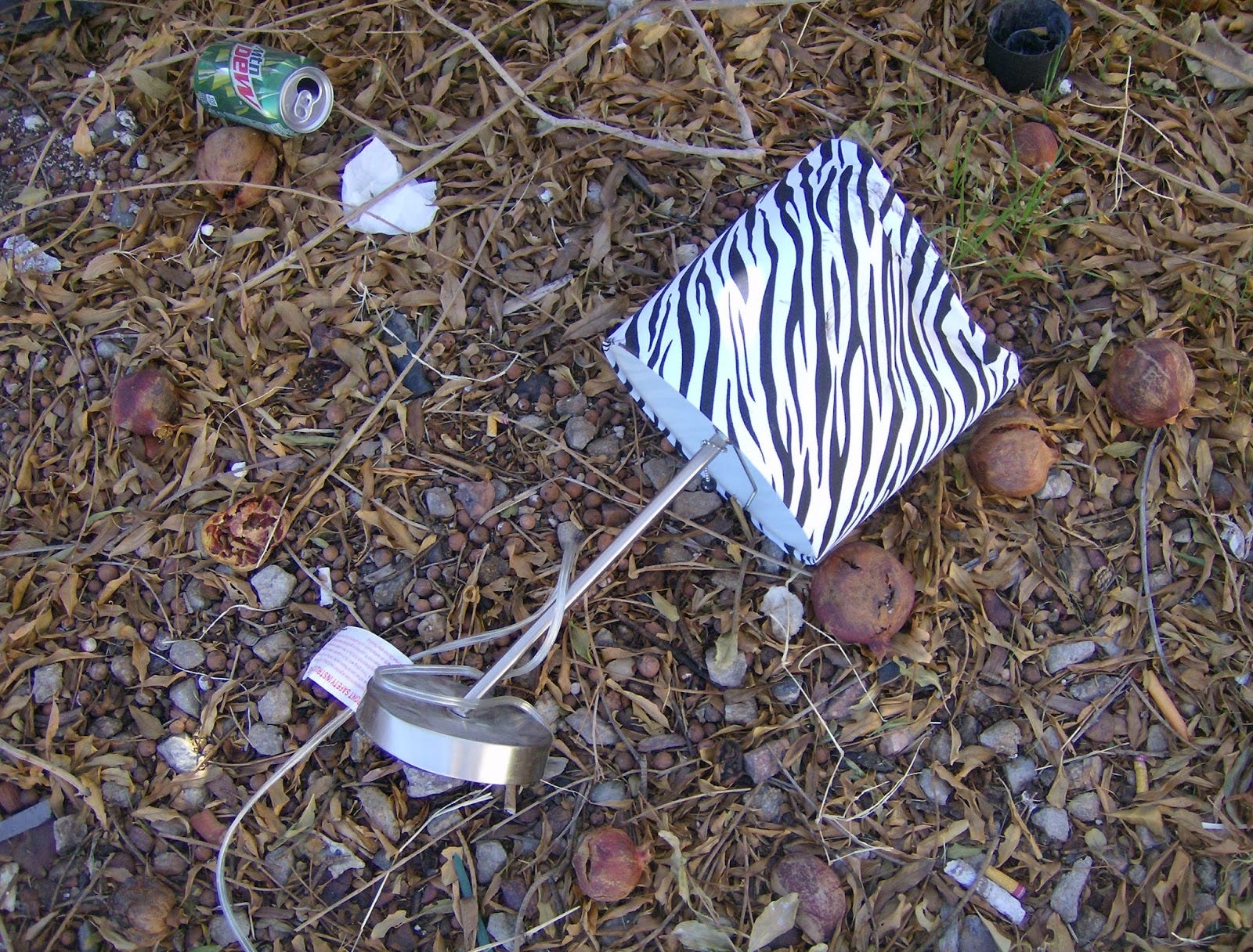
A beige, stucco ranch house with red clay roof tiles and desert landscaping, this quaint-looking family home had been foreclosed upon just a week earlier. Inside, it was littered with the detritus of the disappeared: a laundry basket full of kids’ books capsized in a pink bedroom; an office chair missing its coasters overturned in a nook by the kitchen; half-eaten snacks strewn about; a tangle of broken lamps chucked into the rock garden. These orphaned belongings did not appear to have been brought there by squatters, but jettisoned by people in a hurry without the capacity to take everything they owned to wherever they were going next.
In addition to the dozens of photos I took at this house to send to the bank, I took a few just for me. These were not tourist snaps of my holiday in hell. They were reminders.
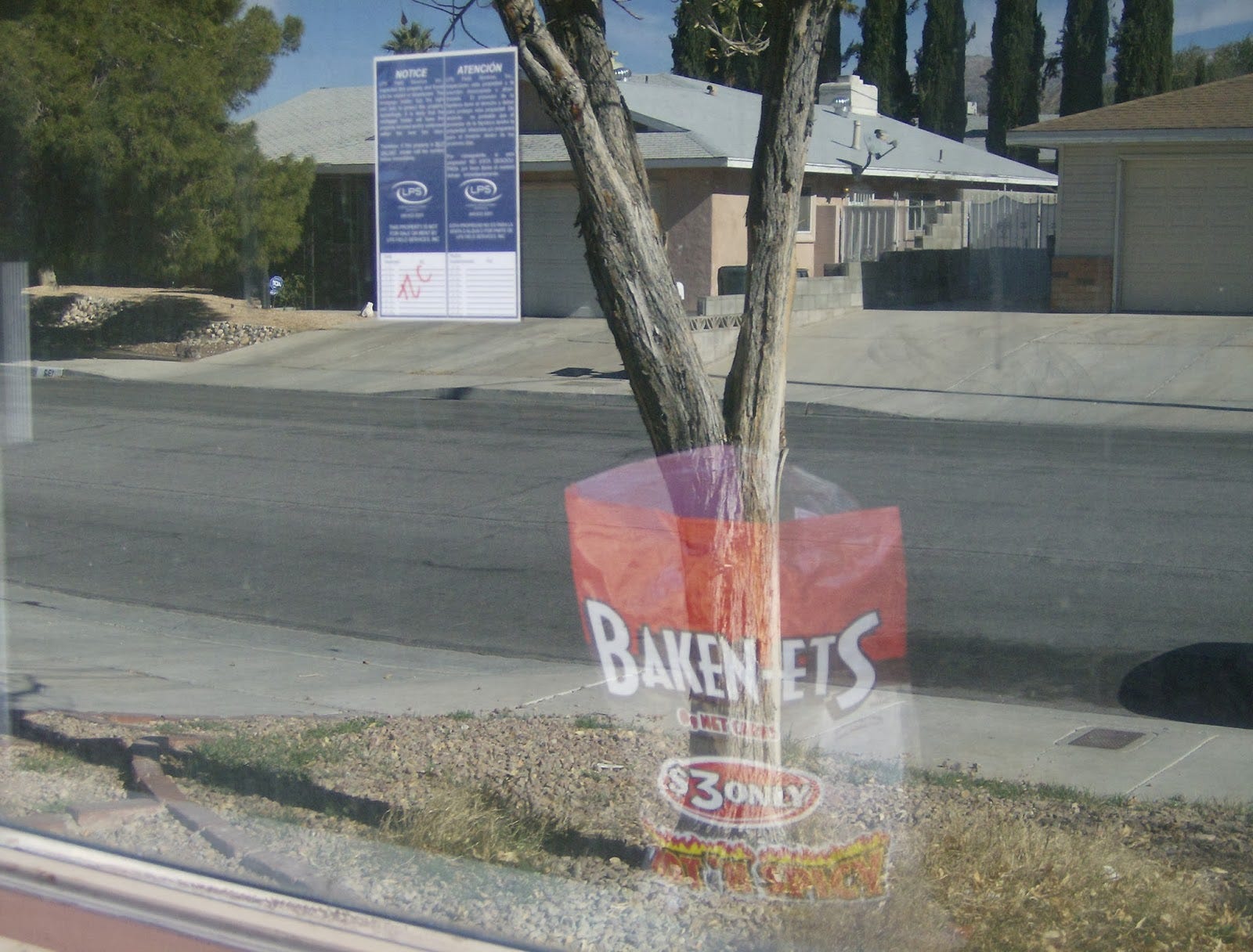
At the grocery, surrounded by profusions of products lining the shelves, as I reach out toward some giant bag of bacon-flavored ridiculousness, I will remember the bag just like it I saw that day, half consumed on a window sill next to a foreclosed property sticker.
When I find myself in the IKEA lighting section contemplating whether the Fluhgger or the Slogg will look best on my bedside table, I will also compare how these elegant, Swedish-designed lighting products might look smashed in a heap in the backyard after the sheriff escorts me from the house I can no longer afford.
As I plan my next round of home repairs, I will ponder how impressed the neighbors would be to see the plumbing upgrades I charged to my credit card, after thieves rip the pipes out of my walls, leaving whatever won’t fit in their truck scattered on the sidewalk.
Most of us will never suffer the trial of having all the silly things we spend money on publicly displayed for our neighbors, who might then wonder aloud, “What were they doing buying Baken-ets and zebra lamps and doing home renovations when they couldn’t pay their mortgage?”
My second day as a Muffy gave me new perspectives on human aspiration. It convinced me that we fill our homes, our bellies and our lives with nonessential things for the same reason Rocky stands in the street waiting for someone to appear who might want to be friends. We believe we’re worth it. There’s love in the waiting, even when it’s futile. There’s love in that bag of bacon-flavored crisps. There’s love in that squashed Fluhgger. There’s love in that bundle of stolen copper. There’s love everywhere, even in loss. Especially in loss.
House is Where the Pain Is
I achieved a milestone on my third day as a Muffy. I documented 19 foreclosed houses in four hours. That’s practically waiter money.
To achieve this level of efficiency, I had to close my mind off to the signs and signals of humanity around me and just do my job.
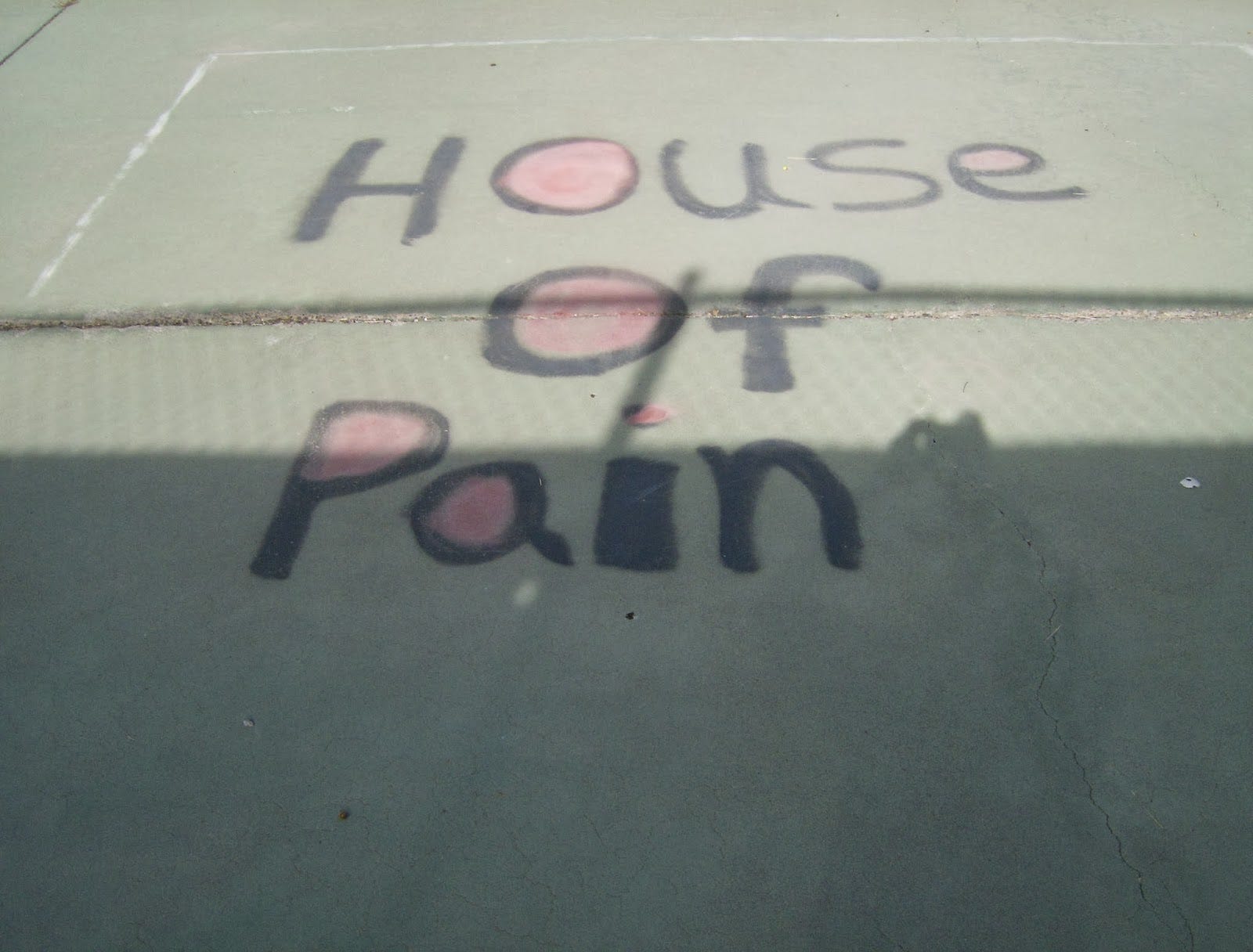
At one house, the tennis court was spray painted with the phrase House of Pain. Underwear was scattered everywhere. I took pictures and moved on.
At another place water was trickling out the front door. One of the trees in the front yard was smoldering. The living room was full of wet cardboard boxes stuffed with tax returns. An orange extension cord ran out one window into a window of the house next door.
I didn’t inquire. I accessed the artificiality of my intelligence. I became an app.
The one observation I couldn’t shake, strangely enough, had nothing to do with the human dramas playing out within these houses. It was that only two of the addresses I visited on this day were officially listed for sale. This tracked with what I had witnessed my first two days: that there are roughly 10 times as many distressed houses sitting vacant in Las Vegas than are actively on the market.
Like kismet, while driving to drop off my daily report to Kris, I heard a story on Bloomberg Radio telling prospective Vegas homebuyers to “place their bets!” The story’s conclusion, that the Vegas real estate market was booming, was entirely attributed to data supplied by Realtor.com.
While I’m impressed that the human animal has evolved to the point of being capable of drawing immense economic and sociological conclusions from a perfunctory analysis of simple datasets publicly available on a commercial website, it is unfortunate that a news group that reaches more than 20 million unique monthly users didn’t require its reporter to look beyond a single biased source for their research.
I asked Kris what she thought about the Bloomberg story. She lit one of those long, cotton-candy-colored cigarettes and said, “It’s bullshit, darlin’.”
She said you can’t trust reporters today because they’re paid too little to have time to really look into stuff. They use social media and corporate press releases to push whatever their CEO or advertisers want people to believe. She said journalists can prove an economic collapse or an economic rebound is imminent at any given moment, or that unemployment is up or down, just by including or not including data about the millions of people who have already given up on finding a job, or who make their living “off the grid,” you know, with meth labs, amateur brothels, and human trafficking depots, etc.
As an off-and-on freelance journalist myself, I can report with confidence that Kris is only, like, maybe half right about the news industry.
As for the validity of commercial real estate websites as journalistic sources, they definitely exclude most foreclosed, abandoned, probated, or tax-burdened houses. It’s not just happening in Las Vegas. It’s happening everywhere. So if that’s where reporters are getting their information, their conclusions are suspect at best.
Maybe those houses are left off the market in order to artificially inflate the prices of available listings. Maybe the power brokers think they’re doing the rest of us a favor by not overwhelming us with the truth. Do most people really want to know how many houses in their neighborhood are just sitting there empty, courting disaster?
One thing I know is that whether it’s officially on the market or not, every vacant house impacts the lives of the people who live nearby.
Imagine watching as your neighbors lose their income and struggle to figure out a solution so they can stay in their home. One day they pack up whatever can fit in their vehicle and disappear to parts unknown. Imagine months pass without anyone knowing who controls the property. You and the other neighbors try to keep the place up, cutting the grass and collecting the stray mail. Then one night thieves break in and tear out all the copper. Squatters move in. Trash starts filling the yard.
What effect does one abandoned house have on the life-force of the rest of the people who live on the street? What happens to a community when those effects are multiplied by 10, or 100, or 1,000 vacant houses?
Maybe that Bloomberg report wasn’t bullshit. Maybe it was just a speculative dispatch from the powers that be to a culture committed to the belief that it’s important to pretend everything is fine.
But if you’re one of the millions of Americans who have lost their house to the bank, or one of the millions of people squatting in those houses, or burglarizing them, or doing drugs or cooking meth or filming porn or lighting fires in them, trust me—nothing is fine.
One House, Many Stories
Early one morning, in Charlotte, North Carolina, a mortgage company processor making around $35,000 a year entered the address of a single-story, mid-century modern ranch house in Las Vegas into a database on ezinspections dot com. Minutes later, in a sprawling, carpeted office in a six-bedroom house in the Vegas suburb of Summerlin South, a millionaire named Kris who drove a luxury truck worth three times the salary of that mortgage company processor received a notification on her phone. She mapped the newly added address, then assigned it to the member of her team of Muffies whose territory it matched.
That Muffy was me.
I arrived at said address around 11:30 am. As I stepped out of my car, I heard songbirds chirping in the dead pomegranate tree in the front yard; flycatchers I guessed, based on the show about local birds I caught the night before on Vegas PBS. I saw a tiny lizard perched atop the rusty mailbox eyeballing me, while a circling hawk eyeballed the lizard.
The house appeared to be vacant, but well maintained. It had one boarded window—the rest had drawn curtains. I approached the front door, then noticed that a puny dowel rod had been placed across it like a little barricade. I was in the process of easily removing the dowel rod when a man two-thirds my size and twice my age approached from behind.
“Can I help ya?” he asked.
I turned and smiled. “I think I’ve got it.”
“Mind tellin’ me what yer doin’ with my deadbolt?” the man said.
“You put this here?” I asked.
“I live next door,” he said. “Name’s Ross.” He pointed to another man who was walking up to us. “That there’s Tom,” he said.
“You a Rill-ter?” Tom asked.
“Nope,” I said.
“With the bank?” asked Ross.
“Nope,” I said.
“Well I guess ya must be somebody,” said Tom.
“That’s the nicest thing anybody’s said to me this week,” I said.
I explained to the men my status as an independent contractor sent to confirm occupancy at houses involved in any number of conflagrations including but not limited to bankruptcy, foreclosure, pre-foreclosure, probate and sheriff’s sales.
“So, yer one-a-them,” said Tom.
“Reckon so.” I gestured to the dowel rod barricade. “Trying to keep the raccoons out?”
“Nope,” said Ross. “That’s so we know when someone’s been over here messin’ with the door.”
“We’ve had a few ‘speriences,” said Tom.
They explained that the previous owners of the house had been spouses who lived into their nineties. The wife fell ill and went into hospice. The husband visited her every day for months. When the wife died, the husband came home grief stricken, then died three days later himself. They had no relatives. They left no will. They had intentionally kept a tiny mortgage on the house, since it reduced their property taxes. After they died, Ross and Tom contacted the utility companies to shut the utilities off in the house. They refused. Eventually, when the bills piled up high enough, the utility companies shut them off themselves.
Within a week the house was broken into. Tom saw it happening and called the police. The police chased the burglars away but did not catch them. Ross and Tom went into the house to find out what was stolen. The thieves had gone right for the deceased couple’s paperwork: IDs, passports, social security cards, etc.
Ross and Tom gathered up everything else they thought a thief might find valuable, including the deceased’s guns, wondering, they said, how they had neglected to think to do that before. They boarded up the window the thieves had broken.
A few days later the house was ransacked, brazenly, in the middle of the afternoon by teenagers. This time, Ross chased the intruders away himself, with one of the deceased couple’s guns. He called the police after it was over. An officer showed up hours later and explained to Ross and Tom that crimes committed against the property were victimless. Since there was no one in a legal position to file charges, there was nothing the police would do.
Since then, there had been more break-ins, more ransacks. There was a near drowning in the pool. Ross and Tom had the pool drained and covered after that.
This crap had been going on for three years, they explained. For three years, these men in their 70s had been fighting off a steady stream of would-be home invaders from their once-beloved neighbors’ home sweet home. In that entire time, the police had not filed a single report.
That’s how long it had taken the bank to get around to processing the paperwork on the couple’s tiny delinquent mortgage and to decide what to do with the property.
I invited Ross and Tom to enter the house with me while I did my work. I didn’t want them to think I was another intruder telling an elaborate lie. I opened the lockbox with my master foreclosed house fob, but the key in the lockbox didn’t unlock the door.
“Oh,” Tom explained, “that’s ‘cause me and Ross secretly been changin’ the locks every time we seen anyone else change the locks, fearin’ the lock changers was metal thieves ‘r scavengers in disguise.”
“That does happen,” I said.
“We know,” said Tom.
Ross let me in with his key, and the two men reverently led me from room to room, all the while telling me the stories of the couple’s former belongings, now scattered, overturned and ripped apart.
“We helped ‘em bring this couch in from the truck. ‘Member that, Tom?”
“Yup. You know, they had the same stove fer forty years. Bet they don’t make ‘em like that no more.”
In the bathroom, some teenagers had broken up the ceramic floor tiles with a jackhammer. There had been a rumor (apparently false) that the old couple had a secret safe in the crawl space.
Every cabinet door was ripped off its hinges, every drawer torn open, the contents tossed about without care. Every drug, every chemical, everything that could be used or easily sold, was gone. What was left was a lifetime of musty clothes, knick-knacks and out-of-style furniture strewn about as if a miniature tornado had systematically traveled to every room, then, satisfied with its destruction, disappeared into a crack in the wall like a mouse.
As I took a picture of the post-apocalyptic kitchen, Ross warned, “Don’t open that ‘frigerator. I made that mistake once.”
I contemplated his remark, envisioning the decomposing dreams of future meals an honorable man had once hoped to prepare for himself and his ailing wife when she returned home from hospice.
I shop for myself and my love. The apples I got at the farm stand; the tahini I purchased months ago intending to make hummus; the frozen grapes; the Italian peppers; the raw cheese. Every ingredient is a storyteller, a peek at our culinary ambitions, the meals and moments we hope to share. If I died today, would they also rot?
When the time came to leave, I expressed my gratitude to Ross and Tom, and told them it was my responsibility to post a blue sticker on the door indicating that I had found the house vacant.
Ross assured me he would tear it off as soon as I left.
I showed him the roll of thousands of such stickers in my car. “Two can play that game,” I joked.
Ross laughed. “I’ll see you next time then.”
No, you won’t, I thought. That would be my last day as a Muffy. I hoped I could learn to do these postmortems from a mental distance. I hoped I could divorce myself from others’ pain. But I had to accept that I’m too sensitive maybe, or too easily heartbroken, to allow myself to become a character in so many peoples’ stories of loss. Undertakers can’t do their job if they start sympathizing with the dead.