(Originally published in AMA Art Magazine)
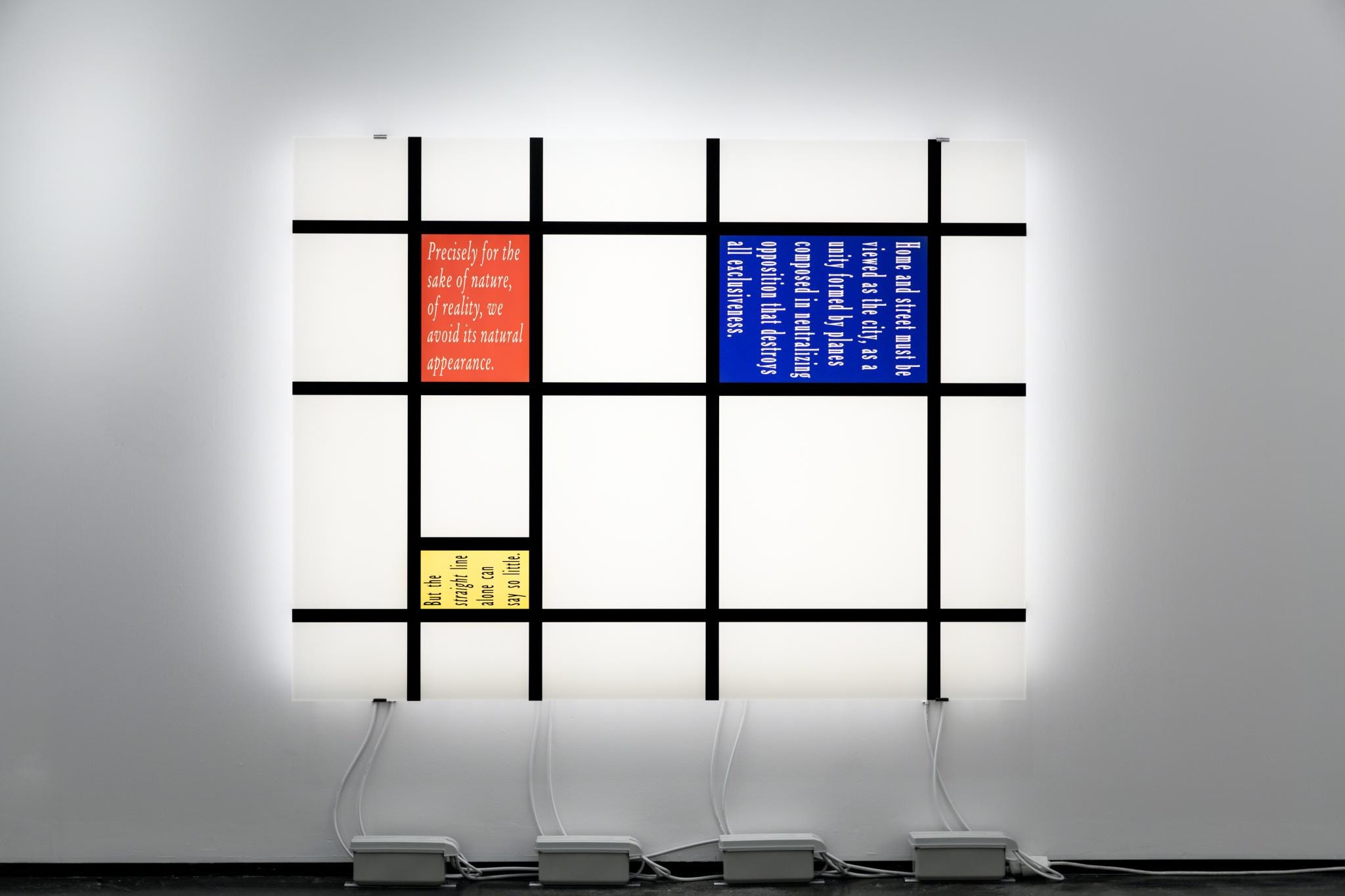
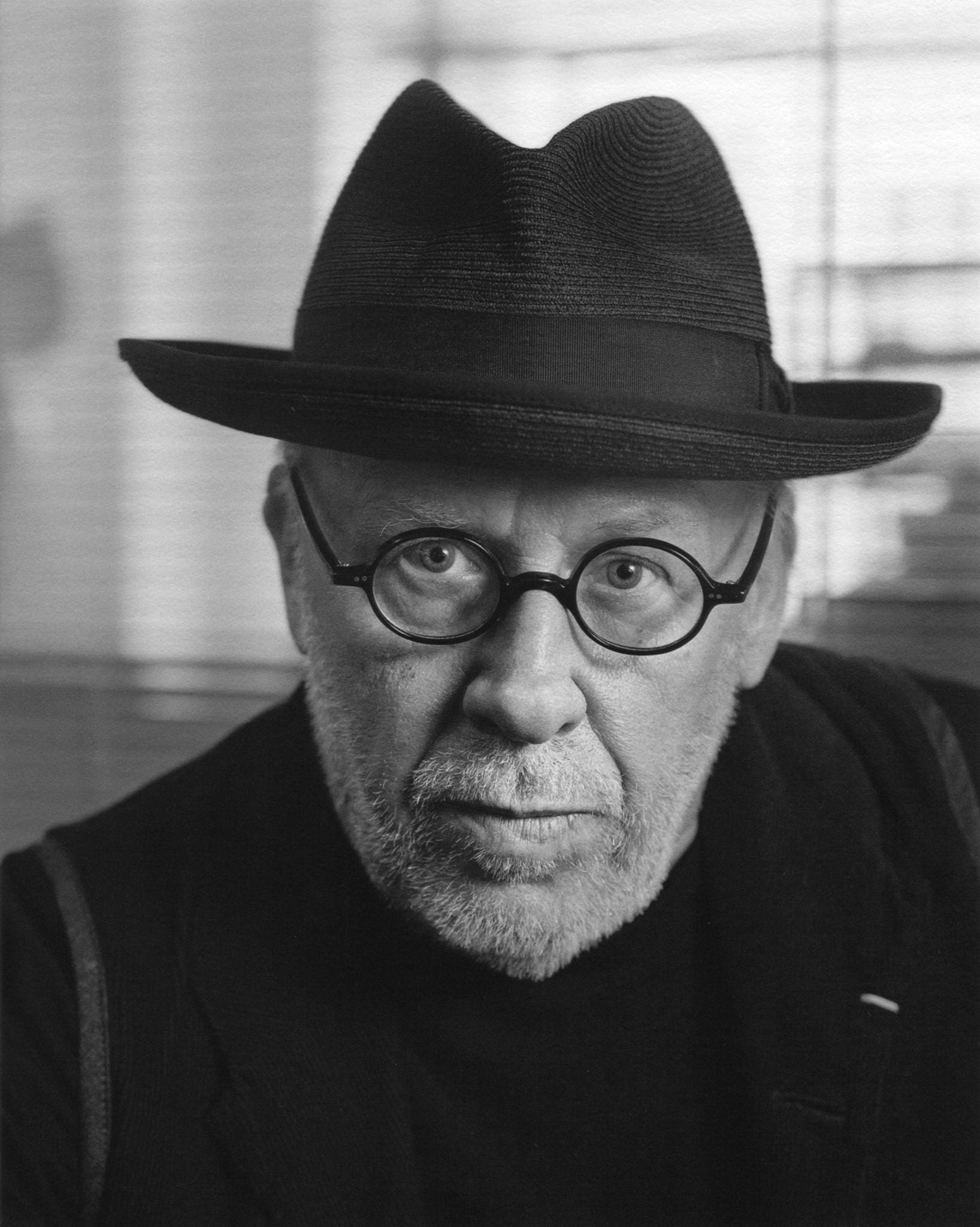
Joseph Kosuth recently opened a new exhibition of work at Almine Rech gallery in Paris. The show includes a lot of clocks, which he says is “no accident”. Kosuth turns 80 this year. The work is “not autobiographical or in the expressionistic sense, he adds, but it does have that dimension to it.” In addition to being a renowned conceptual artist, and one of the progenitors of Post-modernism, he is also possibly the longest serving art teacher on the planet — he tells the story in this interview of how he was unexpectedly elevated to the position of professor when he was just 19 years old.
Kosuth is also an influential writer. His essay Art after philosophy (1969), written when he was 24, had an immediate impact on his generation, convincing hordes of artists that the mediums of the past, especially painting, had become irrelevant because they were no longer sufficient, as Kosuth might say, for asking the right questions. Art after philosophy’s semiotic attack on the art field made Kosuth an enlightened hero to some, and a curmudgeonly heterodox to others. Its ideas are still fiercely debated by artists, many of whom perhaps fail to perceive the sense of humour Kosuth has always had about art and life. As he says: “You cannot have intelligence without humour. And I do not mean that in a vague way. They are packed together.” So the question of painting’s continued relevance may not be as dire as Kosuth’s true believers make it out to be. As he reminds us, artistic innovation is not located in the how, but “in the why”.
How have your ideas evolved since 1969 when you wrote Art after philosophy?
Should I be eligible for the Nobel Prize in Art? Yes. Is there one? No. Short answer. But yeah, lots to be said. I do not even know which door to go through because it is a kind of multi-position piece of history really. But I thought that, see, usually things start with one point and then they get more radical. Can we call it that? Whereas in this case I did what I did and that was the most radical thing that happened. And then things got more and more accessible in the end. Is it a result of the markets compromising everybody’s practice? I do not know, maybe. Is that what has been added to the broth? Perhaps, but I do not know. I am not living in a place where the galleries do anything, you know, so I am out of the run. When I lived in New York, I would go to openings of younger artists. And it has been decades since I got surprised, or informed even really, by what I saw. And I think that is strange. I mean, I am not young. I feel younger. Younger than a lot of the stuff I see being shown. And painting’s pathetic attempt to hang on as having relevancy is, for me, I do not know if I should laugh or cry really. You know, it is not where you can make an addition to the conversation or discourse of art. Just nothing there. And I said that already 40 years ago. You know, people listened, within the practice, but far fewer than I would have expected, because these conclusions I drew, anybody could draw if you got a half a brain and you are an artist. Kick me if I am not being modest. All right? Kick me anyway.
Did the title mean “art in the aftermath of philosophy”, or “art in the style of philosophy”?
Simply the kinds of questions that philosophy traditionally has. If you look at the philosophers, the last philosophers, Wittgenstein, Nietzsche, they basically made the same point from radically different perspectives, which was that you cannot ask these kinds of questions that we are used to asking anymore. The limits of understanding, the limits of language, make that impossible. And so we are stuck.
That essay said, “being an artist now means questioning the nature of art”. Is that still true?
Yeah and that is the kind of thing which is not only true, it is truistically true, possibly. But it is also the basis of the activity which can change and reflect present day reality through the work of younger artists. So it can stay true. That is to say, it is not the art that media defined as modernism — painting, sculpture, lithography, whatever. And so the artist’s work can then reflect political and social reality of the moment, which is what it should be doing, and you know, not making decor for over the sofa of the bourgeoisie. That is not what our mission in life is for, though I know many of my works do, too. I mean, there is too much to be said to say anything more.
You convinced so many others to believe in that essay. Do you still believe it? Does it still matter?
Nothing has changed much. It is not dogmatic, ideological. It is a toolkit to approach what new comes up. So that makes it qualitatively quite different than new media or other applications. The questioning process is still very valid, always relevant. There is always a job to do. That should be the mission. The ability of the impact of what they call conceptual art is that it is continually renewing itself in these ways, you know, which makes it a lot different than modernist ideas that are invested in certain media.
Do you agree that if you are just painting or sculpting, you are regressive?
Yeah, I do agree with it. But I do not know how productive it is to shame and blame. I mean, I think there are other ways to ask the right questions than that. I have learned that lesson. These wrinkles, you know, it took a while. Because it is an essential part of the art, what you say to the young artists about what they need to do — know what the right questions are. All that comes up in teaching and you learn it in teaching and you develop that tool in teaching. So, yeah, I think it was very valuable for my practice as an artist that I began teaching so early. I learned a lot, from being thrust into that situation, about asking the right question, I think.
What has it meant to you to be able to teach?
Well, I see a somewhat global view of what artistic practice should be. Of course, you make the actual propositions about what art is in the works. But also one theorises — you write texts about your practice as an artist. That is what I did. The next thing really is teaching. It is what you tell a young artist they must know and do to be an artist. Right? And so it is a very important part of the construction of what our model of art is as it evolves. So it is important. I was in school in New York Art School and School of Visual Art, and I was pulled out of class. I was actually notorious, apparently, in faculty meetings, as a student, etc. That is the background story you have to know. And so at a certain moment I was pulled out of class and taken to the founder, director, president of the school, who nobody ever… you saw him in the hall, but… so that was kind of scary. I was 19 and he sat down and he said: “So you are consistent?” I said: “Yeah, I am”. He said: “Well, listen, I am sick of hearing complaints about you from the faculty.” He goes on and on. So I assumed I was going to be thrown out of school, you know, for being a disruptive element. And he said: “So I am afraid you are going to have to go on the faculty because you are obviously not very good as a student.” He was a man who did his PhD on Robert Burns, the poet. I mean, you know, this guy was… and so I immediately became a professor. They needed someone and he just decided he would pull me out of the class, make me a professor. So that is how I started. Although my students were my age, so it was a little bit awkward. And I had dated half the women at that point, so it got really awkward in other dimensions. But I like teaching a lot and I like very much the questions students asked over the years. And I have talked the whole time and will continue to teach probably to the bitter end, you know, which I hope is not too bitter.
Is your ideal student one that applies what you say or one who rejects it?
I am too selfish for that. I want to learn something. I want them to combat me. I want them to be the same smart ass prick I want as a student, you know, and so that is, you know, kind of the process. But I taught all over the world pretty much. Yeah. And the best arts students are in Germany. My last class in Venice, they were quite amazing. That is where I teach presently.
When you say they are the best, could you describe why?
Well, they are well read and self reflective and asking the tough questions, the relevant questions, I should say. But I do not see any big difference in the quality of the work being made by young German artists, however. So I do not know. Curious process. It is the creation of meaning within a classroom, within one’s body of work, with someone else. It certainly comes down to one subjective response to the sensuality of your sense organs, taking in form and colour and all that, which, if it is prescriptive, it is very limited as a theoretical model for what art is. Certainly, given the history of art as we know it, contemporary art, for it to be prescriptive is problematic.
You have said that “there are two histories of art”. Could you explain that?
Well, there is the art market history and then there is the art history. And they used to be one and the same. And at a certain point they became competitive with each other. And so now the history of ideas, which used to be the important thing, takes second place to what sells for the most amount of money at auction, which is really… You could cry! It is pathetic, but it is a fact.
Have you ever had a student become discouraged by your teachings?
I have had dozens quit art even. I have been a very destructive influence. But, you know, sorry about that.
Have you ever been discouraged by your teaching?
Well, yeah, that is when I changed my work. That is the heart. That is how an artist should respond to that.
Could you talk about one of those times?
No, it is not enough time!
Is there anything interesting about new mediums like NFTs, AI, digital art?
I do not know. I am not the one to ask. That is not the level for me. That is all a new kind of paint. And that is not where you can ask the right questions. Just new kinds of paint, essentially, you know, and without the history in which it worked and was relevant like painting. There was a time when painting was meaningful and really the area in which one could actually have something to say. But AI, I do not think that has really spoken yet. And anything new will be only judged by its potential commercial value, which is uninteresting.
If Faulkner was right and the past is not past, can painting still be relevant?
Well, yeah, I mean, I suppose if you look around the world, there are a lot of people painting. Does that make it relevant? I do not think so. But yeah, I mean, the danger of what I am saying is it suggests that innovation is located somehow in the how, not in the why. Whereas I really feel the questions you ask, the why, is where innovation must come from. It is not unproblematic, all this.